
Wrong alternators are the most expensive line item in a distributor's year, and they are rarely a manufacturing defect. They are a verification failure: a correct part, quoted confidently, shipped to a vehicle it was never designed for. For overseas importers buying aftermarket auto parts in volume, one wrong SKU in a 500-unit order costs more than return freight — it costs weeks of delay, blocked warehouse space, and a customer who quietly opens a second supplier account.
Two alternators can look identical, carry the same 120A rating, and still not interchange. Model names do not lock parts; photos do not prove fitment. This is the verification sequence we run before any alternator leaves our warehouse.
In short
Confirm the OE number, treat every cross-reference as a lead, then verify the vehicle application, connector, regulator, clock position and pulley. That sequence stops wrong units shipping, and it costs a label photo instead of a container of returns.
1. Why the Same Vehicle Model Can Use Different Alternators
A model name narrows the search. It does not identify the part.
Production Year and Facelift
A facelift or mid-cycle update can change the charging system while the badge stays the same. The part number changes and the catalogue page changes; the buyer quoting last year's list does not.
Engine Code and Trim Level
One platform usually carries several engine codes and displacements, with different mounting geometry and electrical loads. Load matters most: a base trim and a high-spec trim with heated seats, larger audio or driver assistance hardware can require different output and regulation.
Market Version and Start-Stop Equipment
The same nameplate sold in different regions may use different engines or charging architectures, so a part correct for one market version may be wrong for another. Vehicles with a start stop system are the sharpest example: they normally require a LIN-controlled regulator and an overrunning alternator pulley (OAP) or decoupler (OAD), which are not interchangeable with a conventional fixed-pulley unit even when the housing looks the same.
A customer who can only give model and year has given you a search filter, not a part. Ask for the OE number, and where possible the engine code or a label photo.
2. How to Verify an Alternator by OE Number
The OE number is the strongest starting point — provided you confirm which product it points to and whether that product fits the vehicle. This is where most car alternator replacement disputes begin: the buyer verified a number, not an assembly.
Step 1: Read the OE Number From the Unit
Take the number moulded, stamped or printed on the original alternator: the label on the unit, the original equipment manufacturer car parts catalogue, a maintained parts database, or previous original equipment replacement parts records. If the customer can supply the VIN, use it to find parts by VIN in the manufacturer catalogue instead of relying on model year alone. With a label photo, check that every character is legible — a misread character is the most common cause of wrong shipments we see.
Step 2: Treat Cross-Reference Numbers as Leads, Not Proof
Cross-references exist because the same unit carries several numbers. A buyer holding an original OE number may want to purchase a Valeo alternator, a Bosch alternator, Denso alternators or an AC Delco alternator instead, and the cross-reference bridges the catalogues. It is a lead, not a guarantee of interchangeability — and an OEM part number search that returns a match is not a fitment confirmation.
When you run an auto parts interchange or an interchangeable car parts lookup, confirm five things:
- The number comes from a manufacturer catalogue, not a marketplace listing.
- It maps to a complete assembly, not an internal component.
- The reference holds for the specific application.
- Supersessions and design revisions are reflected.
- The specification matches the vehicle.
If two databases disagree, return to the brand's own catalogue. A Delco Remy cross reference and a European brand's listing can both be correct for different assemblies. Don't pick the convenient number.
Step 3: Confirm the Vehicle Application
| Field | What to Confirm |
|---|---|
| Vehicle | Full model name plus platform or chassis code |
| Production date | Year, and month where a changeover falls inside the year |
| Engine | Engine code, displacement or engine family |
| Original OE number | The number on the unit being replaced |
| Brand part number | The number of the replacement itself |
| Market version | The market the vehicle was built for |
| Mechanical fit | Clock position, pulley type (fixed / OAP / OAD) |
Not every order needs all seven: a clear OE number plus a confirmed catalogue range is enough for a repeat line. When two candidates remain or sources conflict, complete the table before confirming the PO.
3. What Else to Check Beyond the OE Number
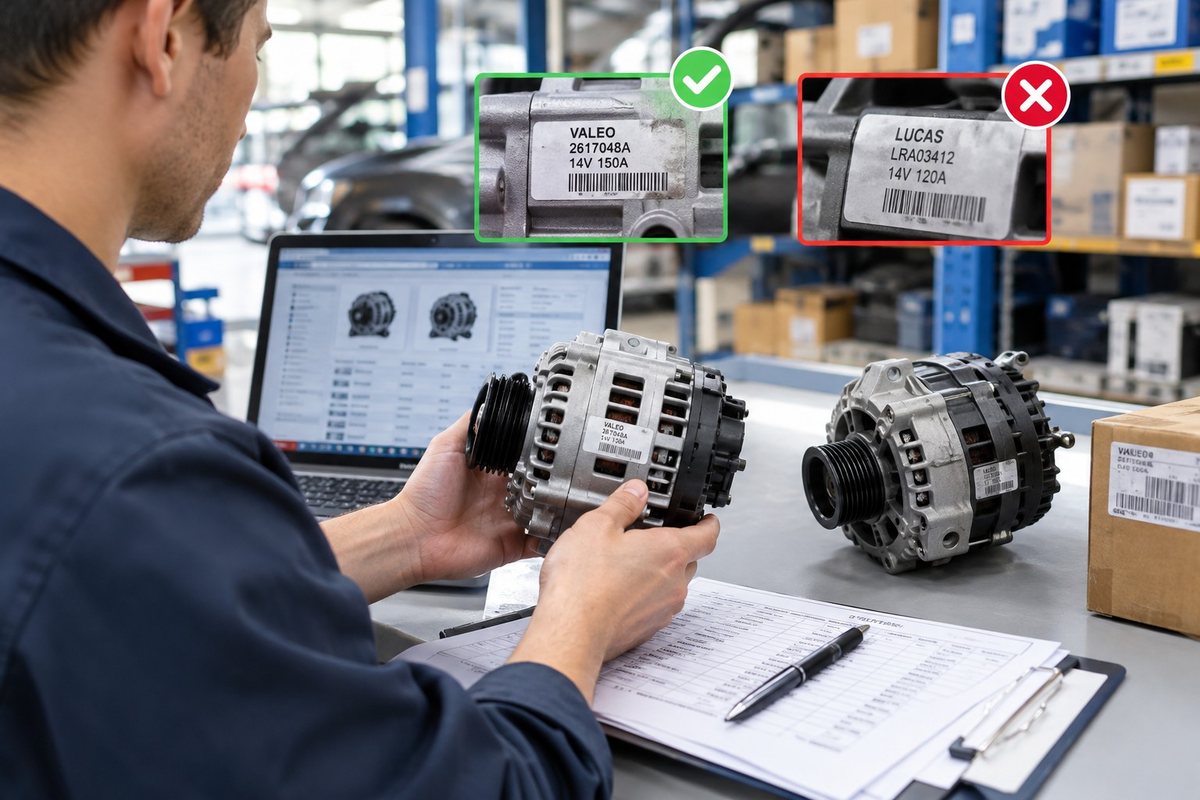
With the OE number confirmed, four checks still deserve separate attention — especially on cross-brand replacements and unlabelled builds.
Rated Output: Same Amperage Is Not the Same Part
Two 120A units are not automatically the same product. Confirm rated output against the vehicle's requirement, voltage (12V for most passenger cars, 24V for trucks and off-highway equipment), regulator type and control strategy, and interface compatibility. Rated output is measured at a defined speed and temperature, so the box figure tells you less than the build sheet.
Connector and Voltage Regulator
Among automotive alternator parts, connectors are the most frequently misread. Two plugs can share a housing shape while differing in pin count, pin arrangement or pin function. Regulator type matters as much: a LIN-controlled unit will not behave like a conventional machine-sensed regulator. Check plug structure, pin definition, regulator type and control interface — never judge compatibility from a photo of a plug. Our notes on alternator wiring, connectors and mounting go deeper.
Clock Position: The Overlooked Fitment Detail
Clock position describes the rotation of the mounting ears relative to the body, usually expressed in clock hours. Identical dimensions, output and connector still fail if the ears sit at a different angle: the unit will not seat, or it seats and the belt runs out of alignment. Buyers sourcing from photos overseas miss this constantly.
Mounting Points and Pulley
Check bore diameter, hole spacing, centre distance and bracket width; then the car pulley itself — type, diameter, groove count and offset. Confirm whether the car belt pulley is fixed, OAP or OAD. Fitting a fixed pulley where an overrunning pulley was specified causes belt flutter, noise and bearing damage; the reverse swap is equally unsafe. Our guide to alternator pulley types covers the differences.
4. A Real Case: One Question That Prevented 200 Failed Installations
A European distributor asked us to quote 200 units of a 120A alternator for a Volkswagen-platform application. The photos matched our unit closely and the rating matched exactly — on paper, a straight quote.
Our engineering team caught one difference: the original used a 3-pin LIN regulator plug; the comparable unit in stock was a 2-pin conventional plug. Same output, same housing, same holes — incompatible interface. One request for a clear label photo settled it in minutes, and we shipped the correct version.
One question avoided 200 wrong units, three weeks of delay and a conversation no distributor wants with a good customer. Across twenty years of export orders, "looks the same, is not the same" is a weekly event, not an exception.
5. How Distributors Reduce Fitment Errors in Bulk Purchasing
Distributors carrying many alternator lines should not re-verify from zero on every PO. Build an internal fitment record and store:
- OE number and verified cross-reference numbers.
- Brand and brand part number.
- Vehicle application, year and engine.
- Rated output, voltage and key specifications.
- Connector, regulator, clock position, mounting and pulley data.
- Data source and known cautions.
Capture parts by VIN number where the customer can supply it, so a repeat order traces to the exact vehicle rather than a model range, and every department works from one record.
Re-verify whenever the part number, supplier version or fitment data changes. A part that fitted last year is not proof that this year's equivalent is identical.
6. How to Choose an Alternator Supplier That Verifies Fitment
Choosing an auto parts supplier for alternators is a fitment question before a price question. Value is not only price and stock depth — it is whether the supplier reduces wrong-shipment risk before the container loads.
Clear product identification. Accurate part numbers, OE references and technical data: label photos, dimension drawings, connector close-ups. At FuZhiHui Auto Parts every alternator ships with its OE reference data; photos and drawings go out at quotation on request.
Reliable fitment information. Fitment should be checked against documented sources, gaps raised as questions rather than covered with a promise. Every FuZhiHui enquiry is reviewed by our engineering team; when information is missing or conflicting, we ask for the label photo or VIN before quoting.
Consistent product records. For long-term importers we keep a dedicated fitment file per part number, so a repeat order reuses verified history instead of restarting the check.
Branded product — Valeo, SEG, JHAEM — follows the brand's own catalogue; custom unlabelled units are specified before production. Whether a buyer sources a branded unit or shops wholesale auto parts online for an unlabelled equivalent, the verification standard is the same. The same checks are applied to mild-hybrid lines in our 48V alternator sourcing guide. FuZhiHui Auto Parts is an authorized supplier to Valeo, SEG and JHAEM and provides authorization documents on request; the catalogue covers more than 10,000 part numbers from a 1,000+ m² stocking warehouse, shipping to more than ten countries, including the US, Germany, Japan, Korea and Peru.
7. FAQ
What is the difference between an OE number and an OEM number?
The OE number is the one the vehicle manufacturer uses in its catalogue. The OEM number is the one used by the company that built the alternator, such as Valeo, Bosch, Denso or ACDelco. One unit usually has one OE number and can carry several OEM numbers across batches, plants and revisions. Cross-referencing maps between those systems — which is why you must confirm whether a number points to an assembly or a component. Whether a unit is rebuilt or remanufactured is a separate question; see rebuilt vs remanufactured alternator.
The label on the old alternator is worn — can the part still be identified?
Yes, by structure. Clean the label and retry; if it stays unreadable, look up the manufacturer catalogue by model, year and engine code, then send photos of pin count, pulley grooves and clock position for comparison. Guessing from a few surviving characters is the highest-risk move available.
Can a fixed pulley be replaced with an OAP or OAD?
No. Overrunning pulleys are matched to the start-stop system, belt tensioning layout and engine vibration profile. Reverting an OAP to a fixed pulley can cause belt flutter, noise and shortened bearing life; the reverse swap carries the same risk. The replacement must match the original pulley type.
Two databases give different cross-reference numbers — which one is right?
Work down the hierarchy: brand catalogue, then mainstream parts databases, then marketplace listings. A conflict usually means a supersession, a version difference, or a number pointing only to an internal component. Return to the OE number and application, then cross-check structure.
8. Final Thoughts
Model name, appearance and amperage each tell part of the story. The sequence that prevents wrong shipments is short: confirm the OE number and its cross-references, confirm the vehicle application, then confirm the details — connector, regulator, clock position, mounting, pulley.
Not sure about a number? Send the OE number, a label photo or the vehicle details through your usual channel — website enquiry, WhatsApp or email — and our engineering team will reply within 24 hours, before you order. Trial order or full container, every alternator is checked to the same standard.
Related parts
Units from our range. Send an OE number and we will check fitment before quoting.
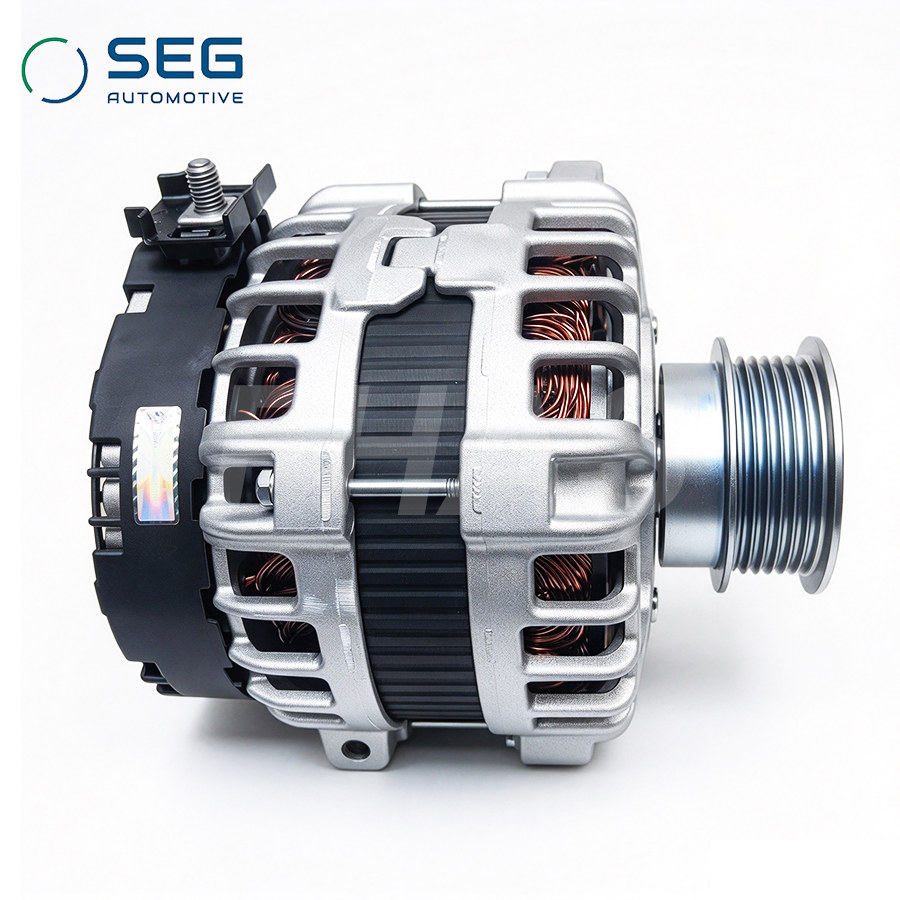 SEG Alternator 12V for Volvo XC60 2.0T Repair (30644945)
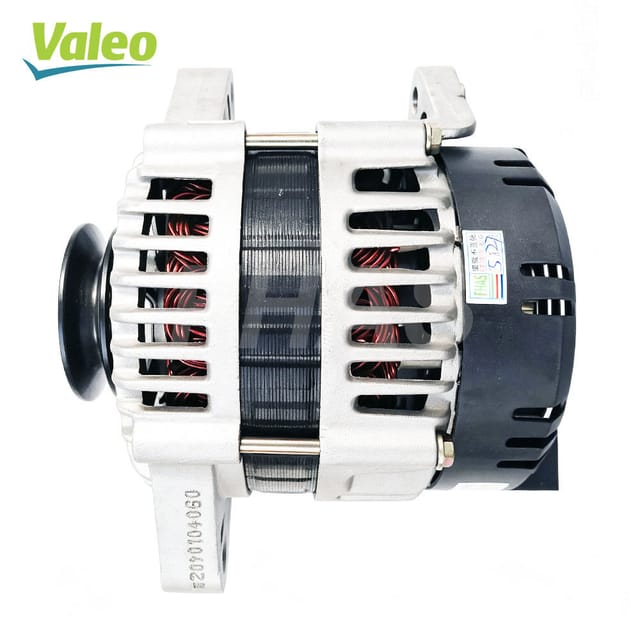 Valeo Alternator 12V 65A for Suzuki Alto (3701010B3)
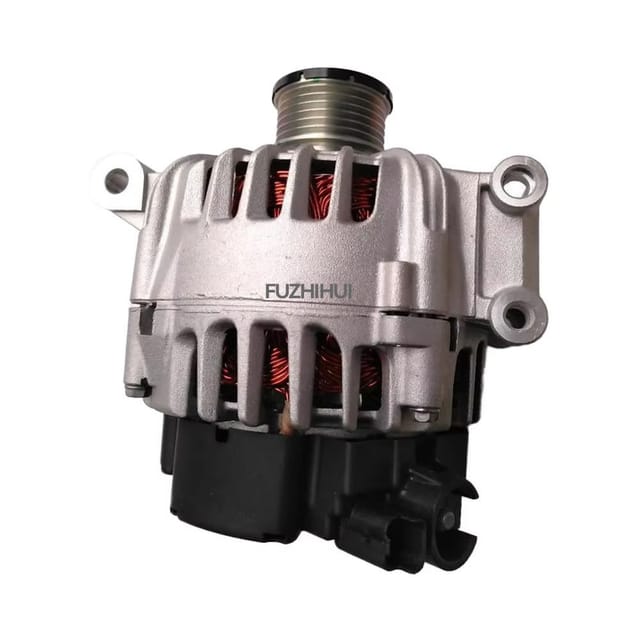 Alternator 12V 150A for Peugeot 308 II (9678731280)
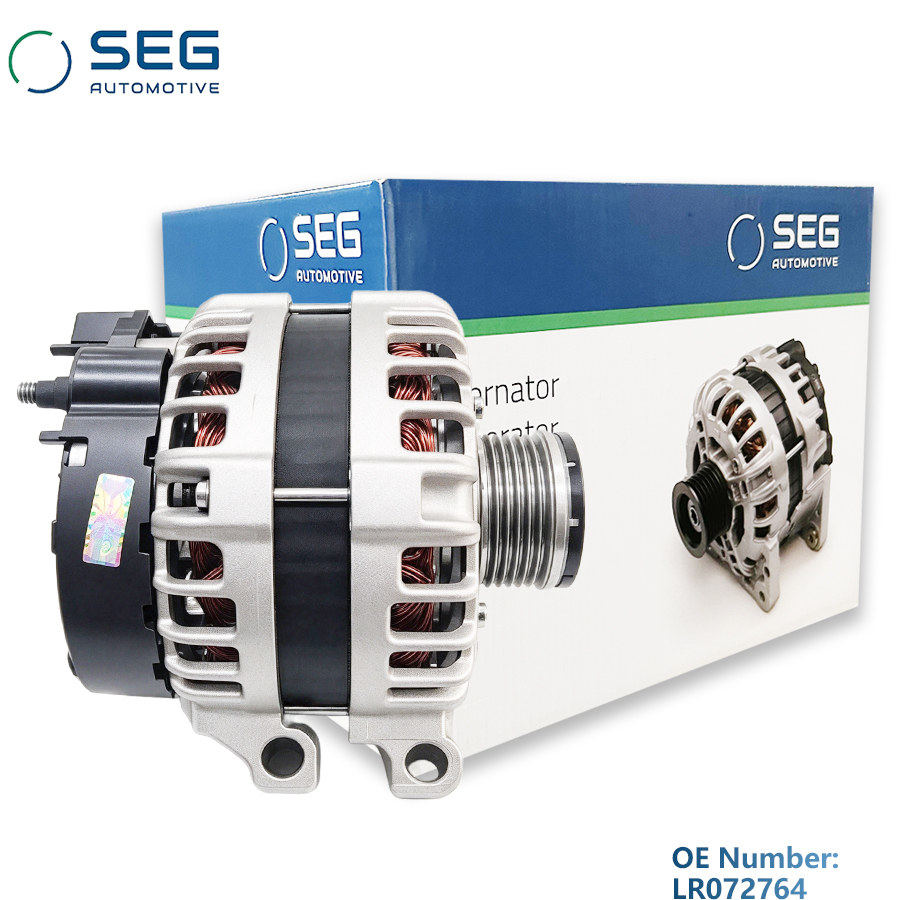 SEG Alternator 12V for Land Rover Range Rover Repair (LR072764)
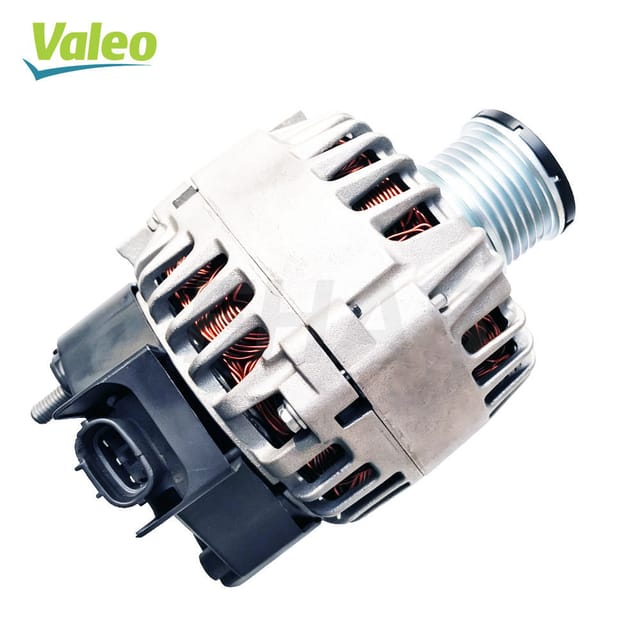 Valeo Alternator 12V 110A for Nissan Sylphy (23100-3RA2B)
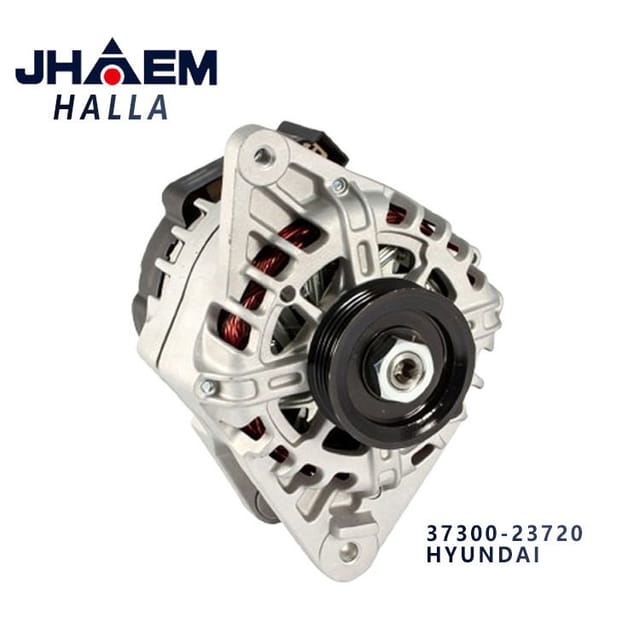 JHAEM Alternator 12V 90A for Hyundai / Kia
Have a part number to price?
Send it over with the quantity and destination. You will get a fitment check, a unit price and a freight cost — usually the same business day.