
Two suppliers quote the same 12V alternator for the same vehicle. One is $15 a unit cheaper — $1,500 across 100 units. The decision looks obvious.
It stops looking obvious three months after the container arrives, when the returns, the reshipments and the warranty conversations have all been invoiced. The lower quote assumed a lower total cost. It rarely is.
What follows is the arithmetic a distributor needs before signing: what the unit really costs landed, what a cheaper programme can absorb in after-sales cost before it stops being cheaper, and how to compare two quotes on the same basis.
In short
Compare quotes on landed cost, not unit price: add freight, insurance, duty and clearance, then divide by the units you can actually sell. A cheaper programme stays cheaper only while its after-sales cost stays under the headroom you calculated.
Key points
- Unit price is one line of the purchase account, not the account.
- Freight, insurance, duty and clearance can add around 20% before the pallet moves.
- Branded and unbranded are not inherently better or worse; landed cost plus claim data decides.
- The after-sales cost a cheap option can absorb is a number you can calculate — past it, the saving inverts.
1. Why two quotes cannot be compared on unit price
Three things differ long before price does.
Product and quality requirement
Valeo, SEG or JHAEM product, and unbranded or custom units, carry different brand requirements, specifications and positioning. Similar-looking housings still need the OE number, plug, mounting dimensions and key parameters checked — the four-point check in OE number and cross-reference verification. Neither the badge nor the photo establishes value.
Scope of the quote
One quote may include specified packaging or testing, another may not. Warranty period, defect handling, replacement responsibility and who pays return freight all change the final number.
Delivery terms
Identical unit prices produce very different landed bills under different Incoterms.
| Term | Main freight and insurance | Import clearance and duty | What it means |
|---|---|---|---|
| EXW | Buyer | Buyer | Seller hands over at the factory; most cost sits with you |
| FOB | Buyer | Buyer | Seller clears export and loads |
| CIF | Seller (to destination port) | Buyer | Quote includes ocean freight and insurance |
| DAP | Seller (to named place) | Buyer | You still handle import clearance |
| DDP | Seller | Seller | You mostly just receive the goods |
Before any comparison, fix the specification, order quantity, packaging, delivery terms and warranty standard. Two listings that both read cheap auto parts online free shipping can still differ by 20% at the border — the freight is in the price somewhere.
2. Building the landed cost
Landed cost is the number distributors should price from. It has five parts: product cost (unit price × quantity); international freight and insurance; import duty, set by classification, origin and destination rules; customs clearance and documentation; and delivery from port, airport or warehouse to your premises.
100 alternators, illustrative:
| Cost item | Amount | Share of landed cost |
|---|---|---|
| Product cost | $8,000 | 80% |
| International freight and insurance | $1,200 | 12% |
| Import duty | $400 | 4% |
| Clearance and destination delivery | $400 | 4% |
| Landed cost | $10,000 | 100% |
| Per unit | $100 | — |
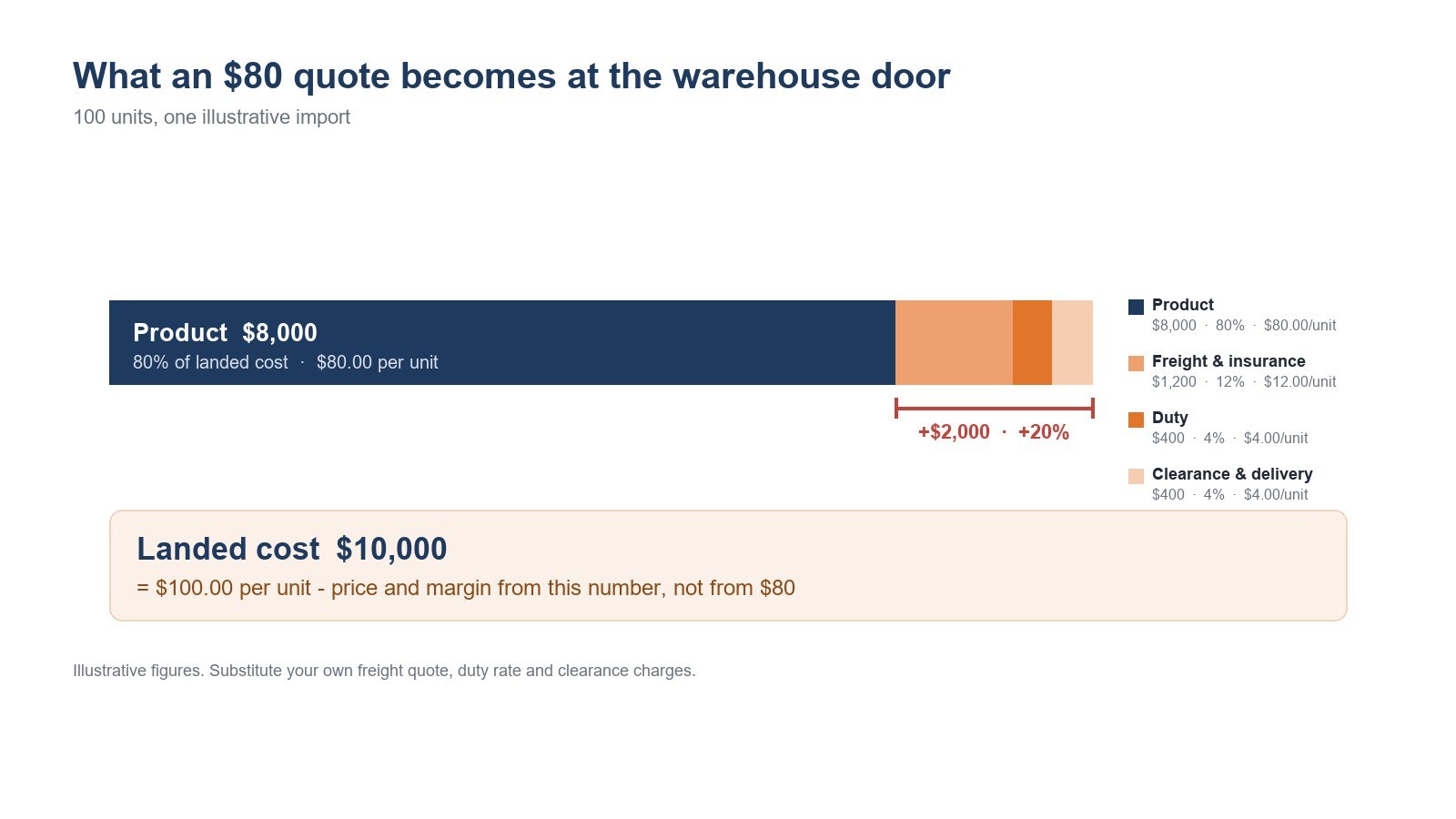
Two cautions. First, avoid double counting: confirm what the supplier quote already includes, and check whether import VAT belongs in your cost base given local rules and whether you can reclaim it. Second, payment terms are a cost: 30% deposit with the balance before shipment ties up capital very differently from 60-day terms, and on large orders that difference belongs in the comparison.
The $100 per unit — not the $80 — is the figure to build a selling price and a margin on.
3. Branded or unbranded: which programme costs less?
The two serve different buyers — branded for customers who specify a name, unbranded for cost control, flexible purchasing or private label. Neither is cheaper by definition; the full account decides.
Same 100 units, both meeting the buyer's basic specification:
| Cost item | Branded | Unbranded |
|---|---|---|
| Product cost | $9,500 | $8,000 |
| International freight and insurance | $1,000 | $1,200 |
| Import duty (assumed) | $475 | $400 |
| Clearance and destination delivery* | $525 | $400 |
| Landed cost | $11,500 | $10,000 |
| Assumed extra after-sales cost | $150 | $560 |
| All-in cost | $11,650 | $10,560 |
| Per unit (100 units) | $116.50 | $105.60 |
*Branded shipments often travel in stronger crates or shock-resistant export packaging, which raises volumetric weight and handling charges. Figures are illustrative.
Where branded still wins
In this scenario the unbranded programme is $10.90 per unit cheaper. That result rests entirely on your own claim data, not on a supplier's brochure — and it reverses in four common situations:
- downstream customers name the brand, so unbranded stock never reaches their purchase order;
- the vehicle parc is premium, where one failure costs more reputation than $10.90;
- branded product commands a retail premium that covers the purchase gap;
- the supplier's warranty and replacement terms on branded lines are materially better.
The tables also exclude storage, capital cost and selling expense.
4. How much after-sales cost the cheaper option can absorb
A more useful question than "which is cheaper": at what after-sales cost does the cheap option lose its advantage?
Headroom = other programme's all-in cost − this programme's landed cost
$11,650 − $10,000 = $1,650, or $16.50 per unit.
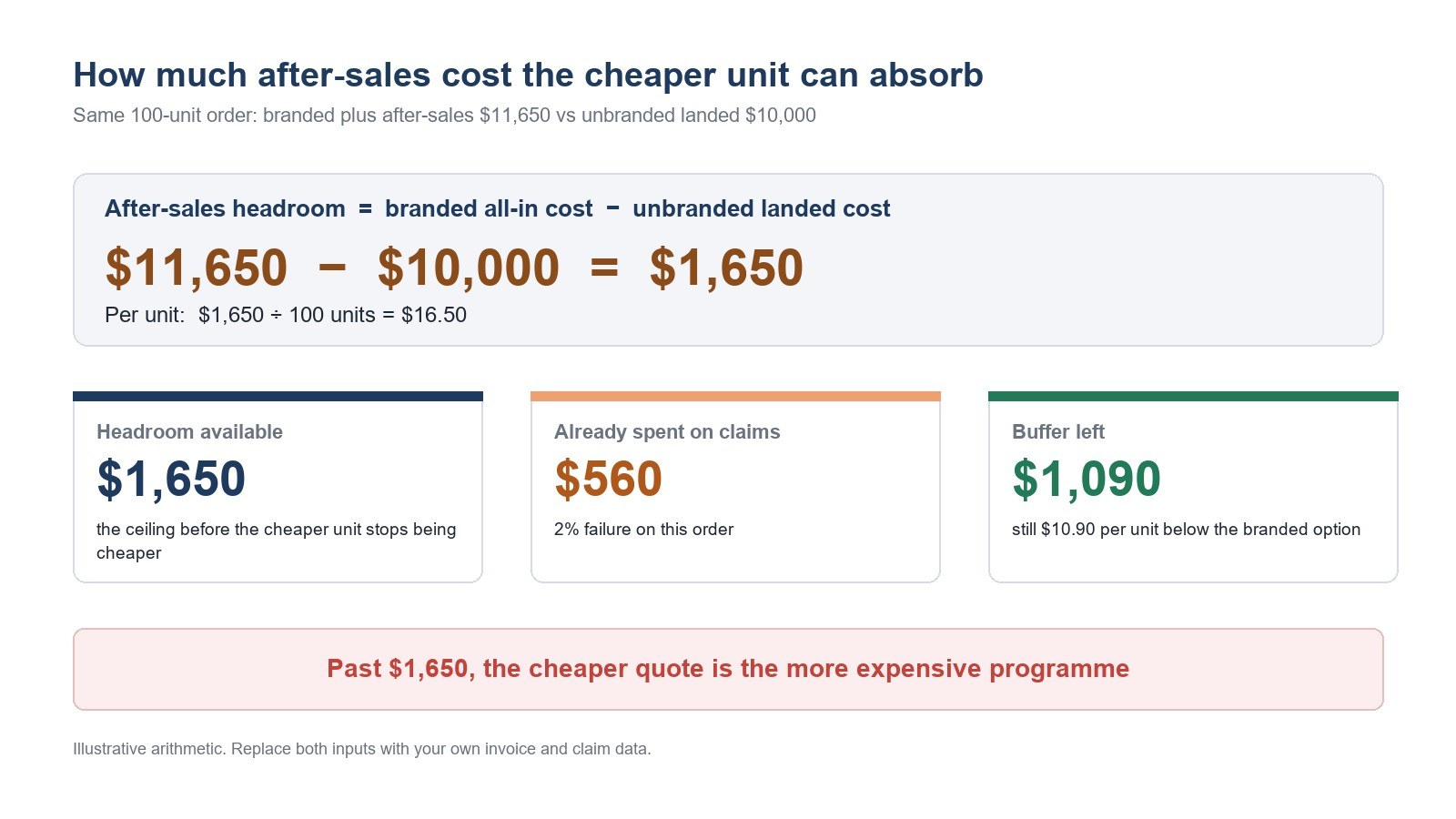
With $560 of claims spent, $1,090 of buffer remains ($10.90 per unit). The figure is not a prediction — it is the boundary of the price advantage. Cross it and the cheap option is the expensive one.
And the cost is not only money. A failed alternator on a customer's vehicle spends the distributor's credibility with its own downstream accounts, which is harder to invoice and harder to recover than return freight. Record return reasons, warranty spend, replacement costs and fitment issues by supplier and by product line, and let order data rather than promises set the risk.
5. After landed cost, calculate cost per sellable unit
Landed cost tells you what it took to get the goods to your door. It is not the cost of the units you can actually sell.
Say four of the 100 units fail inspection and need repair or scrap — the situation the $560 of after-sales cost represents. You pay to handle them and you can sell 96.
Cost per sellable unit = (landed cost + extra after-sales cost − recoverable amount) ÷ sellable quantity
$110.00 per unit, not $105.60 — that $4.40 gap is the true price of those four units.
Recoverable amounts must be real: scrap value, or a credit the supplier has actually granted. Pending claims and promised replacements do not belong in the calculation until they land.
Failure rate and handling cost: the sensitivity table
Reuse the case: $140 per failed unit — return freight both ways, replacement handling, inspection labour and paperwork. For a five to eight kilogram alternator, international express is charged by weight and service level in both directions, so $140 for a return plus replacement is a conservative figure rather than a generous one.
| Failure rate | Extra after-sales | Sellable units | Cost per unit (vs $116.50) |
|---|---|---|---|
| 2% (2 units) | $280 | 98 | $104.90 (−$11.60) |
| 4% (4 units) | $560 | 96 | $110.00 (−$6.50) |
| 6% (6 units) | $840 | 94 | $115.32 (−$1.18) |
| 8% (8 units) | $1,120 | 92 | $120.87 (+$4.37) |
| 10% (10 units) | $1,400 | 90 | $126.67 (+$10.17) |
Each extra failed unit adds about $140 to the batch and takes one unit out of the sellable count. Measured against the branded $116.50, the two programmes break even at roughly 6.4 failed units — a break-even failure rate near 6.4%.
Note that this is stricter than the headroom figure: $1,650 ÷ $140 ≈ 11.8 units by money alone. A failure costs cash and capacity, and the branded comparison assumes all 100 units sell.
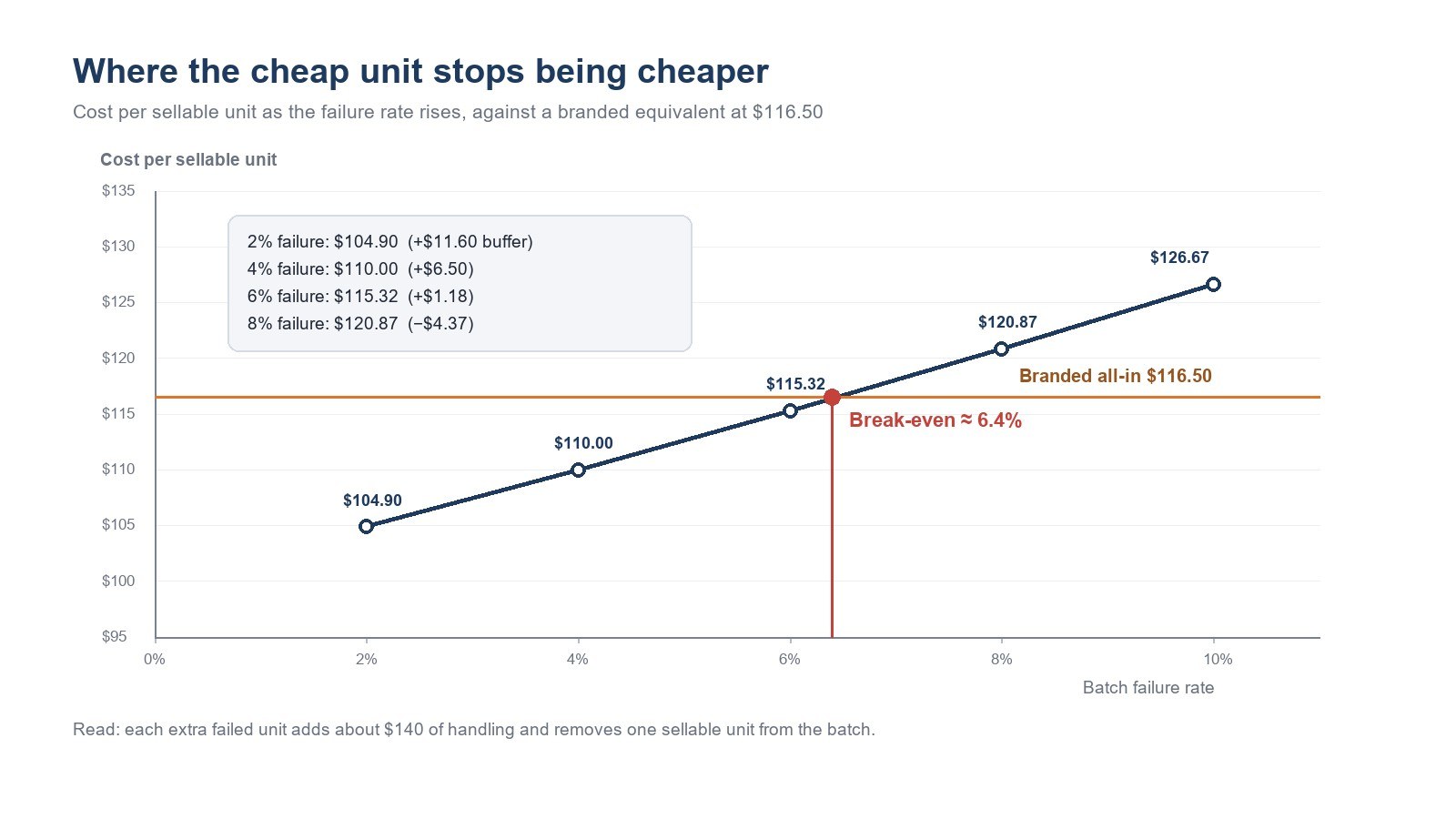
The conclusion is uncomfortable for anyone shopping purely on price: if a supplier holds batch failure at 1–3%, the unbranded advantage is solid; what breaks the programme is not the $3–5 per unit gap but a 6%+ quality problem. That is why factory testing and OE fitment accuracy matter more than a few dollars on the quote — and why the car alternator cost your customer meets later is set by the failure rate you accepted today.
6. Comparing supplier quotes fairly
Use this before the next comparison:
- Verify the product: OE number, vehicle and engine application, plug, mounting dimensions, key specification.
- Fix the quote basis: quantity, packaging, delivery term, lead time, quote validity.
- Cost the import: a real freight quote, duty checked against destination and classification, other applicable taxes.
- Pin the warranty: claim documents, response time, replacement conditions, who pays return freight — and the quality evidence behind the line, which is covered in alternator quality evaluation before bulk purchase.
- Check continuity: stock on the numbers you sell, replenishment cycle, ability to keep supplying — for the SKU list itself, see which 12V alternators to stock.
- Model the margin: selling expense, capital cost, after-sales spend and target price on top of landed cost.
Red flags: a quote valid for 48 hours that forces a decision without information; "perfect fitment" claimed without checking the OE number; a warranty that says "12 months" and nothing about process or responsibility; hesitation when you ask who pays return freight.
Request template — Subject: RFQ – Alternator, OE [number], [qty] pcs to [destination port].
Body: OE numbers and applications: ___ / Quantity: ___ (mixed OE numbers in one container: yes/no) / Branded or unbranded (private label: yes/no) / Terms: EXW / FOB / CIF / DAP / DDP, destination: ___ / Warranty: period, claim process, return freight responsibility / Quote validity and lead time.
Mixing several OE numbers in one shipment is worth asking for: it spreads freight across the order and lets you send the full requirement list in one round of comparison.
Whether you buy from a factory or an online auto parts platform, the unit price is the least informative number in the file. A workshop's customer asks, "how much does it cost to replace an alternator?" The importer has to answer a harder question first: what did each sellable unit cost to put on the shelf. For distributors carrying auto parts spares across hundreds of numbers, that is the difference between a price list and a margin plan.
7. FAQ
What belongs in the landed cost of automotive parts?
Product cost, international freight and insurance, import duty, customs clearance and destination delivery. Add the capital cost of the payment terms on large orders.
Branded or unbranded for a wholesaler?
It follows your customer mix: brand-specified buyers need branded product; buyers chasing margin and flexibility usually suit unbranded. Compare on landed cost and claim data, never on unit price alone.
How do I compare two alternator suppliers fairly?
Equalise first: same OE number and specification, quantity, delivery term, packaging and warranty standard. Then calculate landed cost, and cost per sellable unit using your own failure rate.
8. Closing
Price the landed cost before you commit. Compare programmes on quality performance, sellable quantity and after-sales spend, not on the quote sheet. That is how you tell a genuinely competitive offer from one that has merely deferred its cost into the next quarter.
Four details turn a quote into a comparable quote: target OE numbers (several is fine), quantity, branded or unbranded, and destination port or country. Send those and FuZhiHui Auto Parts will quote line by line on one specification and one set of terms, so you can put the numbers straight into your landed-cost sheet. Twenty years supplying passenger-car 12V alternators, more than 10,000 part numbers, a 1,000+ m² warehouse, and engineering review of fitment on every order.
Related parts
Units from our range. Send an OE number and we will check fitment before quoting.
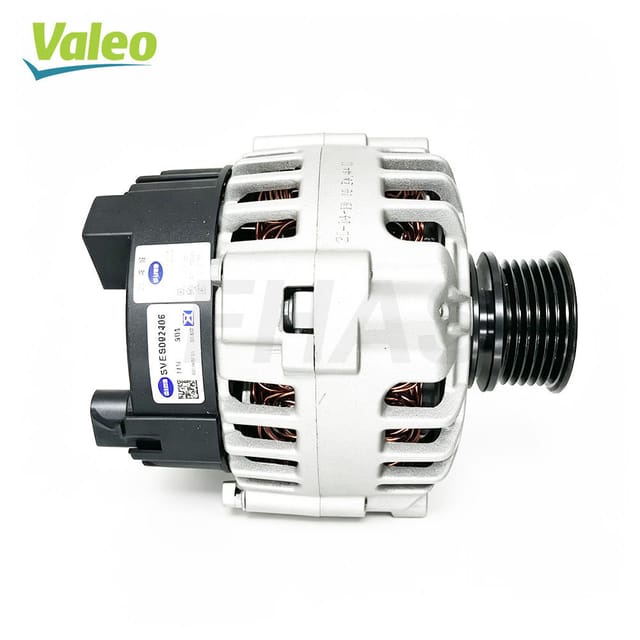 Valeo Alternator 12V 90A for VW Jetta / Audi (028903028D)
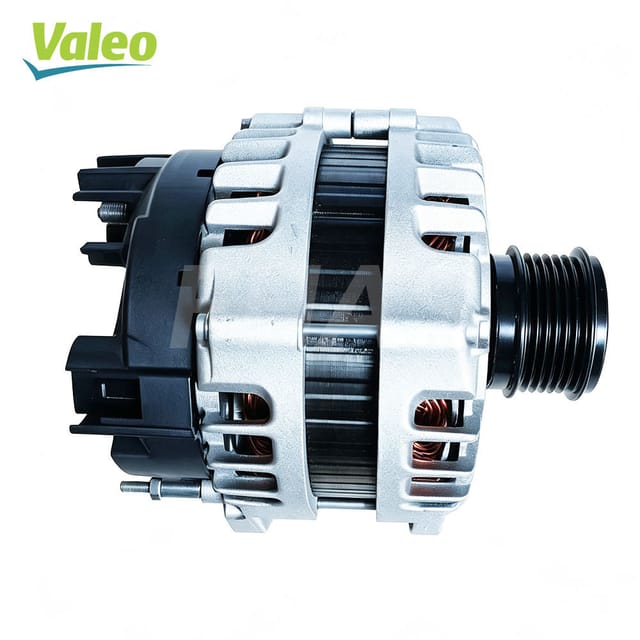 Valeo Alternator 12V 140A for MAXUS LDV (C0000618)
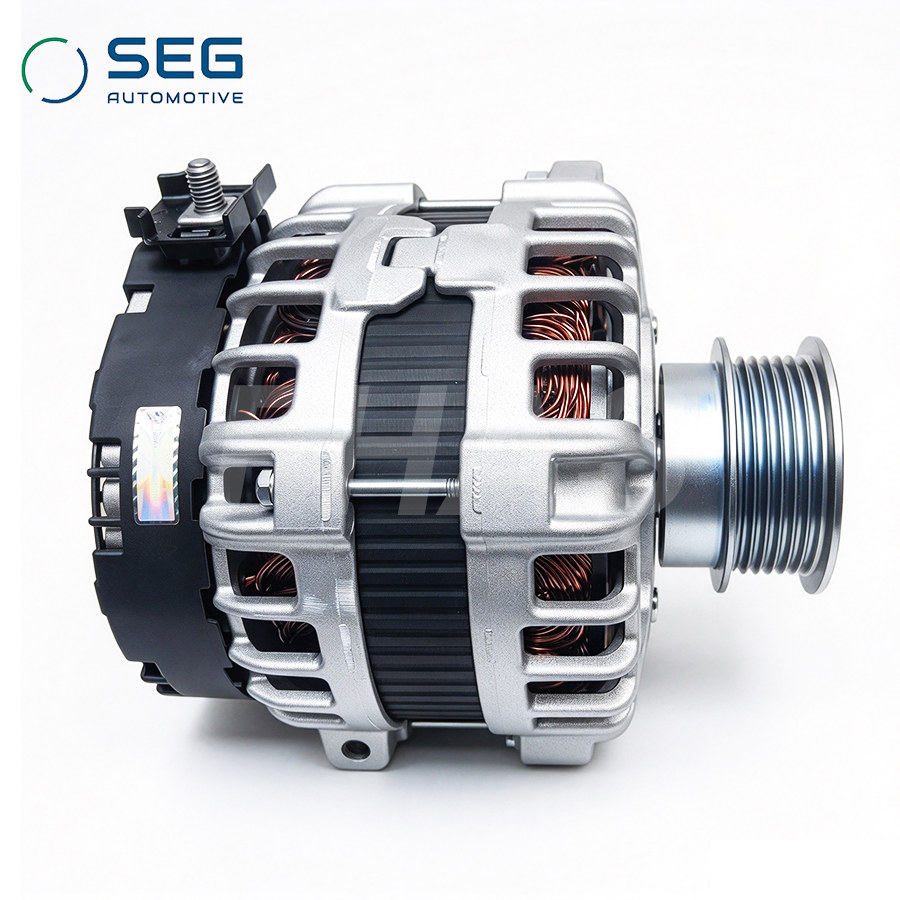 SEG Alternator 12V for Volvo XC60 2.0T Repair (30644945)
 Alternators 12V / 48V — Valeo, SEG and JHAEM Lines
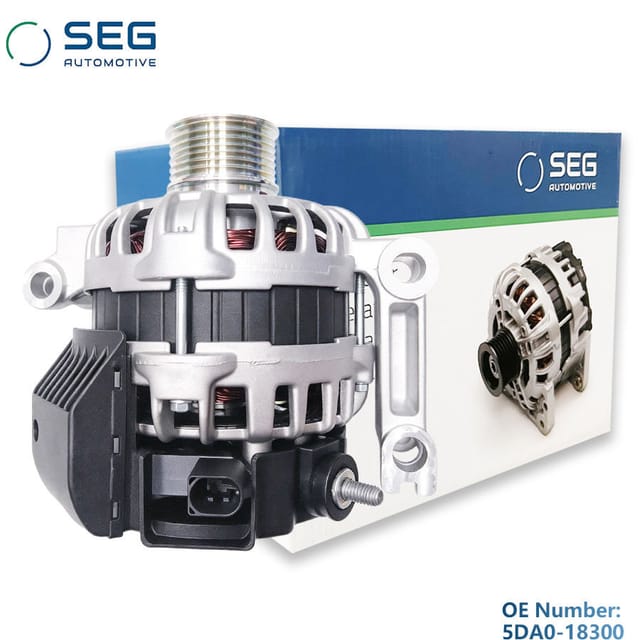 SEG Alternator 12V for FAW Besturn X80 (5DA0-18300)
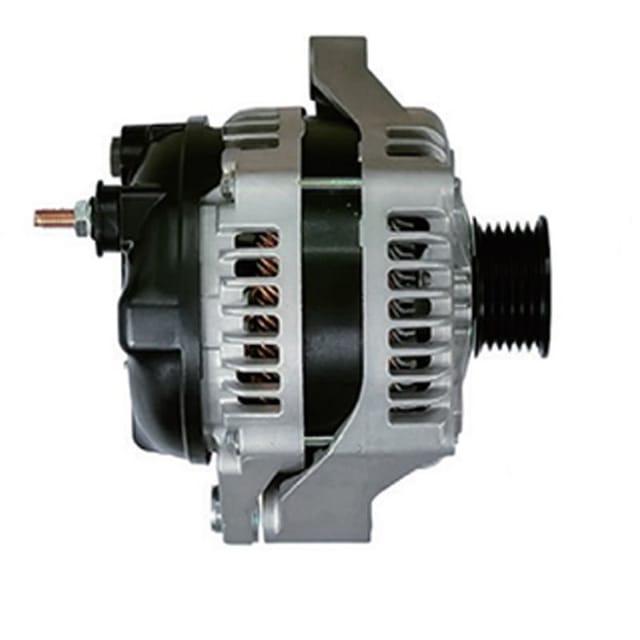 Alternator 12V 150A for Maserati 4.2 / 4.7 (104210-3960)
Have a part number to price?
Send it over with the quantity and destination. You will get a fitment check, a unit price and a freight cost — usually the same business day.