
A European distributor books a batch of 48V starter generators. The housings, connectors and pulley look identical to the original unit; the quote is 15% below the usual channel. The parts ship, clear customs, reach the customer's warehouse and go onto vehicles — and the vehicles do not start. The OE number belongs to a different engine configuration. Two-way international freight, customs delays and cancelled customer orders cost far more than the entire margin on that batch.
This happens more often at 48V than at 12V, and there is a structural reason: 48V mild-hybrid (MHEV) volume only scaled up in recent model years, so one vehicle family can carry several different 48V units across model years, engines and emissions variants, while the aftermarket catalogues behind them are still catching up. For aftermarket car parts buyers, the information layer is thinner than the product layer.
For automotive parts distributors and car parts wholesalers, the 48V starter generator category is growing — but it cannot be bought with 12V habits. Fitment data, quality provenance, supply continuity and warranty terms each move real money. This guide walks through ten procurement checkpoints, and ends with a pre-order checklist, a copy-and-send RFQ template and a FAQ.
In short
Fitment data, provenance, supply continuity and warranty terms move more money than the unit price does. This guide gives ten procurement checkpoints, a pre-order checklist and a ready-to-send RFQ template for buying 48V starter generators.
1. 48V Category Context: Why the Sourcing Logic Differs from 12V
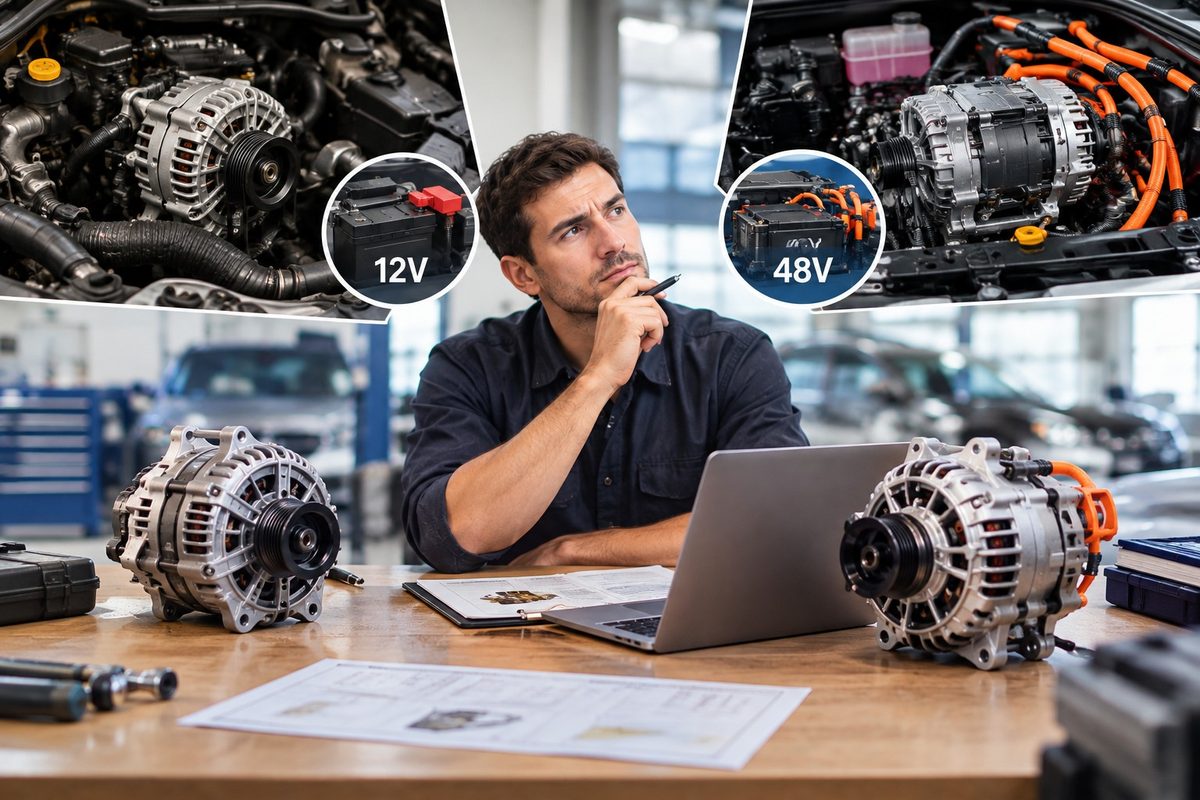
48V mild hybrid has become a mainstream configuration across European platforms. Mercedes-Benz EQ Boost, the Land Rover and Jaguar Ingenium MHEV family, Ford EcoBoost Hybrid, Volkswagen eTSI, Hyundai/Kia 48V models and Ram eTorque have all been in volume production long enough that replacement demand for 48V motors and starter generators is now rising steadily.
Compared with a conventional 12V unit, a 48V part changes three things in your risk model.
- Fitment data is more sensitive. Architectures are not even consistent inside one brand. Mercedes-Benz uses a belt-driven motor (EQ Boost) on the M264 engine and a crankshaft-integrated motor on the M256 — different mounting position, different interface, no interchangeability. Appearance and model name are not enough to judge fitment.
- Unit value is higher. A 48V starter generator typically costs several times a 12V unit, so a single mismatch or quality failure destroys more margin than the same mistake at 12V.
- System coupling is stronger. The 48V motor is one node in a mild-hybrid system that also includes the 48V lithium-ion battery, the DC/DC converter and the vehicle's control strategy. Fault diagnosis therefore needs a system view, not a parts view.
What this means for your buying process
Those three differences explain every checkpoint that follows. A 12V order can often be corrected with a single replacement unit on the next shipment. A 48V order that is wrong at the fitment level usually turns into a return, a credit note, a stranded customer and a conversation about who pays the freight. The cost of prevention sits in documents and photos; the cost of correction sits in containers.
2. OE Numbers and Vehicle Fitment: How to Avoid Buying the Wrong Unit
Similar housing, matching connector, and the unit still will not fit — the usual causes are a different OE number, a different vehicle configuration, or a different product version. The same model can use a completely different 48V unit depending on production year, engine and market specification.
Never judge fitment from a product photo or a model name. Verify four data points instead.
- OE number — the original part reference, plus the basis on which the supplier claims an alternative number replaces it.
- Vehicle data — production year, engine configuration, emissions standard and sales market.
- Product structure — connector (our alternator wiring, connectors and mounting guide covers the interface families you will meet), mounting position, fixing method and the label on the unit itself.
- Product version — model and technical specification, so that a lookalike is not treated as an interchangeable part.
Reading the nameplate: one photo covers most of the check
A unit nameplate normally carries the manufacturer mark, the OE number or a reference number (Valeo units, for example, use an A-prefixed number), rated voltage and current, a serial number and a production date. A clear nameplate photo in the RFQ lets most of the fitment check happen before anyone quotes.
Caution: some labels carry a factory-internal reference rather than the OE number. Confirm what the number means against the OEM parts catalogue before you treat it as a match. Finding it in a catalogue is what separates a verified OE number from a plausible one, which is why a proper OEM part number lookup against the vehicle maker's own data still beats any supplier's spreadsheet.
Where VIN helps, and where it stops
If the customer can supply a nameplate photo or a VIN, use it. A VIN decodes the vehicle's build configuration, which narrows the candidate part considerably — but it does not by itself prove the part-level relationship. The last step is always the same: match part numbers against the vehicle manufacturer's catalogue, then confirm against the physical label on the unit you are shipping.
The part numbers are the contract
Different model years of one engine family routinely carry different part numbers, and Land Rover parts numbering across the Ingenium range is a good example of how the same displacement and the same mounting envelope can hide a different 48V unit. Put the confirmed OE number on the order confirmation, and keep the written confirmation from both sides. Compared with one international return, that step costs almost nothing.
3. Product Type and Quality: Confirming What You Are Actually Buying
Three questions decide whether a quote is for the part you think it is: which architecture it is, what state it is in, and whose brand is on it. Answer them in that order — a price discussion held before these three are settled is a discussion about a product nobody has defined yet.
3.1 BSG/BISG versus ISG/CISG: get the terminology right first
48V naming is inconsistent, and every OEM labels the family differently. Confirm the product type before you discuss price.
The two architectures are not interchangeable: mounting position, interface and drive method all differ. A "starter alternator" and a "starter generator" are often the same physical part described by two names, while a crankshaft-integrated unit that shares the same marketing language is a different product entirely. Judge by OE number and product documentation, never by name.
| Type | Structure | Typical location | Notes |
|---|---|---|---|
| BSG / BISG | Belt-driven | Original alternator position, driven by the accessory belt | "Integrated" refers to integration into the belt drive; functionally it is usually a starter generator |
| ISG / CISG | Crankshaft-integrated | Between engine and transmission | Combines starting and generating; structure and mounting differ completely from BSG |
| 48V alternator | Generating only | — | Strictly, generating only; most passenger-car 48V systems actually use a starter generator |
3.2 New, used or remanufactured: state must be explicit
Product state drives both price and the way you describe the item to your customer. Confirm:
- whether the unit is new, used or remanufactured;
- brand, model, part number and supply source;
- whether a brand authorization letter or applicable quality documentation exists;
- whether packaging and label match the product actually delivered.
Category is not the same as quality. Alternator remanufacturing is only as good as the process behind it — which components are replaced, what is tested, and against which specification. Rebuilt alternators from a disciplined programme can be a sound commercial choice (see our comparison of rebuild versus remanufactured alternator); the same word on a trading company's price list tells you nothing. Equally, a branded new unit still needs its source verified. Clear state lets you price correctly, describe the goods accurately and avoid disputes later.
3.3 Why OE-supplier brands matter more at 48V
The electromagnetic design, power electronics and control logic of a 48V machine are far more complex than a 12V unit, and the spread between documented and undocumented product is correspondingly wider. Valeo and SEG Automotive are original equipment manufacturer parts suppliers with defined OE applications behind their 48V products, which makes provenance traceable — and traceability is the basis on which a wholesaler can stand behind the part to an end customer. Our guide to the operating principles and failure indicators of Valeo 48V units is a useful reference before you evaluate a quote.
When you buy, ask for the brand, the OE application list and source information. An authorized distributor can also provide a brand authorization letter, which is the most direct proof of a genuine channel. That is the difference between "we can supply Valeo" and "here is the document that says we are allowed to".
4. Quality, Installation and Warranty: Cutting After-Sales Cost
A 48V after-sales case is usually decided in the first 48 hours, and what decides it is the documentation the buyer can produce, not the argument. Three checks keep those 48 hours short.
4.1 A fault is not automatically a parts fault
A 48V starter generator that reports a fault is not necessarily the failed component. The mild-hybrid system around it includes:
- the 48V motor (generator or starter generator);
- the 48V lithium-ion battery;
- the DC/DC converter (48V to 12V);
- the belt drive and the wiring connections;
- the vehicle control strategy.
Any of these can interrupt system operation. When an end customer reports a fault, collect the fault codes, the installation details, the test results and photos first, then decide how to handle it on evidence. Treating "will not start" or "charging fault" as proof of a failed aftermarket alternator usually produces an unnecessary replacement and a claim nobody can adjudicate. Our guide to 48V starter generator failure symptoms, causes and diagnosis walks through the evidence to collect first.
4.2 Confirm installation requirements before shipping
Some vehicles require a dedicated diagnostic tool for system registration, initialization or a software update after a 48V component is replaced — certain Mercedes-Benz and Land Rover models have registration or matching requirements on 48V system parts. The specific procedure is defined by the vehicle's own repair information, so confirm it with the workshop before the goods leave, not after the customer calls. One sentence in the shipping notice prevents most "fitted but not working" disputes.
4.3 Warranty terms, line by line
Warranty period is only one clause of the after-sales condition. Before ordering, confirm:
- the warranty period and when it starts;
- conditions of coverage and exclusions;
- what the buyer must supply when opening a claim (photos, test results, order information);
- who bears return, replacement and freight costs.
A written process lowers the cost of every conversation and keeps your own customer's expectations manageable.
5. Stock and Supply Stability: Can the Supplier Support the Long Run?
A supplier's value is not a quote; it is the ability to keep meeting demand. A fast-moving OE number that is always out of stock damages your delivery to customers, while an order sized above real demand ties up cash and creates slow-moving inventory.
5.1 Six questions to ask every supplier
- Which of our high-turnover OE numbers are in stock, and can you confirm quantity in writing?
- What is the replenishment lead time for out-of-stock items?
- What are the price breaks by quantity, including MOQ?
- Can you supply the specified brand and model continuously, not just this once?
- How long after order confirmation do you ship?
- Can you provide product source and brand authorization documents?
Stock and lead times are only valid for the specific part number at the moment of confirmation. A supplier who can source a brand does not automatically hold every part number in that brand's range.
5.2 Red flags worth walking away from
Ask the questions, then verify the answers. Be cautious when you see:
- a quote well below market with no clear explanation of source;
- no brand/model/OE cross-reference material, and no brand authorization;
- refusal of a sample order or a small trial order;
- a personal bank account, or a request to change the receiving account mid-order;
- vague answers on whether the unit is new or remanufactured;
- no pre-shipment photo or video inspection;
- warranty promised only verbally as "we replace anything faulty", with no written terms.
5.3 How a long-term arrangement actually looks
Build a list of your high-turnover OE numbers, ask the supplier to confirm stock, price and replenishment for that list, then buy in batches matched to your actual sell-through. Good automotive distributors and automotive parts suppliers will work from your list rather than pushing whatever is in their warehouse — that is the difference between a vendor and a supply partner, and it is what keeps inventory turning without emergency air freight.
6. Total Procurement Cost: Why the Lowest Quote Rarely Wins
A unit price does not describe the cost of an order. In international purchasing, the workable measure is landed cost plus the cost of after-sales and returns.
6.1 Worked example: an 8% gap against one return
Two suppliers quote the same OE number:
- Supplier A — unit price 8% lower, full prepayment, vague warranty, no brand authorization document.
- Supplier B — unit price 8% higher, 30% deposit with the balance after pre-shipment inspection, brand authorization letter and written warranty terms.
On a USD 20,000 order, the price gap in A's favour is about USD 1,600. One fitment error that turns into an international return — two-way freight, customs, and a four to six week replacement cycle, on illustrative figures — usually costs more than the entire gap. The cheap quote is only cheaper if nothing goes wrong, and at 48V something usually does. For repair-side figures, see 48V alternator replacement cost.
6.2 The worksheet to run on every order
Total procurement cost = product value + freight and customs + actual (or historically estimated) after-sales and return cost.
Estimate the last line from your own order history, not from an industry percentage. And remember that the car alternator price you were quoted is the first line of this worksheet, not the conclusion of it.
| Cost item | Question to answer |
|---|---|
| Product | Is the unit price quoted for the same quantity, state and brand? |
| Freight and customs | Which Incoterm (EXW/DAP/DDP), freight, insurance and duty — i.e. the landed cost |
| Payment | Deposit ratio, credit terms, payment after inspection or not |
| Inventory carrying | Does the order size match your actual sell-through? |
| Return risk | Is the fitment data verified, and who pays return freight? |
| After-sales | Fault investigation, replacement shipping, and the hours spent managing the customer |
7. Transaction Safety: Payment, Inspection and Trade Terms
In cross-border purchasing, transaction risk deserves the same attention as product risk.
7.1 Payment
- With a new supplier, start with a small trial order to validate both the product and the process, then scale.
- Verify any change of receiving account by video call or phone — account-change fraud is one of the most common risks in export trade.
- Deposit ratio and terms directly affect the working capital tied up in one shipment; see the cost table in section 6.
7.2 Samples and inspection
- Order a sample before a bulk purchase and check the OE number, label, connector and packaging against the reference.
- For high-value orders, arrange third-party inspection (SGS, BV) or contract pre-shipment photo and video inspection.
- Alternators are precision components: confirm that export packaging is moisture-proof, shock-absorbing and properly secured.
7.3 Trade terms
- Agree the Incoterm and the cost split before ordering. EXW suits buyers with their own import and logistics; DAP and DDP both deliver to a named place, and the difference is who pays destination duty and clearance — the buyer under DAP, the seller under DDP.
- Confirm LCL versus FCL, plus expected transit and clearance time.
- Check destination duty rates and import requirements early; clearance delays are usually a documentation problem, not a shipping problem.
7.4 Authenticity and authorization
Ask for the brand authorization letter to confirm the genuine parts channel, and request labels, source and brand information — both for import compliance at destination and for your own customer's confidence. If a supplier cannot produce either, price is not the issue; the supply chain is.
8. Pre-Order Checklist
- Keep this as a template in your purchasing system, or print it for the buyer who signs the order. Every box should be answerable in writing before payment leaves; any box that can only be answered verbally is a gap, not a confirmation.
- Product information:
- OE number and alternative number verified
- Brand, model and product state confirmed
- Vehicle fitment and connector details checked
- Label-to-product consistency confirmed
- Supply and delivery:
- Quantity, unit price, total and price breaks confirmed
- Stock quantity or replenishment lead time confirmed
- Ship date and Incoterm (EXW/DAP/DDP) stated
- Packaging (moisture-proof, shock-proof) confirmed
- Quality and after-sales:
- Brand authorization letter and product source confirmed
- Warranty period, conditions and claim process understood
- Installation requirements (registration/coding/initialization) confirmed with the customer
- Transaction:
- Payment method and ratio confirmed
- Sample order or third-party inspection arranged
- Pre-shipment photo/video inspection arranged
- Quotation and order confirmation archived
- A checklist does not remove risk, but it surfaces the information gaps before money and goods move. For bulk orders, keep the quotation, order confirmation, product label photos and pre-shipment inspection photos together, so every unit in the field can be traced back to a document.
9. RFQ Template: Copy, Fill, Send
Not sure where to start? Copy the template below, fill in the blanks and send it — the fitment check goes faster when the first message already contains what is needed.
The three fields that decide how fast you get a usable answer are the OE number, the nameplate photo and the product state. An OE number without a photo can usually be checked against the catalogue; a photo without an OE number can often be read back to one; a quote request with neither turns into a guessing game that both sides lose. If the customer truly has no OE number, give the model year, engine code and market instead — a 2021 C200 with the M264 engine is a workable starting point, "C-Class alternator" is not.
The template is also a record. Keep the filled version next to the quotation and the order confirmation: if a fitment question comes back four months later, the information you supplied at inquiry stage is what settles it.
- OE number: (e.g. A000906XX00; if unsure, give the vehicle: 2021 C200 / M264)
- Nameplate photo: (attach if available — speeds up verification)
- Brand preference: Valeo / SEG / no preference
- Product state: new / remanufactured
- Quantity: (mixed OE numbers allowed: yes / no)
- Incoterm: EXW / DAP / DDP + destination
- Expected order date:
Conclusion: Making 48V Alternator Supply a Repeatable Business
For wholesalers and distributors, a dependable 48V procurement system has to satisfy five conditions at once: accurate fitment, traceable source, clear quality information, stable supply and written after-sales terms. None of them is expensive on its own. Missing any one of them is expensive eventually.
Fuzhihui Auto Parts supplies alternators and starting system components, and is an authorized distributor for Valeo and SEG. The range covers conventional 12V units and 48V starter generators. Every order ships with the brand authorization letter, so the product can be traced to a genuine channel.
Our order process rests on three points: OE number verification before dispatch, stock and lead time confirmed in writing, and photo inspection before shipment. Fitment verification uses TecDoc / brand catalogue data and is cross-checked against the physical label.
Valeo, SEG and related trademarks belong to their respective owners and are mentioned here only to describe product source and fitment information.
FAQ
Q1. Are BSG, BISG and ISG the same product?
No. BSG/BISG are belt-driven and sit in the original alternator position; ISG/CISG are crankshaft-integrated and sit between engine and transmission. Mounting position, interface and drive method all differ, so they are not interchangeable. The basis for any decision is the OE number and the product documentation.
Q2. Does a 48V starter generator need programming or initialization after replacement?
On some vehicles, yes. Certain Mercedes-Benz and Land Rover models require system registration or a software update with a dedicated diagnostic tool after a 48V component is replaced. Check the repair information for the specific model before shipping, and confirm with the workshop that will install it.
Q3. A customer reports a fault — how do I judge whether it is the part?
Collect fault codes, installation details, test results and photos first. A 48V system includes the motor, the 48V battery, the DC/DC converter and the control strategy, so the fault does not necessarily originate in the part. Decide on evidence and avoid unnecessary claims.
Q4. New or remanufactured — which should I buy?
Match it to your customer base and price positioning. Remanufactured units cost less, but confirm the process and test regime behind them; branded new units suit customers who need quality assurance and documentation. What matters commercially is that the state is transparent and the description is accurate.
Q5. What information should an RFQ contain?
The target OE number (or model year plus engine configuration), preferred brand, product state, quantity, and your Incoterm preference and destination. The more complete the first message, the faster the fitment confirmation and quotation.
Q6. Can I mix different OE numbers in one order? What is the MOQ?
Mixed OE numbers can be combined within one order. MOQ and mixing rules are confirmed case by case on the quotation.
Q7. How do I open an after-sales claim?
Provide the order number, product label photo, fault description, fault codes and test results. We respond with a handling proposal within the agreed time frame for that order.
Q8. How can I quickly judge whether a supplier is reliable?
Five checks: can they provide brand and OE cross-reference material; do they accept a sample order and pre-shipment inspection; is the receiving account a company account; is the warranty written; and is the quote far off market level. The red-flag list in section 5 covers the rest.
Related parts
Units from our range. Send an OE number and we will check fitment before quoting.
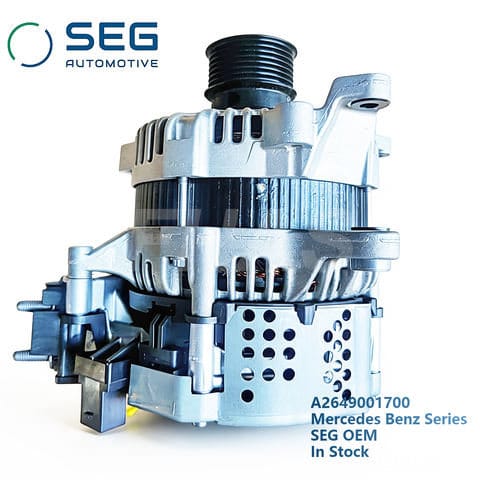 SEG Alternator 48V for Mercedes-Benz
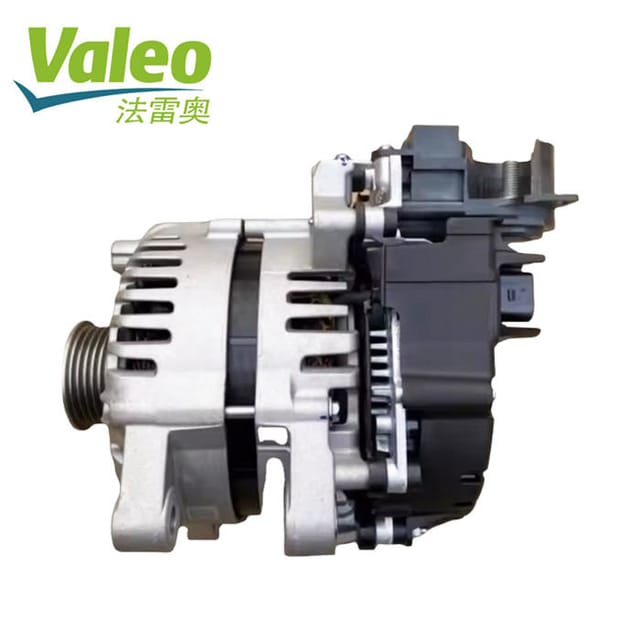 Alternator 48V 250A for Geely Hybrid (11601324)
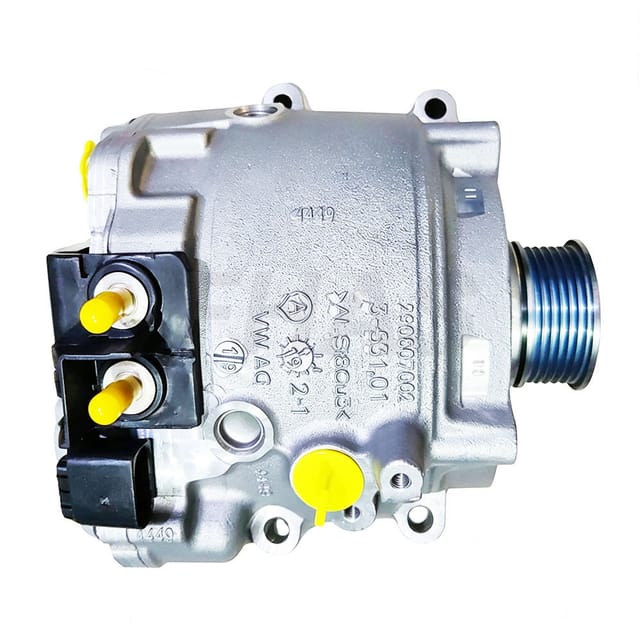 Continental Alternator 48V for Audi A6 / A7 / A8 / Q7 / Q8 Diesel — 4N0903028M
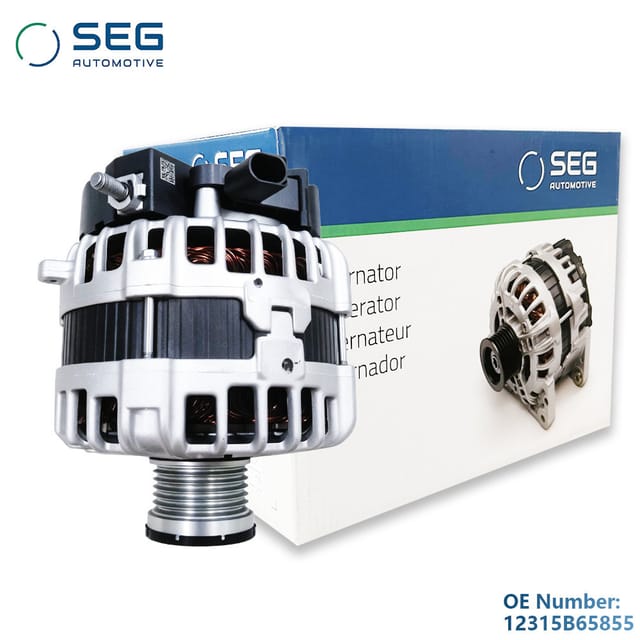 SEG Alternator 48V for BMW X7 G12 (12315B65855)
 Alternators 12V / 48V — Valeo, SEG and JHAEM Lines
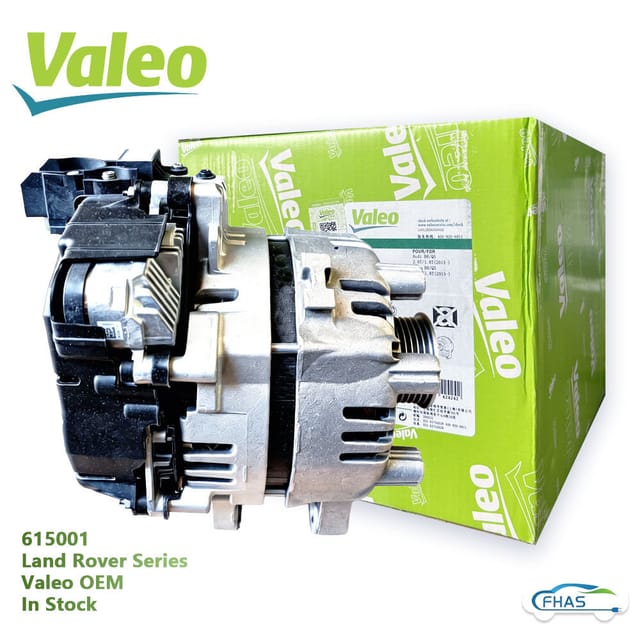 Valeo Alternator 48V for Land Rover (KPLA11A240AB)
Have a part number to price?
Send it over with the quantity and destination. You will get a fitment check, a unit price and a freight cost — usually the same business day.