
As 48V mild-hybrid technology becomes increasingly common, the traditional alternator is evolving into a more sophisticated component that supports electrical power generation, engine restarting, and energy recovery. For dealerships, repair shops, and automotive parts distributors, understanding how a 48V system works is essential for accurate diagnosis and reliable replacement. This guide explains the differences between 48V and conventional 12V alternators, the four operating modes of a mild-hybrid system, common failure indicators, and how to select a genuine Valeo replacement based on original equipment (OE) specifications.
In short
Valeo 48V starter-generators combine power generation, engine restarting, and regenerative braking in compatible mild-hybrid vehicles. Accurate OE matching and system diagnostics are essential for reliable replacement.
1. What Are the Differences Between 48V Alternators and Traditional 12V Alternators?
A conventional 12V alternator converts mechanical energy from the engine into electricity, supplying vehicle electronics and charging the 12V battery. Engine starting is generally handled by a separate starter motor.
In many 48V mild-hybrid vehicles, a belt-driven starter-generator (BSG) integrates these functions. Depending on the vehicle architecture, the BSG can generate electricity, restart the engine quickly, recover energy during deceleration, and provide additional torque during acceleration.
A conventional alternator contains several key alternator components, including a rotor, stator, rectifier, and voltage regulation system. The rotor generates a rotating magnetic field, while the stator produces alternating current. The alternator rectifier, which contains diodes, converts this alternating current into direct current suitable for vehicle electrical systems.
The voltage regulator on an alternator controls its output to maintain the required charging voltage. Some conventional designs also use an external voltage regulator, although many modern units integrate the regulation function internally.
A 48V BSG, however, uses a system-specific electrical and control architecture. Its internal design may differ considerably from that of a conventional alternator, so individual alternator parts should never be assumed interchangeable without verified application data.
Comparison of Key Parameters
The main difference is functional integration rather than voltage alone. A 48V BSG supports additional mild-hybrid functions that a conventional alternator does not provide independently. Actual power, efficiency, and service life depend on the vehicle and component design. Replacement selection must therefore follow the original equipment specification.
| Parameter | Traditional 12V Alternator | 48V BSG |
|---|---|---|
| Nominal system voltage | 12V | 48V |
| Main functions | Electrical generation and battery charging | Generation, engine restarting, energy recovery, and potentially torque assistance |
| Power capability | Conventional electrical loads | Higher-power mild-hybrid functions, depending on design |
| Energy management | Primarily conventional charging | Supports regenerative energy recovery |
| Starting system | Usually a separate starter motor | Integrated starter-generator functionality |
2. Understanding the Four Operating Modes of a 48V System at a Glance
A 48V mild-hybrid system manages energy according to driving conditions, allowing the starter-generator, battery, and power electronics to work together to improve efficiency and driving comfort.
- Suggested infographic: Four operating modes of a 48V mild-hybrid system, showing power generation, regenerative braking, boost assist, and engine-off coasting.
- Power Generation: The engine drives the BSG through a belt, generating electricity to charge the 48V battery and support the system's electrical requirements.
- Regenerative Braking: During deceleration, the BSG operates as a generator, converting part of the vehicle's kinetic energy into electrical energy stored in the 48V battery.
- Boost Assist: When additional acceleration is required, stored electrical energy powers the BSG to provide supplementary torque to the engine.
- Coasting with Engine Off: On compatible vehicles, the engine may shut down during certain coasting conditions, reducing fuel consumption while the control system manages the restart.
3. Warning Signs: When Your 48V Generator Needs Inspection
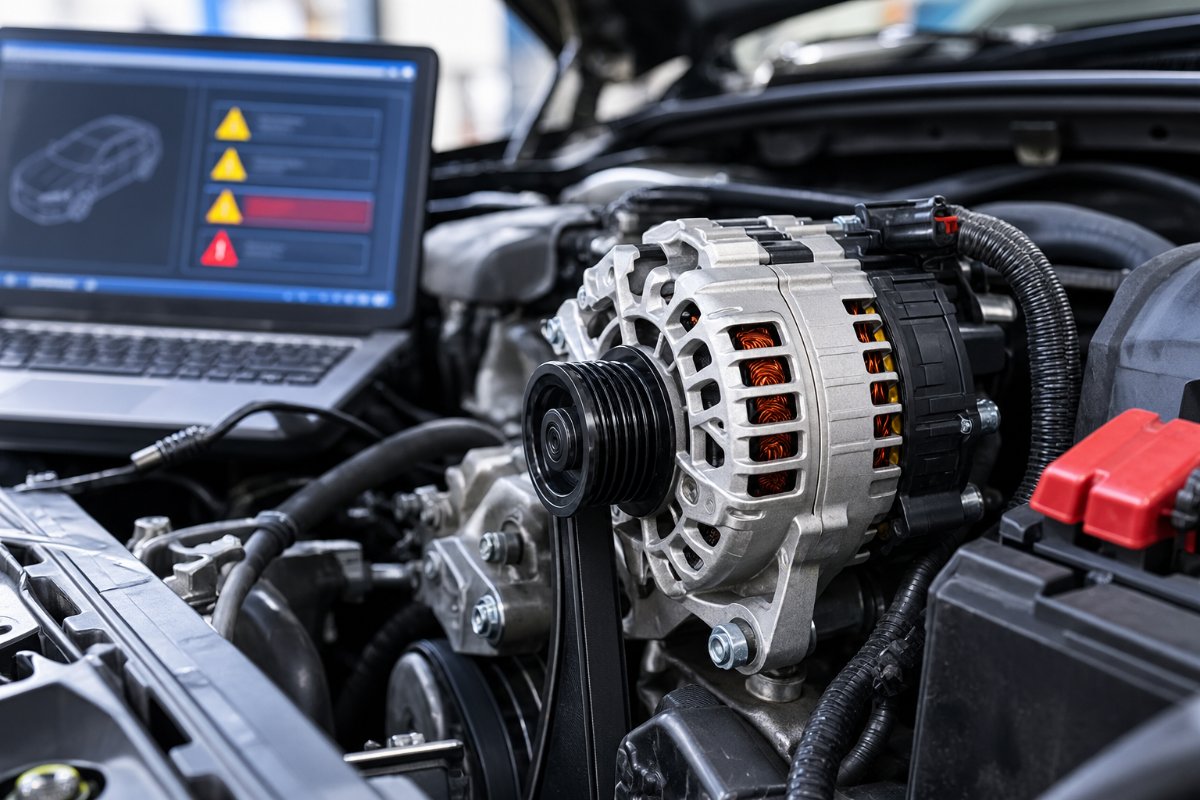
A malfunctioning 48V starter-generator can affect more than charging performance. Because the system coordinates engine restarting, energy recovery, battery management, and sometimes 12V power supply, a fault in one component may trigger warnings elsewhere.
Three Typical Symptoms
1. Frequent start-stop system failures
If the engine does not restart smoothly, the automatic start-stop function becomes unavailable, or restarting produces unusual noises, the BSG or its supporting system may require inspection. Potential causes include belt wear, tensioner problems, electrical connection faults, battery limitations, or a malfunctioning starter-generator.
2. Recurring 12V battery depletion
Repeated 12V battery discharge may indicate insufficient DC/DC converter output, a malfunctioning 48V system, excessive parasitic current draw, or a deteriorated 12V battery. Wiring faults may also contribute. Replacing the BSG without checking the batteries and converter may leave the original problem unresolved.
3. Electrical warning lights on the dashboard
Electrical-system or battery warnings should not be ignored, particularly when accompanied by starting problems. Depending on the vehicle architecture, a 48V system fault may affect 12V power availability and eventually contribute to a no-start condition.
When investigating conventional alternator problems, technicians may also inspect the alternator bearing for excessive noise or play, and check the rotor, stator, brushes, and slip rings where applicable. Worn alternator brushes or damaged slip rings can affect electrical contact, while a defective rectifier or alternator diodes may cause charging irregularities. These components are relevant to many conventional alternator designs but should not automatically be assumed to exist in the same form in every 48V BSG.
Quick Reference: Common Fault Codes
Fault-code definitions vary by vehicle and diagnostic platform. Confirm the exact description using manufacturer-specific service information. Neither code should automatically be interpreted as proof that the BSG itself has failed.
Step 1 — Record the symptoms. Note dashboard warnings, starting behavior, battery discharge frequency, and the driving conditions under which the problem occurs.
Step 2 — Scan the system. Use a compatible diagnostic tool to retrieve codes from the starter-generator, battery management, engine, and related control modules.
Step 3 — Test before replacing. Have a qualified technician inspect the 48V battery, DC/DC converter, belt drive, wiring, connectors, and BSG according to the manufacturer's procedures.
A systematic diagnosis helps distinguish a generator failure from a battery, converter, mechanical-drive, wiring, or software problem, reducing unnecessary replacements and repeat workshop visits.
| Fault code | General interpretation | Recommended diagnostic direction |
|---|---|---|
| P0CA700 | May indicate a hybrid battery discharge-current fault in certain vehicle-specific diagnostic systems | Check battery condition, current measurements, operating data, and manufacturer procedures |
| U046900 | May indicate invalid data received from a starter-generator-related control module in certain applications | Check communication, related fault codes, wiring, connectors, and applicable software updates |
4. Replacing the Generator Without the Battery? Three Components That Deserve Attention
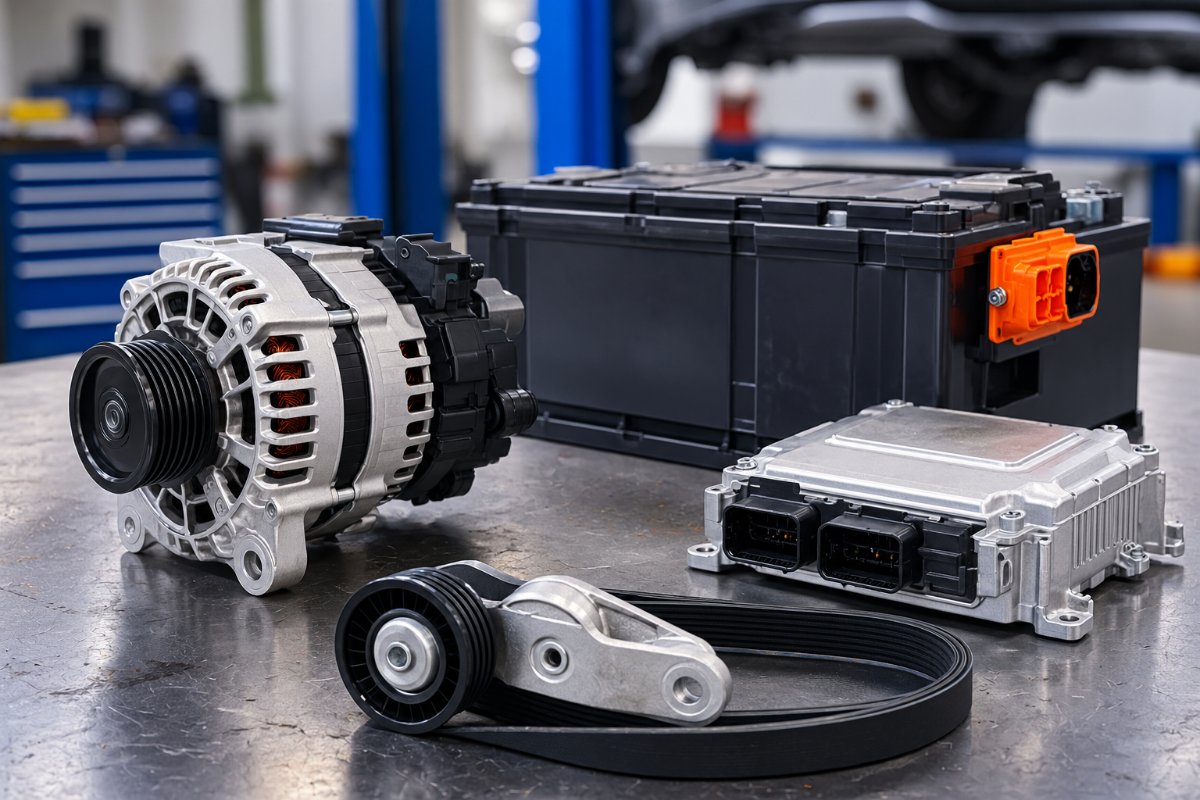
When a 48V BSG fails, replacing the generator alone may not resolve the underlying problem if the supporting system has also deteriorated. Three components deserve particular attention: the 48V lithium-ion battery, DC/DC converter, and belt tensioner.
The battery stores recovered energy and supplies power when required. The DC/DC converter transfers electrical energy between the 48V and 12V networks. The belt tensioner maintains appropriate belt tension for reliable mechanical power transfer. If the battery cannot accept or deliver energy correctly, the converter has an electrical fault, or the belt drive slips, a new BSG may continue to operate under abnormal conditions.
However, these components do not universally need to be replaced simultaneously. Inspect them and replace only those confirmed to be faulty, or those the vehicle manufacturer's repair procedure explicitly requires replacing together. Some vehicles may also require software updates, calibration, initialization, or post-repair testing.
For workshops and dealerships, the objective is not simply to install a new part but to restore the entire 48V system to its intended operating condition. Identifying the root cause before ordering components helps control costs and improves repair reliability.
5. How to Choose: A Quick-Reference Guide to Valeo's Product Line
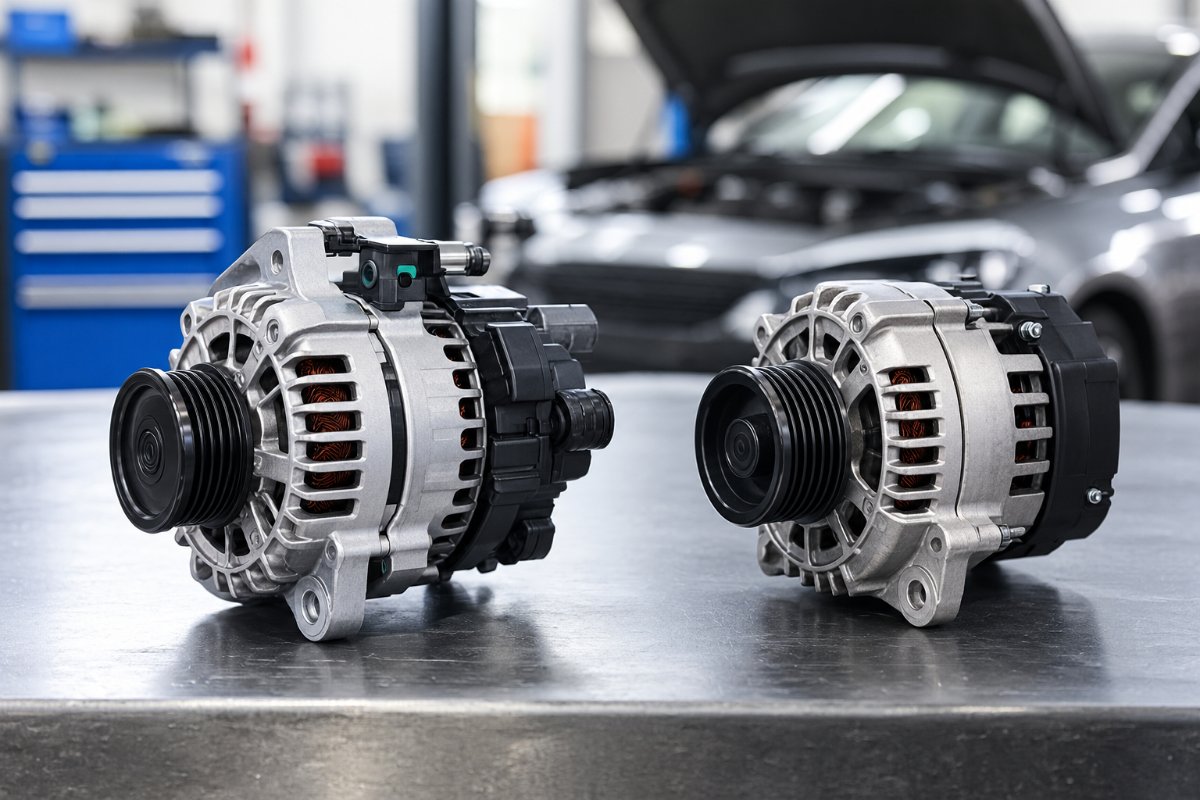
Selecting the correct Valeo unit requires more than matching nominal voltage. Product family, electrical architecture, mounting position, drive configuration, and vehicle-specific control requirements all matter.
- These product families serve different purposes and should not be treated as interchangeable. Verify exact specifications and applications against current Valeo documentation and reliable vehicle catalog data.
| Product family | General application | Key selection consideration |
|---|---|---|
| iBSG | Belt-driven starter-generator technology used in mild-hybrid applications, including 48V systems | Verify OE reference, rated performance, drive layout, and vehicle compatibility |
| i-STARS | Valeo starter-generator technology associated with 12V stop-start applications | Confirm the exact voltage and application; do not assume it can replace a 48V BSG |
| eAccess | Electric propulsion platform for selected light electric mobility applications | Confirm the complete drivetrain architecture; it is not a direct replacement for a conventional alternator |
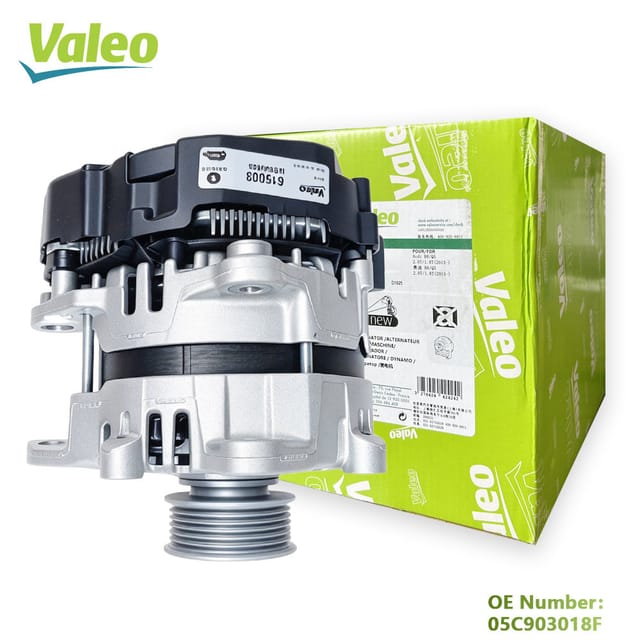
Valeo Alternator 48V 350A 6PK for Audi (05C903018F)
- OE / cross-reference: 05C903018F · 05C903018 · 05C903018G · 05C903018GX · 05C903018X · 05E903018F · 05E903018G · 05E903018GX · 5E903018G · 2740575C · 2740575D · 415003 · 415012 · 415014 · 615003 · 615012 · 615014 · IBSG4U054 · IBSG4U065
- Valeo brand line
- New condition · inspected before dispatch
PriceUS$1,254.99–1,313.99
Minimum order 2 pieces
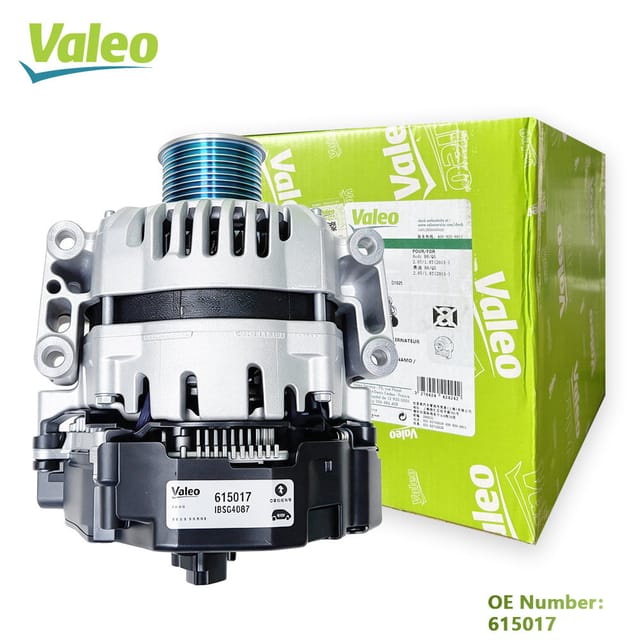
Valeo Alternator 48V 6PK for Audi A3 (615017)
- OE / cross-reference: 615017 · 06Q903018 · IBSG4W026 · 415017
- Valeo brand line
- New condition · inspected before dispatch
PriceUS$1,254.99–1,313.99
Minimum order 2 pieces
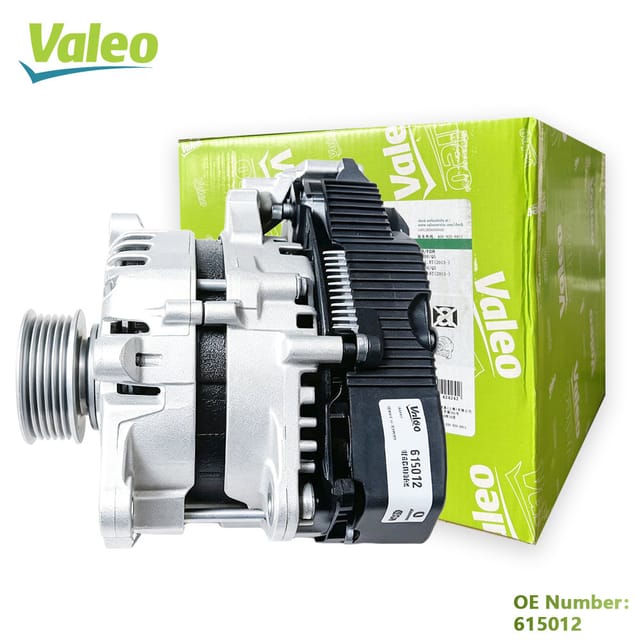
Valeo Alternator 48V 250A 6PK for Audi VW Golf (615012)
- OE / cross-reference: 05E903018F · 05E903018G · 5E903018G · 615012 · 05C903018 · 05C903018G · 05C903018GX · 05C903018X · 05E903018 · 05E903018GX · 2740575C · 2740575D · 415003 · 415012 · 415014 · 615003 · 615014 · IBSG4U054 · IBSG4U065
- Valeo brand line
- New condition · inspected before dispatch
PriceUS$957.99–1,118.99
Minimum order 2 pieces
Which Solution Fits Your Application?
Passenger cars: Prioritize a genuine Valeo BSG that matches the original OE reference and vehicle specifications.
SUVs: Check the exact model, engine, production year, hybrid architecture, and BSG configuration.
Light electric vehicles: Consider eAccess where the vehicle uses a compatible Valeo electric propulsion platform.
Why OE Matching Matters
Vehicle alternator parts and starter-generator assemblies may differ in output performance, mounting points, pulley configuration, connectors, cooling arrangements, and control requirements. A part that looks identical may not function correctly in the intended vehicle.
Before purchasing a replacement, confirm the original part number, vehicle identification number (VIN), engine specification, and applicable superseded OE references. Verify cross-references through reliable catalog data rather than visual similarity alone.
As an authorized Valeo distributor, we supply genuine Valeo 48V units for professional replacement requirements. For repair shops, dealerships, and automotive parts distributors, accurate OE matching is essential for reliable installation and long-term performance.
Conclusion
Valeo 48V starter-generators play an important role in modern mild-hybrid energy management, combining electrical generation, engine restarting, and energy recovery. Understanding their operating modes and recognizing early warning signs helps technicians diagnose faults more efficiently.
When replacement is necessary, verify the OE reference, inspect the supporting 48V system, and follow the vehicle manufacturer's installation and diagnostic procedures. Genuine parts, correct compatibility, and sound repair practices help support dependable vehicle operation and reduce repeat failures.
Frequently Asked Questions
Q1: Can a Valeo 48V alternator be installed in a vehicle with a conventional 12V electrical system?
No, not as a direct replacement. A 48V BSG is designed for a compatible mild-hybrid architecture, including the appropriate battery, power electronics, and control systems. A conventional 12V vehicle generally lacks this configuration. Always verify the specified OE replacement.
Q2: Is an alternator covered under warranty, and is there a risk of electric shock with a 48V system?
Warranty coverage depends on the product warranty, seller's terms, vehicle application, and cause of failure. For a genuine replacement unit, confirm the applicable warranty period and exclusions with the authorized supplier before purchase.
A 48V system can still present electrical, thermal, and short-circuit hazards. Follow the manufacturer's isolation procedures, use appropriate protective equipment, and have qualified technicians perform repairs. Never assume that a lower voltage makes the system safe to handle.
Related parts
Units from our range. Send an OE number and we will check fitment before quoting.
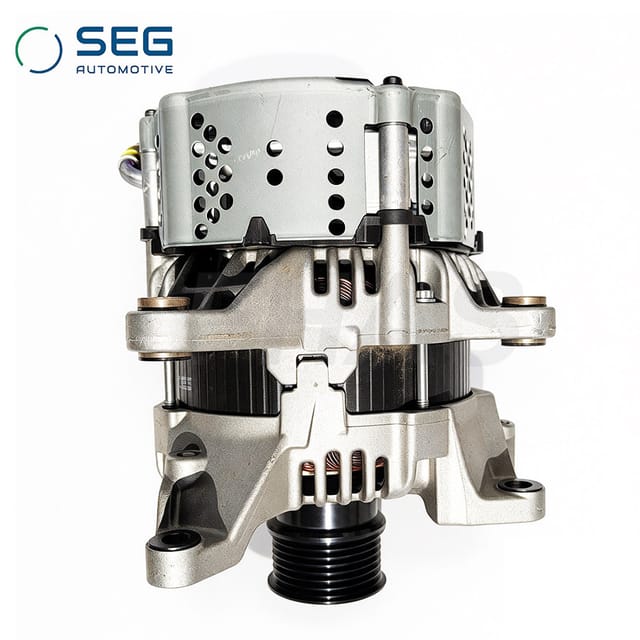 SEG Alternator 48V for Mercedes-Benz Mild Hybrid Repair (A2649001000)
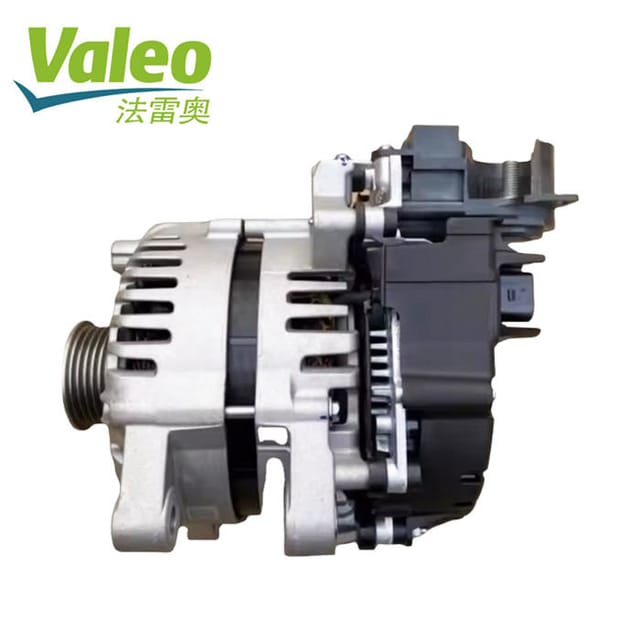 Alternator 48V 250A for Geely Hybrid (11601324)
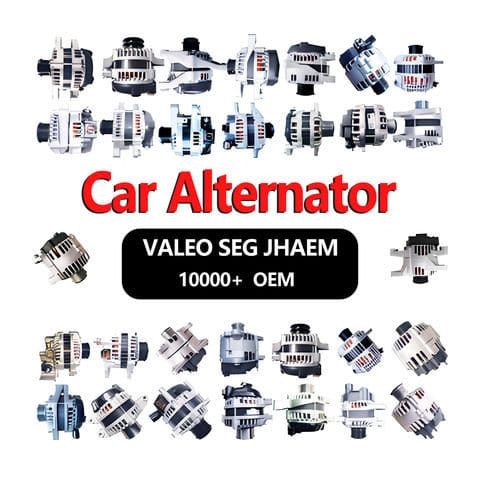 Alternators 12V / 48V — Valeo, SEG and JHAEM Lines
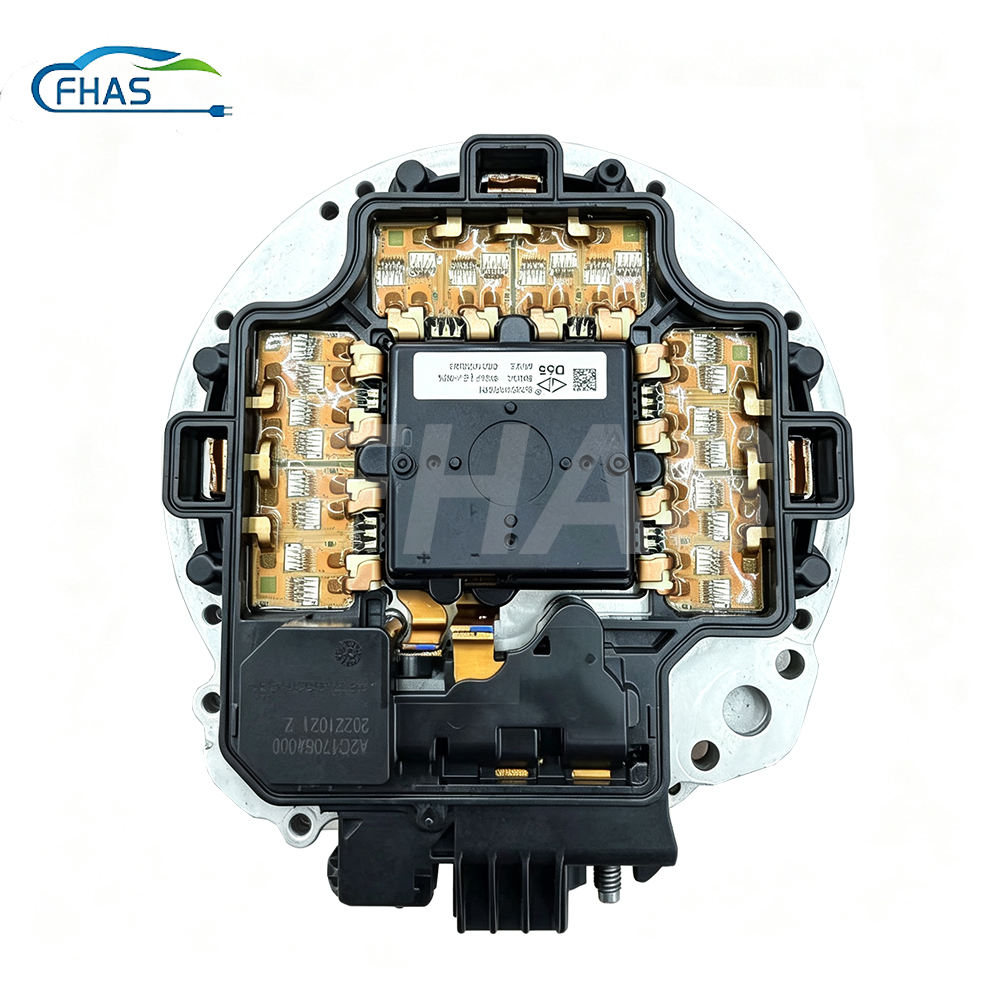 4N0903028P 4N0903028N 4N0903028J 4N1903028 Audi 48V Water-Cooled Alternator Computer Board
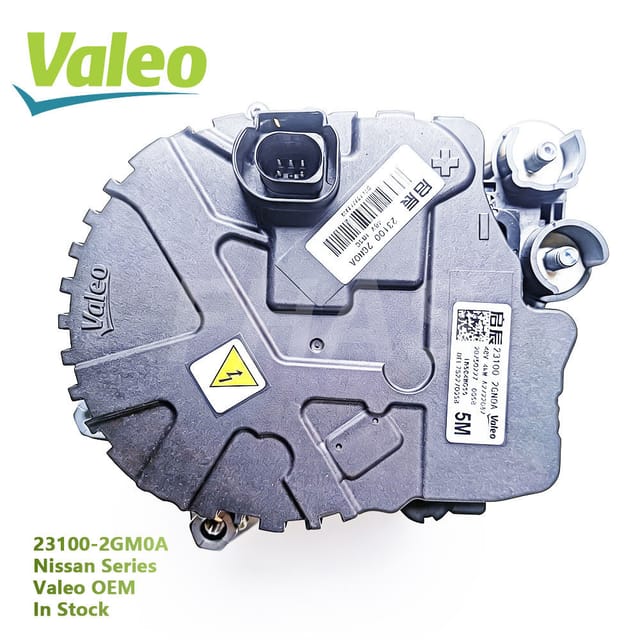 Valeo Alternator 48V for Nissan / Venucia (23100-2GM0A)
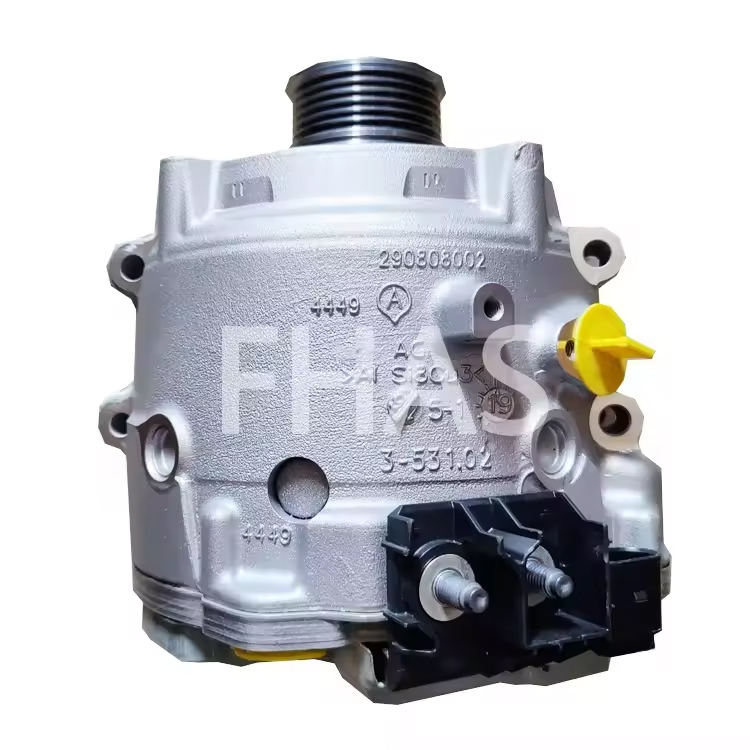 Continental Alternator 48V for Audi A6 / A7 / A8 / Q7 / Q8 gasoline — 4N0903028P
Have a part number to price?
Send it over with the quantity and destination. You will get a fitment check, a unit price and a freight cost — usually the same business day.