
This article is about the charging circuit itself — how current actually flows, why the alternator replaced the DC generator, and how long a battery survives alone. The reader asking does an alternator charge the battery is asking about the loop, not about a fault.
In short
Yes — the alternator charges the battery whenever the engine runs. The regulator holds output between roughly 13.5 and 14.5 V, above the battery's resting voltage, and pushes current in through the B+ terminal. Without the alternator, the battery alone carries every load and drains until the engine stops.
How the Alternator Charges the Battery
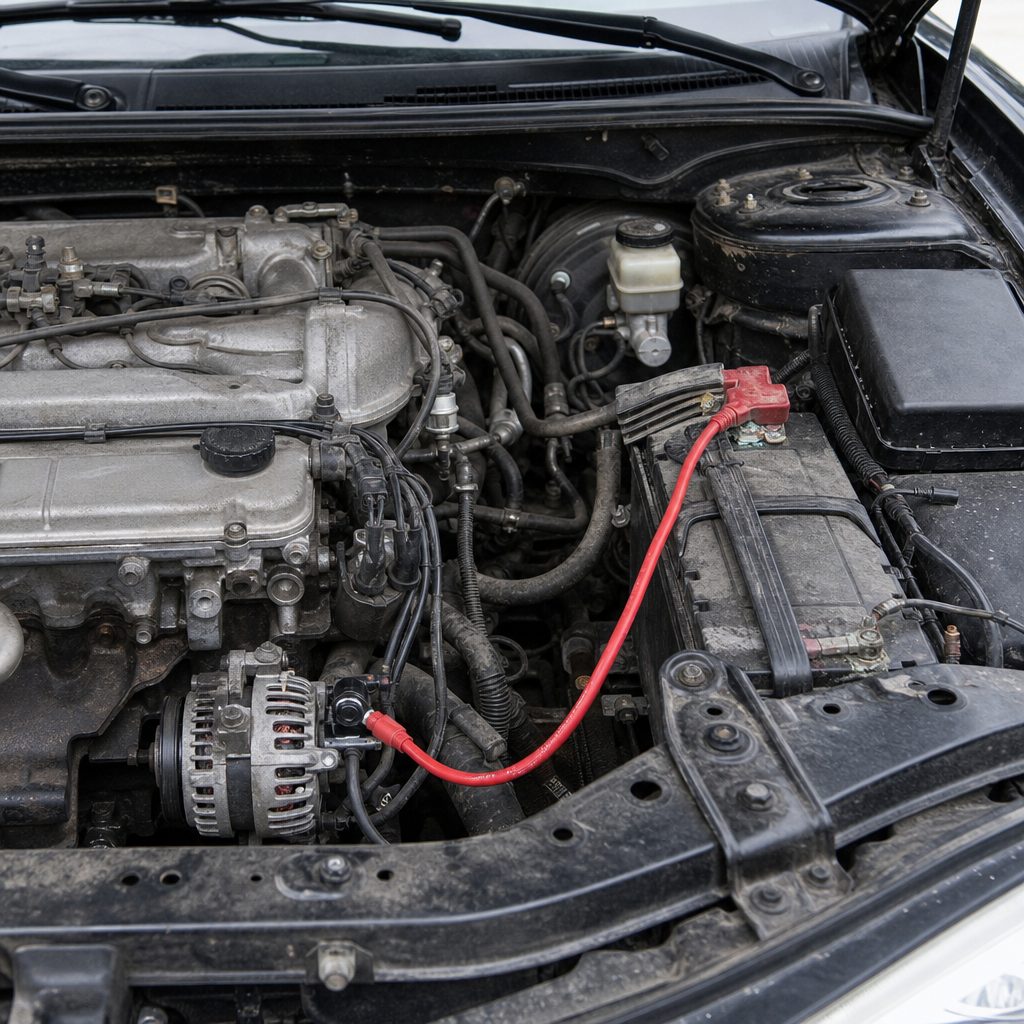
The alternator makes three-phase alternating current and converts it to direct current internally. A rectifier bridge — six diodes, one for each half-phase — turns the AC into a lumpy DC, and a smoothing effect from the battery and system capacitance flattens the rest. The regulator then controls field current to the rotor so that output voltage stays in a window, typically around 13.5–14.5 V on a conventional system. That window is not arbitrary: it must sit above the battery's open-circuit voltage, which is about 12.6 V for a fully charged 12 V lead-acid battery, or no charging current would flow at all, and below the gassing voltage of roughly 14.8 V where the electrolyte starts breaking down. Everything the regulator does happens inside that band.
Current flows in through the heavy B+ stud on the back of the unit. The positive cable from the alternator runs to the battery positive, either directly or through a fusible link or mega fuse, and the circuit completes through the engine block and body back to the battery negative. The battery sits in parallel with every load, so while the engine runs, the alternator supplies the loads and any surplus goes into the battery. When demand is high at idle, the battery may briefly supply part of the load, and the alternator refills it when rpm rise. So the question how does the alternator charge the battery has a short answer: by holding a voltage above the battery's own, through a rectified three-phase machine and a regulator. Shorter phrasings of the same question — does alternator recharge battery power, does car alternator charge battery banks while driving, or the plain alternator charge battery loop — all describe this same circuit, and can alternator charge battery health back from a discharge has the same answer with one caveat: it maintains rather than bulk-charges.
The battery's role in this loop is storage, not generation. It starts the car and it buffers loads at idle; it does not make electricity. Drivers who notice the headlights brighten when the engine is revved are watching the alternator take over from the battery in real time — the system voltage rising as output climbs with rpm. The two devices are complements: asked does the alternator recharge battery power that the starter drew, yes, that is exactly the daily cycle. Each start removes a small amount of charge, and the first minutes of running put it back. Shorter phrasings — alternator charges battery, alternator charges the battery, car alternator charge battery drained by cranking — are all the same daily loop described at different lengths, and the mechanism never changes: voltage held above resting, current pushed in through B+.
Alternator vs Generator: Why the Car Moved On
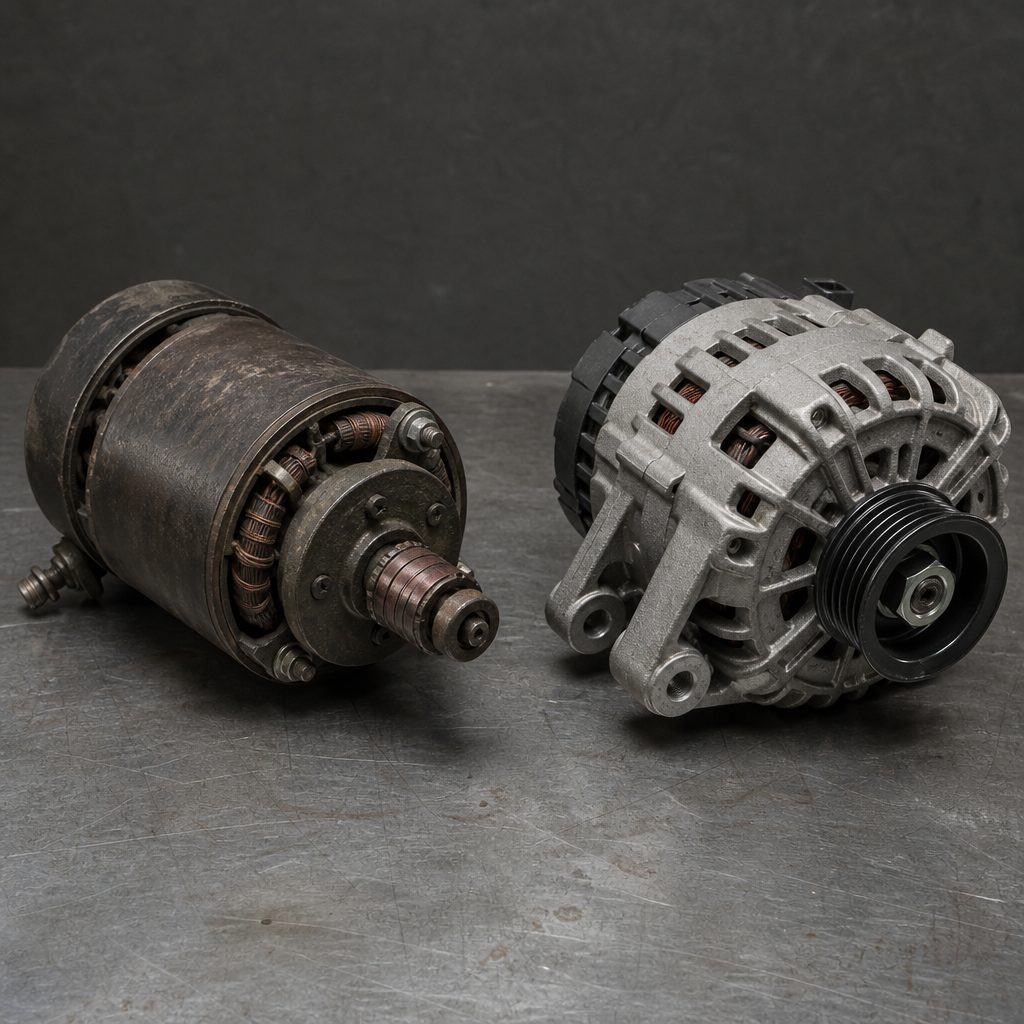
The older device was a DC generator, or dynamo. A dynamo vs alternator comparison is really a comparison of three engineering constraints, and the alternator wins all three. First, a dynamo's commutator and brushes must carry full output current, so they wear and spark; an alternator's brushes carry only the small field current (a few amps), while the main output passes through silicon diodes with no moving contact at all. Second, a dynamo cannot make useful charging current at idle rpm — it needs engine speed to reach usable output — while an alternator with its higher pole count and the multiplication of the pulley ratio delivers a meaningful share of its rating at idle. Third, a dynamo is heavier for the same output.
The term "generator" is a generic word for any machine converting mechanical energy to electrical energy, which is why alternator vs generator is a confusing search: technically an alternator IS a generator — specifically, an AC generator. In everyday automotive usage "car generator" now usually means the alternator, and the old DC machine is distinguished as a dynamo or DC generator. The generator alternator difference that matters to a reader is this: modern vehicles, smart charging included, use alternators exclusively; the DC generator survives only in vintage vehicles. A car generator vs alternator swap on a classic car is a common upgrade precisely because the alternator charges at idle where the dynamo does not.
Every phrasing of the comparison lands on the same three facts. Alternators vs generators is a question about brushes and commutators; dc generator vs alternator is a question about idle output; auto alternator vs generator is the workshop phrasing of the same comparison. None of them change the engineering: the dynamo carries its full output through a wearing commutator, the alternator carries it through diodes, and only one of them charges at idle.
How Long a Battery Lasts Without an Alternator
The honest answer is a range, not a number, because it depends on the battery's state of charge and the electrical load you allow. A healthy, fully charged battery in a modern gasoline car running minimal loads — no headlights, blower off, heated screens off — can keep the engine and its fuel and ignition systems alive for a meaningful distance; the engine stops when battery voltage falls below what the electronics need to function. Add headlights and a blower in rain, and the drain rate multiplies several times over. Diesel engines with high-compression restarts and vehicles with electric power steering drawing at low speed drain faster still.
The failure mode at the end is worth understanding. As the battery discharges, its terminal voltage falls; the engine management needs a minimum voltage to keep injectors and coils firing, and when it drops below that threshold the engine cuts out rather than running progressively worse. If you are ever in this situation: switch off every load you can, avoid stopping the engine if it is still running, and head somewhere the car can be charged and diagnosed. And do not simply install a fresh battery and continue — a battery that has been deeply discharged may be sulfated and permanently reduced in capacity, and the cause of the discharge still needs to be found.
Every phrasing of the survival question has the same shape. How long will a car battery last without an alternator and how long would a car battery last without an alternator are the same question asked with different grammar, and how long will car battery last without alternator is the same question with the articles dropped — the answer is a range set by load and charge state, not a fixed figure. The meter — not the calendar — tells you when it ends.
Idle Charging and the RPM Question
Charging at idle is the alternator's hardest moment, and this is where the pulley ratio earns its keep. Because the alternator spins faster than the engine — the pulley ratio is deliberately geared up, commonly around three to one — the machine is already turning at a few thousand rpm when the engine is idling at seven or eight hundred. Output at idle is typically a fraction of the rated figure, and the regulator may be field-limited there. This is why city driving with heavy accessory loads ages batteries faster than highway driving: the average state of charge drifts down over weeks of short trips.
Whether the alternator charges while idling is therefore yes — does the alternator charge the battery when idling, does the alternator charge the battery while idling, both — but with less authority than at speed, and modern systems manage it. On vehicles with computer-controlled charging, the engine computer may raise idle rpm when demand is high, or momentarily reduce field current during acceleration to free torque. The practical takeaway for a workshop or fleet buyer: if a vehicle's duty cycle is mostly idle — taxis, delivery, police — the output curve at idle, not the peak rating, is the specification that matters. That is also how fast does a car alternator charge the battery in practice: quickly at cruise, slowly at idle, and only ever as fast as the regulator allows. The shorter phrasing — how fast does alternator charge battery capacity back — asks the same thing and gets the same answer: the rate follows rpm and regulator, so the honest figure is a curve, not a number. And for the reader who asks how does an alternator charge a battery so quickly after a start, the mechanism is the same three-phase rectified machine delivering its largest current exactly when voltage difference is greatest — in the first minutes after the starter's draw.
What Can Go Wrong in the Loop
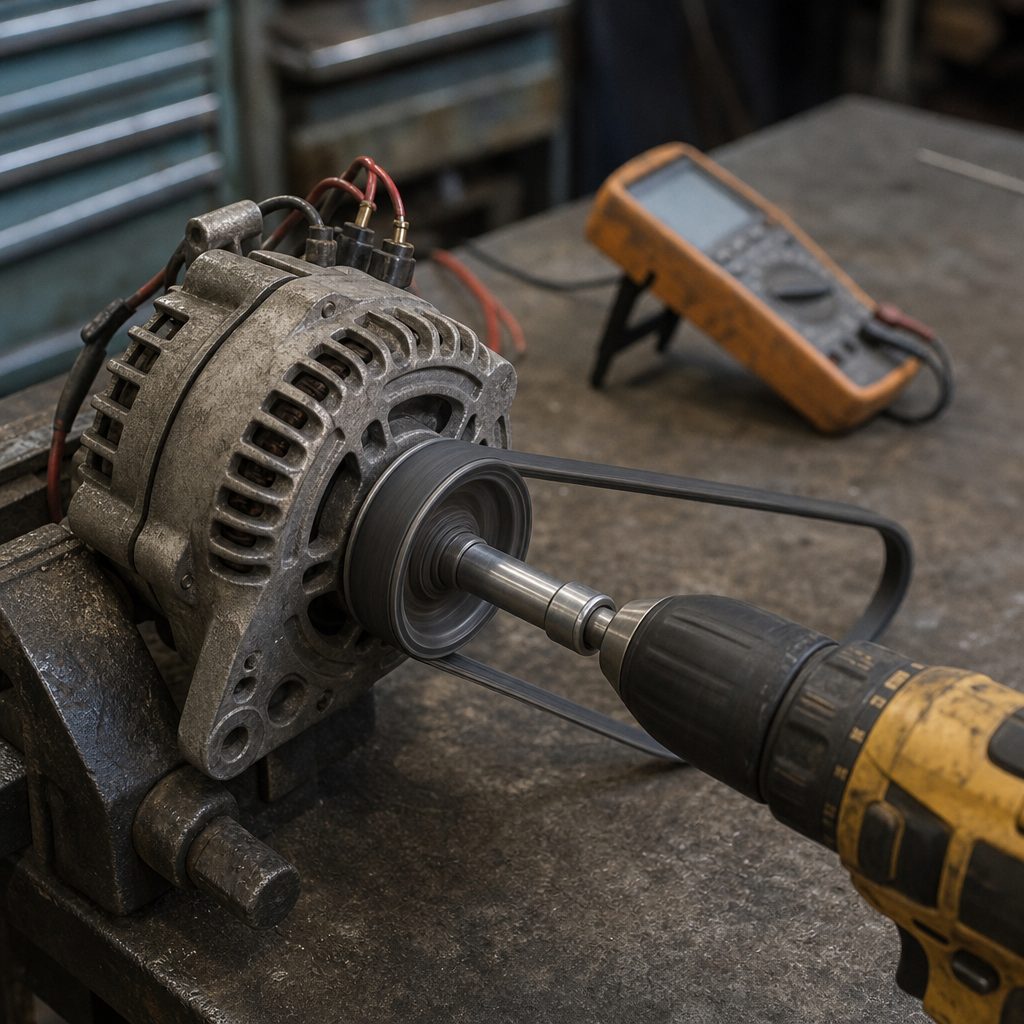
The loop fails in more places than the alternator itself, and knowing them prevents replacing healthy parts. The B+ cable and its fusible link corrode and develop resistance, which shows up as a charge that never completes even though alternator output is healthy at the stud. The ground path — engine block to body, battery negative to chassis — carries the return current, and corrosion there produces the same symptom. The belt can slip under load, spinning the alternator below the rpm it needs. And the regulator, whether internal or computer-commanded, can fail high (overcharging, boiling the battery) or low (undercharging, slow battery decline).
Diagnosis therefore runs around the loop, not straight at the part: measure charging voltage at the battery under load, then voltage drop across the ground and B+ paths while current flows, then belt condition and tension, and only then condemn the unit. A replacement alternator installed on a vehicle with a corroded B+ terminal will show the same complaint within days — not because the part failed, but because the loop was never repaired.
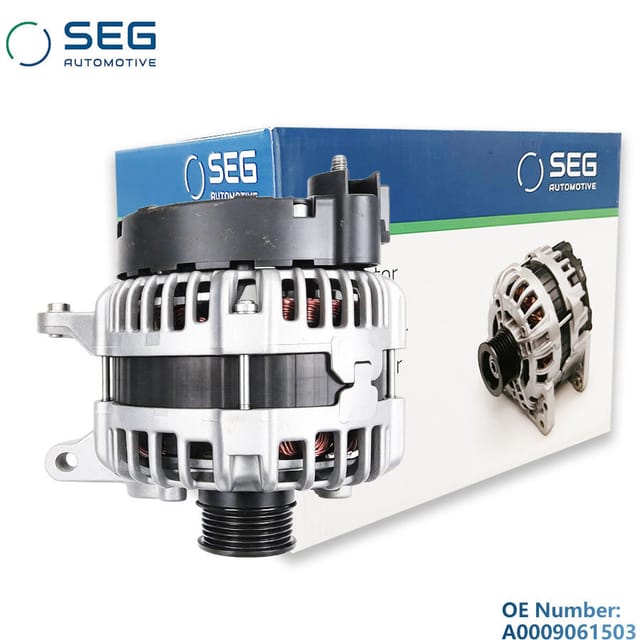
SEG Alternator 12V for Mercedes-Benz E / C-Class (A0009061503)
- OE / cross-reference: A0009061503 · A0009060922 · 23100-4HH3A
- SEG brand line
- New condition · inspected before dispatch
PriceUS$187.99-194.99
Minimum order 2 pieces
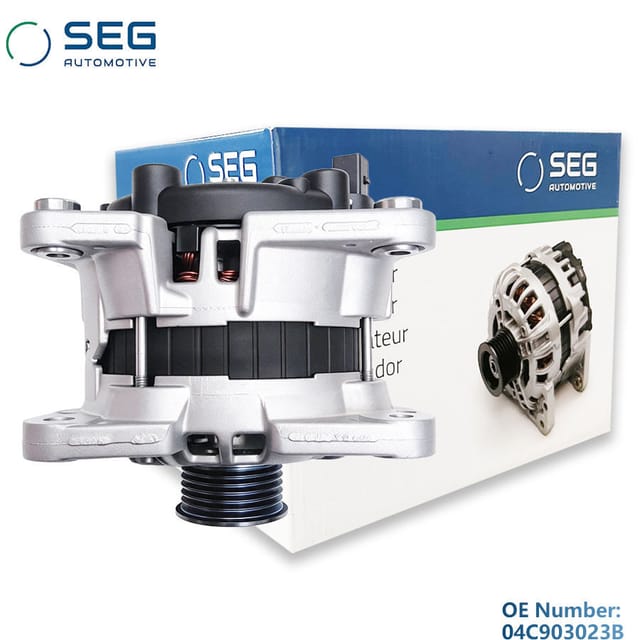
SEG Alternator 12V for Volkswagen Santana (04C903023B)
- OE / cross-reference: 04C903023B · F000BL06A0 · 04E903025P
- SEG brand line
- New condition · inspected before dispatch
PriceUS$60.99-64.99
Minimum order 2 pieces
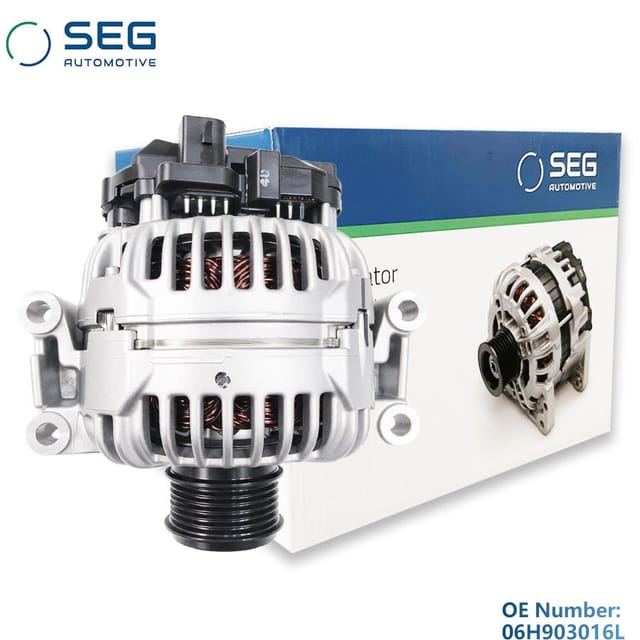
SEG Alternator 12V for Audi A5 (06H903016L)
- OE / cross-reference: 06H903016L · 525226 · 0124525113
- SEG brand line
- New condition · inspected before dispatch
PriceUS$174.99-180.99
Minimum order 2 pieces
FAQ
Does the alternator charge the battery while the engine idles?
Yes. Output at idle is a fraction of the rated figure because the machine turns slower, but the regulator still holds system voltage above battery voltage, so charging current still flows. Heavy accessory loads at idle can momentarily pull the battery into the load, and the alternator refills it when rpm rise.
Will a car run with a failed alternator?
Yes, on battery alone, until voltage falls below what the fuel and ignition electronics need. Distance depends on battery charge and load — minimal loads stretch it, headlights and blower shrink it. The engine cuts out when the threshold is crossed, rather than running progressively worse.
Is an alternator the same as a generator?
Technically an alternator is a type of generator — an AC one. Automotive usage keeps the word "generator" for the old DC machines, which needed engine speed to charge and wore their commutator brushes. Every modern vehicle uses an alternator, whose diodes carry the output current instead of brushes.
Can I charge a dead battery by driving?
Only partially, and only if the battery is still serviceable. An alternator is designed to maintain a charge, not to bulk-charge a dead battery. Driving with a deeply discharged battery overworks the alternator and may not restore full charge; charge it properly on a charger first, then let the alternator maintain it.
Does disconnecting the battery test the alternator?
No — that test is outdated and unsafe on modern cars. With the battery disconnected, the alternator runs unloaded and voltage can spike, damaging electronics. The correct test is measuring charging voltage at the battery with the engine running and loads on.
What is the difference between a dynamo and an alternator?
The dynamo is a DC generator whose commutator and brushes carry full output current; it wears quickly and produces little at idle. The alternator rectifies AC through diodes, carries only field current through its brushes, and charges meaningfully at idle. Vintage cars ran dynamos; every modern car runs an alternator.
How often does the battery actually need recharging?
Every start draws down the battery slightly, and the first minutes of driving restore it. A vehicle used mostly for short trips never fully recharges between starts, so state of charge drifts down over weeks. Periodic longer runs, or an overnight charge, keep the battery healthy.
Related parts
Units from our range. Send an OE number and we will check fitment before quoting.
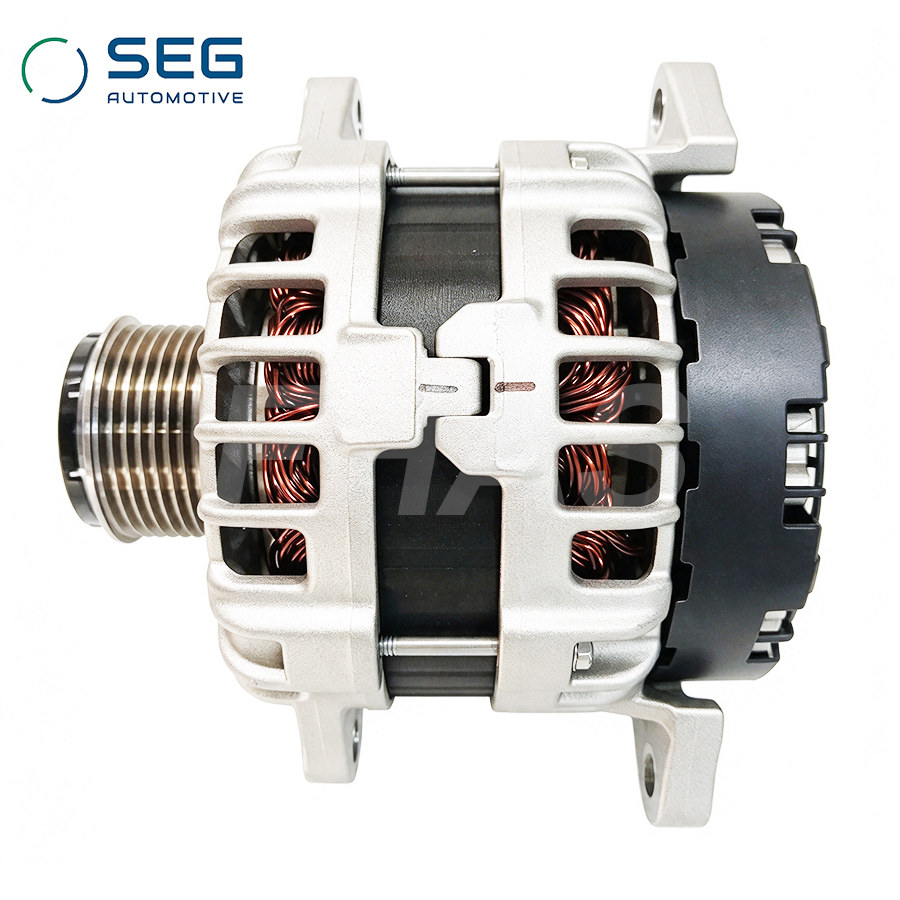 SEG Alternator 12V for Dongfeng Yufeng 3.0 Repair (23100-A084A)
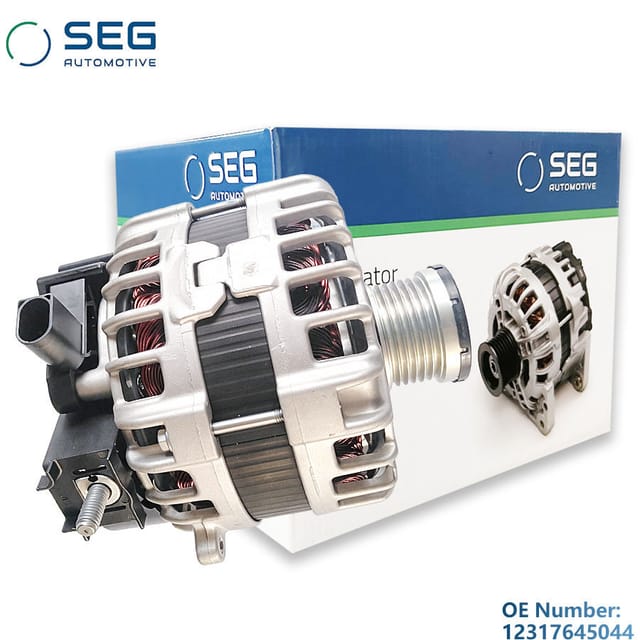 SEG Alternator 12V 180A for BMW 3 Series (12317645044)
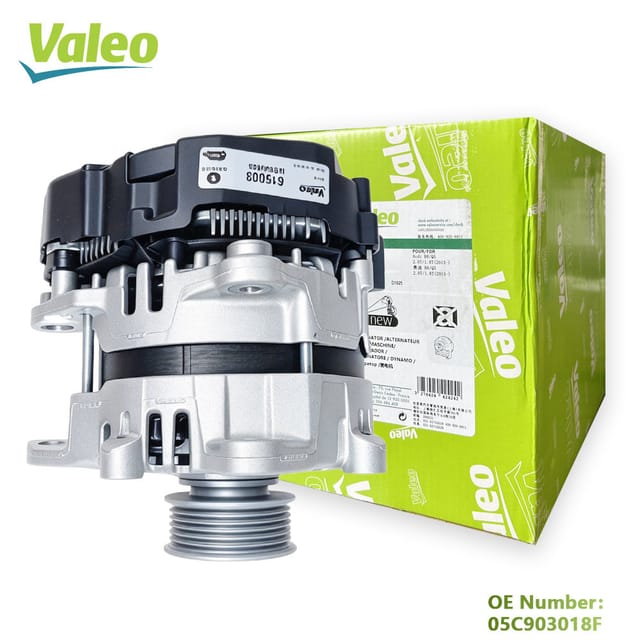 Valeo Alternator 48V 350A 6PK for Audi (05C903018F)
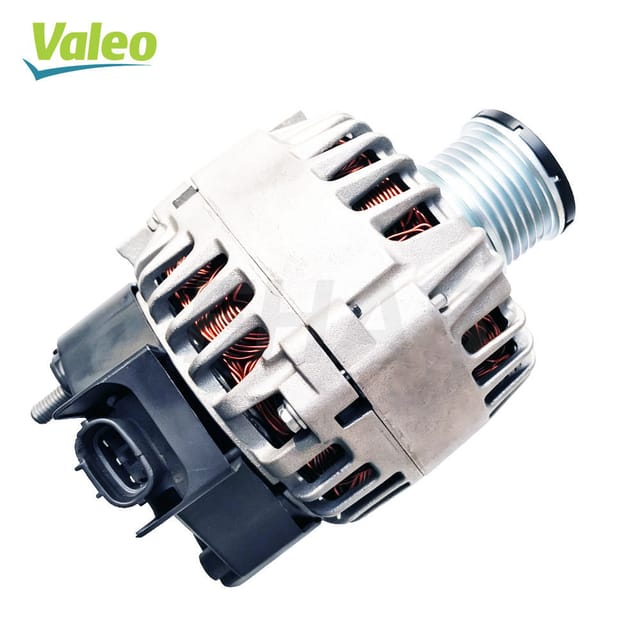 Valeo Alternator 12V 110A for Nissan Sylphy (23100-3RA2B)
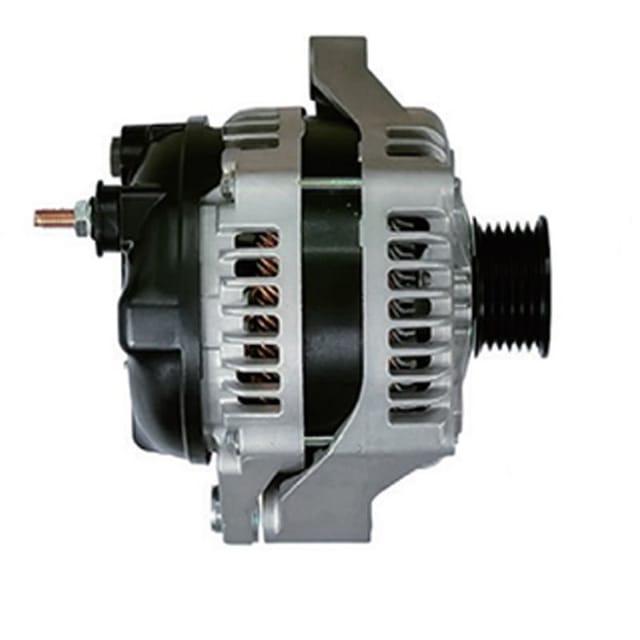 Alternator 12V 150A for Maserati 4.2 / 4.7 (104210-3960)
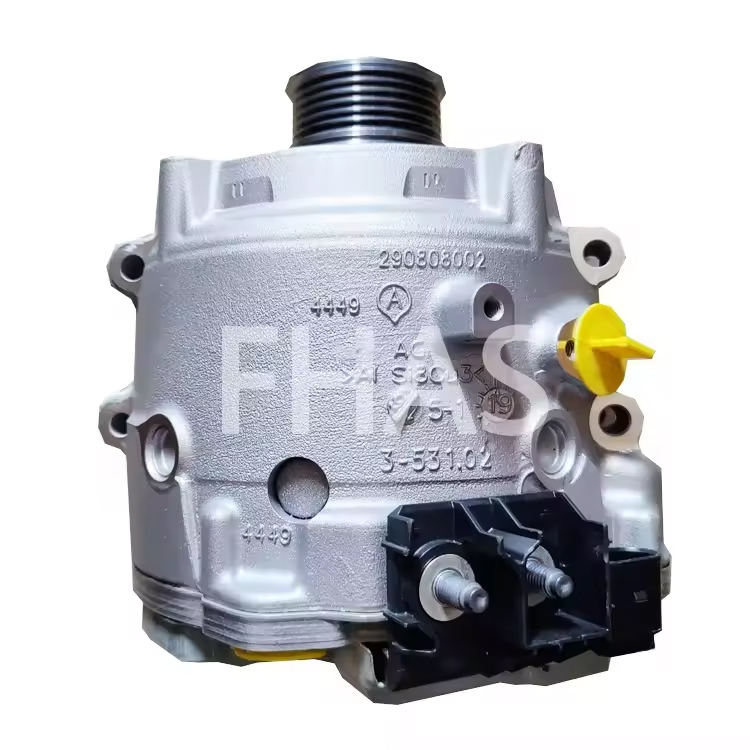 Continental Alternator 48V for Audi A6 / A7 / A8 / Q7 / Q8 gasoline — 4N0903028P
Have a part number to price?
Send it over with the quantity and destination. You will get a fitment check, a unit price and a freight cost — usually the same business day.