
This article is a parts-identification guide. The reader is ordering a pulley or an alternator and needs to know which type the vehicle uses, how to tell them apart on the bench, and what happens if the wrong type is fitted. It is written from the parts counter's point of view: the box has arrived, or is about to, and the question is whether it matches what came off the engine.
In short
Not every alternator pulley is a plain solid wheel. Modern units use overrunning alternator decoupler pulleys or one-way clutch pulleys that let the rotor freewheel against belt flutter. The types are not interchangeable, and fitting the wrong one causes belt chirp, vibration, and early bearing failure. Identify what is on the car before ordering.
The Three Pulley Types and How to Tell Them Apart
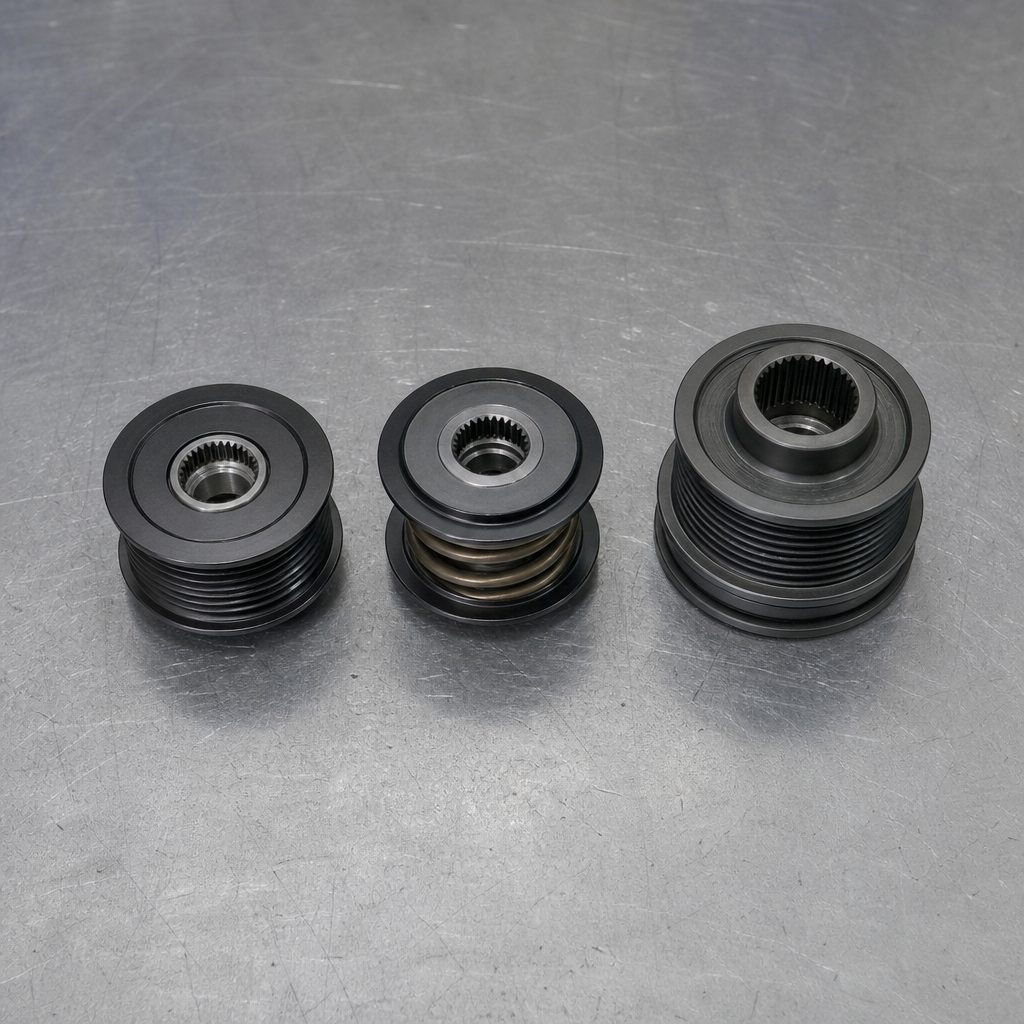
The solid pulley is the traditional type: a single machined wheel, rigidly connected to the rotor shaft. It is still correct for many vehicles and is the default on simpler charging systems. You identify it by behavior — spin it by hand with the belt off and the whole rotor turns, because there is no free motion between pulley and shaft. Its grooves are matched to the belt: a v belt alternator pulley carries a single V-groove (or two, on a double v belt pulley for older high-load installations), while a serpentine pulley carries multiple narrow ribs — typically four to seven — matching the rib count of the serpentine belt pulleys it runs with.
The counter vocabulary is noisy but resolves to type and groove. Pulley alternator listings, alternator pulleys stock, and a generator pulley for an older unit are all the same part family described from different directions — the identifying facts are always which clutch function and which groove cut. A double v belt pulleys setup shares drive across two grooves; a micro v belt pulley is the multi-rib profile that serpentine belts engage; a v belt pulley belt pairing is the older trapezoidal system. An alternator v belt pulley for an older charging system is the same single-groove wheel specified against the shaft and groove angle, and a v belt alternator pulley in a listing is the same part with the words reversed — type and groove are still the only two facts. Whatever the listing calls it, the two questions at the counter do not change: solid or clutch, and how many grooves or ribs.
The overrunning alternator decoupler, or OAD, adds two functions in one package: a one-way clutch and a spring-damped isolation system. Inside the pulley is a set of springs and a clutch mechanism, which lets the pulley overrun the rotor when engine speed drops suddenly — absorbing the torsional spikes that a rigid pulley transmits into the belt — and damps the small speed differences the accessory drive sees every combustion cycle. You identify an alternator decoupler pulley on the bench with a simple check: hold the alternator firmly, spin the pulley in the drive direction and it should turn the rotor; spin it the opposite direction and it freewheels with a faint ratchet feel. The spring damping is what distinguishes a true OAD from a simpler overrunning clutch pulley, and the distinction matters at the parts counter because the two are not interchangeable even when they share a spline.
The one-way clutch pulley — often called an alternator clutch pulley — is the lighter cousin of the OAD: it has the overrunning function without the full spring-isolation system. It freewheels in the non-drive direction like an OAD, but transmits drive more directly. Its service behavior differs in a way a buyer can feel: a worn clutch pulley often locks up solid (losing its overrun function, so belt flutter returns) or goes completely free (so the alternator stops charging), while a worn OAD more often announces itself as a rattling or buzzing noise at idle that disappears with rpm. The check tool for either type is the same alternator decoupler pulley tool that removes and refits them — a hex socket through the center and a counter-hold on the shaft. Listing names flip the words — an alternator pulley clutch, a clutch pulley alternator variant — but they all describe this same one-way mechanism; the specification, not the word order, is what identifies the part.
Why the Types Exist and What Fitting the Wrong One Does
The engineering reason for decoupling is belt dynamics. A rigid pulley forces the alternator rotor to follow every instantaneous speed change of the crank pulley. The rotor is a heavy flywheel relative to the belt, and the crankshaft accelerates and decelerates slightly with every firing pulse. On a rigid drive those pulses hammer the belt; at high rpm the belt actually vibrates in spans, and the tensioner oscillates trying to compensate. The OAD decouples the rotor from those pulses — the clutch lets the rotor keep spinning smoothly while the pulley slows, and the springs absorb the difference — which is why a vehicle engineered for an OAD runs measurably quieter and its belt and tensioner last longer.
Fitting the wrong type reverses those benefits with interest. A solid pulley on a vehicle engineered for an OAD transmits every torsional pulse into the belt: the symptoms are belt chirp on startup, visible tensioner oscillation, and accelerated wear on the belt, the tensioner pulley assembly, and eventually the alternator front bearing. A one-way clutch where an OAD belongs removes the spring isolation, so the high-frequency vibration the springs were absorbing returns as noise and tensioner wear. And an OAD where a solid pulley belongs adds compliance the drive was not designed for — belt flutter and alternator under-speed at idle. The rule at the counter is absolute: match the type the vehicle left the factory with, verified against the OE number, not against appearance.
There is a second, quieter failure mode worth knowing before ordering: the pulley that looks fine but is functionally dead. A decoupler can seize solid or freewheel permanently while looking cosmetically perfect. The bench check above — drive direction engages, opposite direction freewheels, no roughness — takes seconds and should be done on any used unit before it is reinstalled or resold. On the vehicle, a seized decoupler mimics a bad belt tensioner; the distinguishing test is to watch the tensioner arm at idle, because a tensioner compensating for a dead decoupler oscillates visibly.
Serpentine and V-Belt Systems: Matching the Grooves
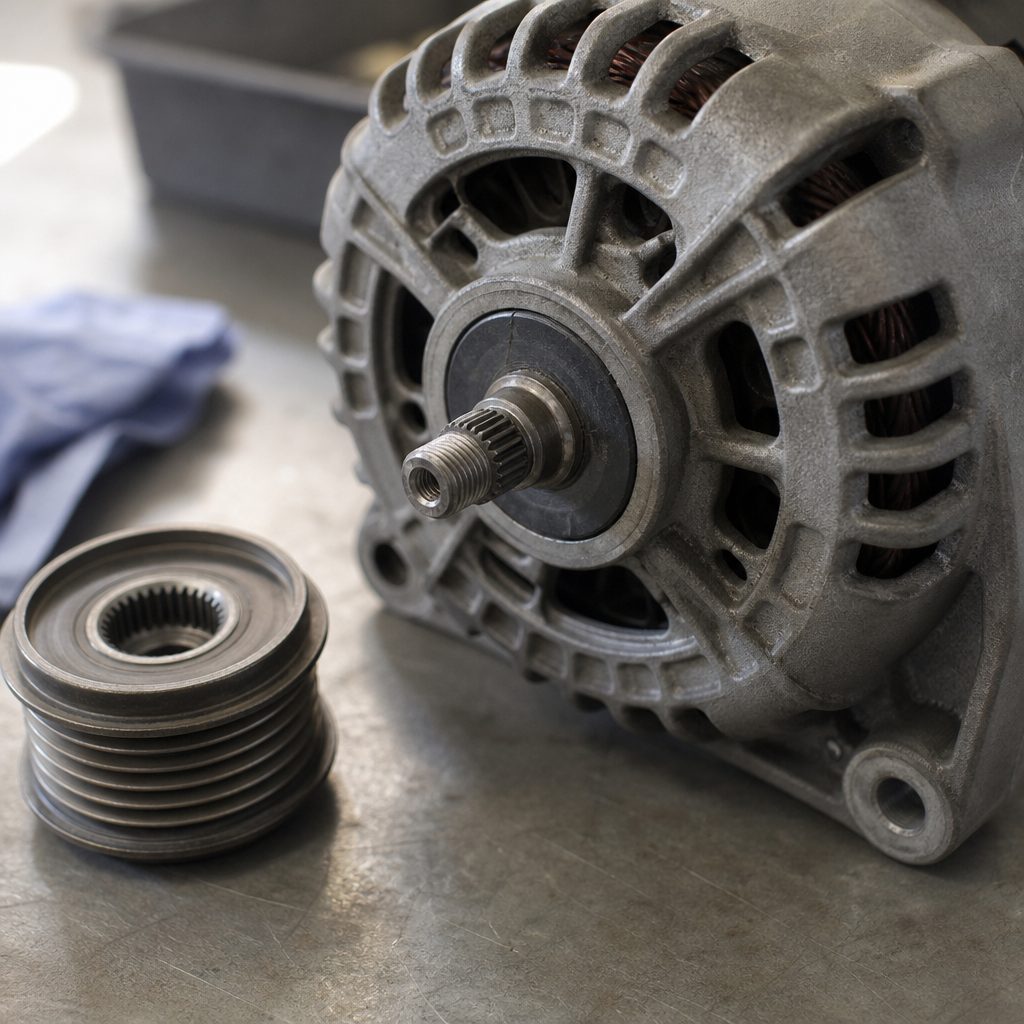
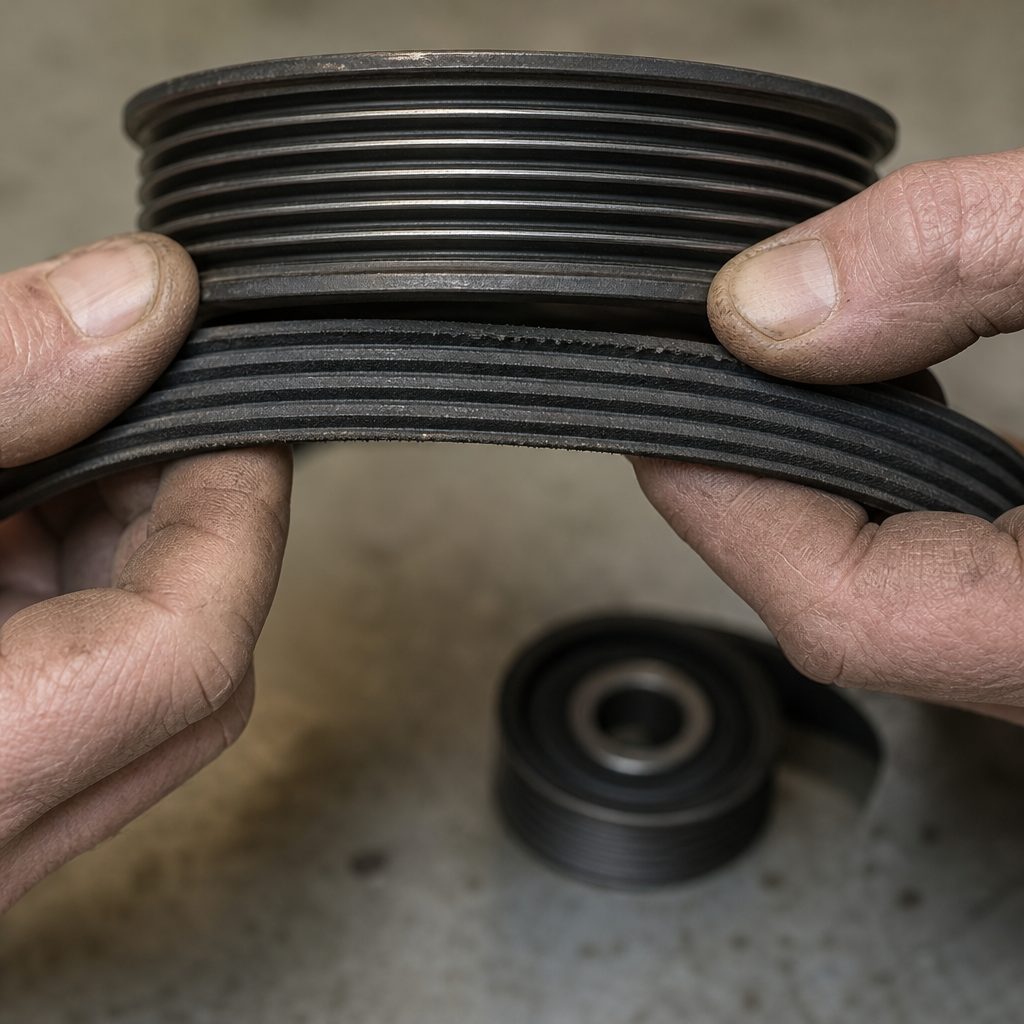
Pulley type is only half the ordering problem; belt engagement is the other half. A serpentine pulley must match the belt's rib count and profile — the automotive serpentine belt in use today is a multi-rib band, and a serpentine belt pulleys set that includes the crank, alternator, and every idler must share the same rib count or the belt will not seat. A vehicle converted or fitted with a mismatch will sit the belt high in the grooves, and it will throw the belt under load. Rib profiles also differ subtly by era and manufacturer, which is why the OE number, not the naked eye, is the matching standard.
The v belt system survives on older and simpler machines. A single v belt pulley carries one groove; heavier installations used a double v belt pulley so two belts share the drive. If you are replacing pulleys on a v belt installation, the groove angle and width must match the belt — a pulley too wide for its belt lets the belt sit low and slip; too narrow and it rides the crown and wears the edges. The mixed terminology at the counter ("serpentine belt/pulleys", "pulley for serpentine belt", "v belt pulley belt") all resolves to the same two facts: how many ribs or grooves, and what type of clutch function the vehicle expects. So does the phrasing of the drive train around it: a pulley v belt match, a tensioner pulley for serpentine belt drives, a pulleys v belt specification sheet — each is one of the two questions wearing different words.
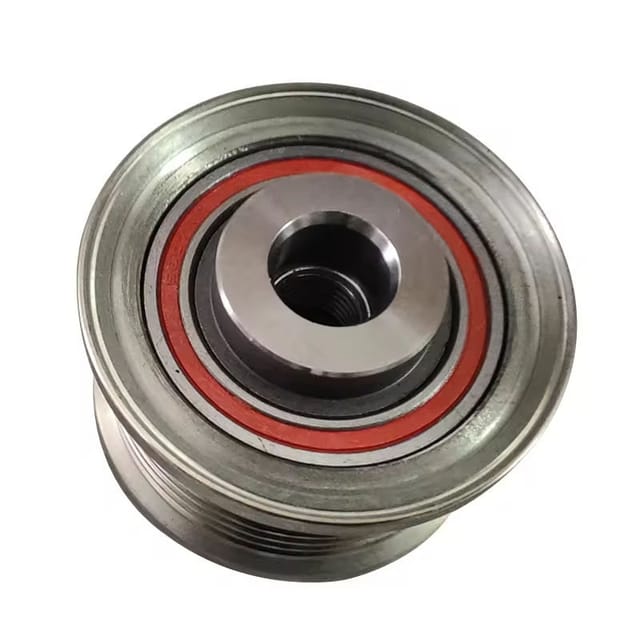
Alternator Pulley for Toyota Hilux III — 27415-0L030
- New condition · inspected before dispatch
PriceUS$7.50–8
Minimum order 10 pieces
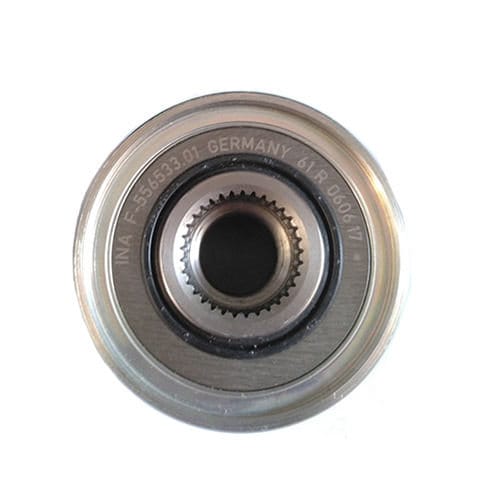
INA Freewheel Pulley Clutch F-556533.01 for Mini 1.6T
- New condition · inspected before dispatch
PriceUS$28.24–33.89
Minimum order 2 pieces
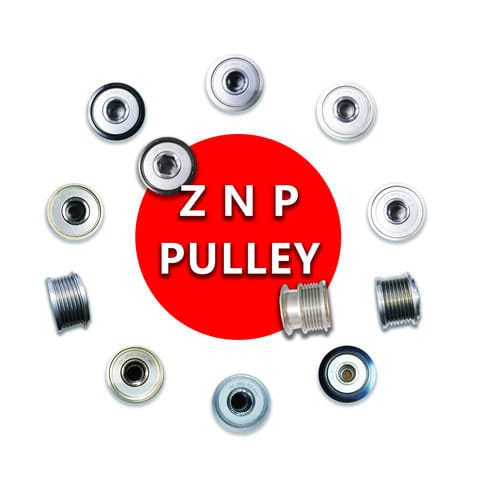
ZNP Alternator Pulley for Citroen / Peugeot / Suzuki / Opel
- New condition · inspected before dispatch
PriceUS$6.80–8.80
Minimum order 10 pieces
Ordering and Installing Without Mistakes
Order by the alternator's OE number, not by vehicle model alone: pulley fitment changes within model years, and the same vehicle can carry different alternator families with different splines and thread directions. Some manufacturers use left-hand thread pulley nuts — a fact discovered, usually violently, by whoever applies force in the usual direction — so the thread direction belongs on the order check. Check what arrives: rib count, groove profile, and clutch type against the old unit, before the old unit leaves the bench. The removal questions — how to take pulley off alternator assemblies, how to take off alternator pulley hardware, removing pulley from alternator housings, or simply removing alternator pulley types wholesale — are one procedure with one tool set, covered in the hands-on sequence; the identification questions stay here, because ordering the wrong type is how the removal gets done twice.
Installation has one non-negotiable: the torque specification. A decoupler pulley tightened to guesswork either works loose (destroying the rotor shaft thread) or is preloaded wrong (destroying the clutch). The factory figure is a stated number for a stated tool setup — hex drive through the center, counter-hold on the shaft, torque wrench on the hex — and it is not interchangeable with "tight". After installation, spin-check the clutch behavior once more and run the engine with the belt fitted to watch the tensioner arm: a steady arm at idle is the visual confirmation that the drive is harmonically happy. The hardware around the pulley ages with the drive: an alternator tensioner bracket that is cracked or bent moves the pulley out of plane, and a car tensioner pulley with a tired bearing feeds vibration straight back into the belt. A tensioner pulley assembly is a wear item in its own right, and the auto tensioner pulley spin test belongs in every pulley job, not just belt jobs — a pulley tensioner assembly replaced with the belt is cheaper than a belt replaced twice.
FAQ
How do I know which pulley type my alternator has?
With the belt off, spin the pulley. If it turns the rotor in both directions, it is solid. If it drives in one direction and freewheels in the other, it is a clutch type — OAD or one-way. For OAD versus plain clutch, check the specification by OE number; the spring damping inside a true OAD is not reliably visible from outside.
Can I replace a decoupler pulley with a solid one?
No. If the vehicle was engineered for a decoupler, a solid pulley transmits every crankshaft torsional pulse into the belt. The result is chirp, tensioner oscillation, and accelerated wear on the belt, the tensioner pulley assembly, and the alternator's front bearing.
What are the symptoms of a failed decoupler pulley?
A rattling or buzzing noise at idle that fades with rpm is the classic sign of a worn OAD. A clutch pulley that has seized solid brings back belt flutter; one that freewheels permanently stops the alternator charging altogether. On the vehicle, watch the tensioner arm at idle — visible oscillation means the drive is compensating for something.
Do all modern alternators use decoupler pulleys?
No. Fitment follows the vehicle's engineering, not the calendar. Many current vehicles still run solid pulleys where the drive was designed around one. The OE number on the alternator or pulley is the authority; guessing by vehicle age misorders parts.
What tool removes an alternator decoupler pulley?
A dedicated kit: a hex socket that passes through the pulley center onto the shaft and a counter-hold tool that stops the shaft turning. The pulley nut on some units is left-hand thread, so check the specification before applying force in the usual direction.
My serpentine belt keeps walking off the pulleys — is it the pulley?
Possibly. A belt that will not seat is usually a rib-count or profile mismatch between belt and pulley, or a pulley that has worn a ridge. Compare the belt rib count to every pulley it runs on, and inspect the grooves for a stepped wear edge. A misaligned tensioner produces the same walking symptom — check it before replacing the belt again.
Related parts
Units from our range. Send an OE number and we will check fitment before quoting.
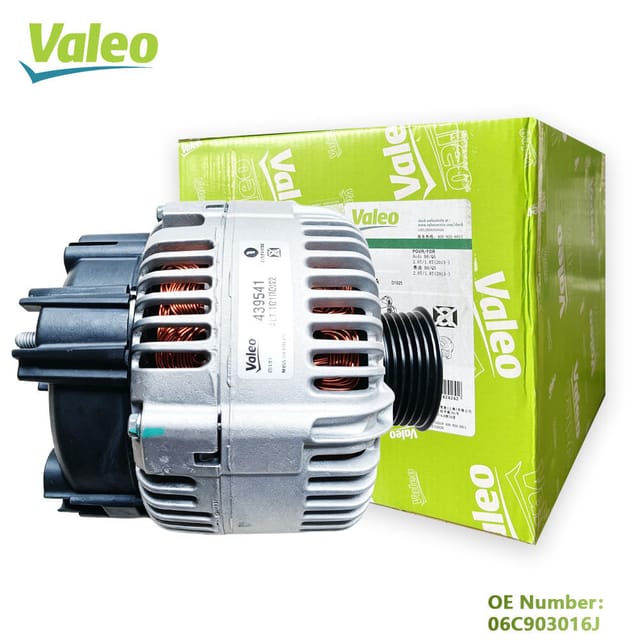 Valeo Alternator 12V 180A for Audi C6 (06C903016J)
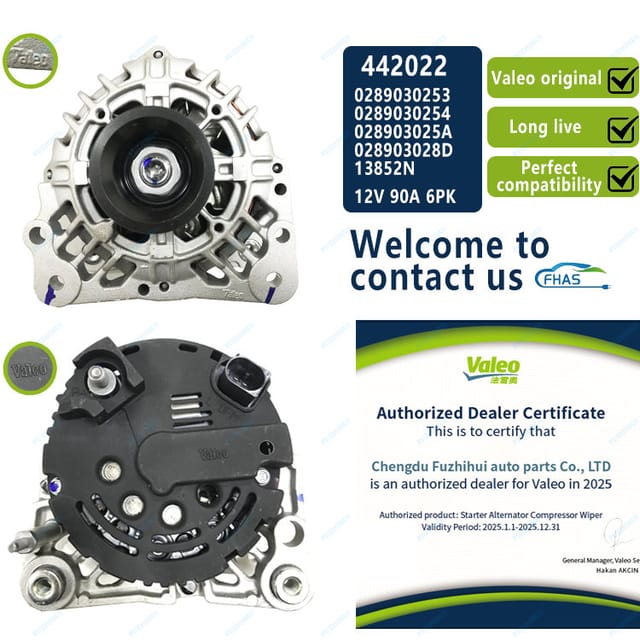 Valeo Alternator 12V for VW Golf (06A903026AV)
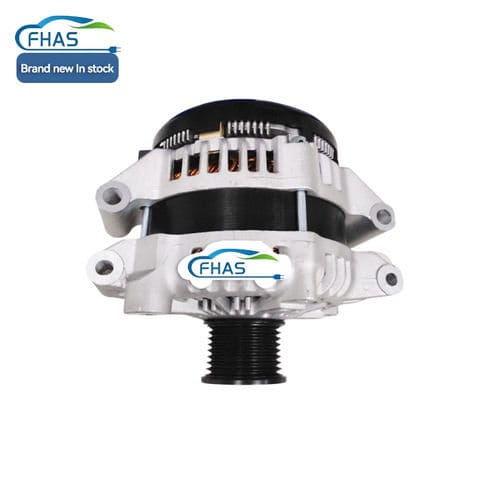 JHAEM Alternator 12V 210A for BMW 523 / 528 / X3 3.0
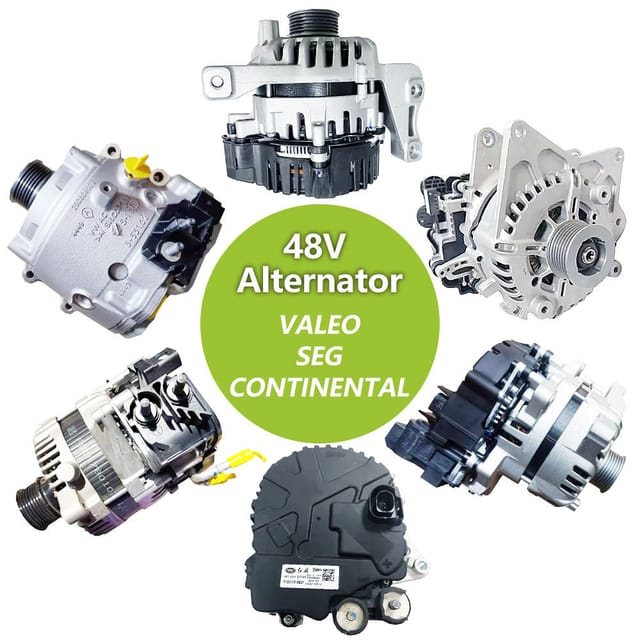 High-Output Alternator 48V for Audi / Geely / Land Rover
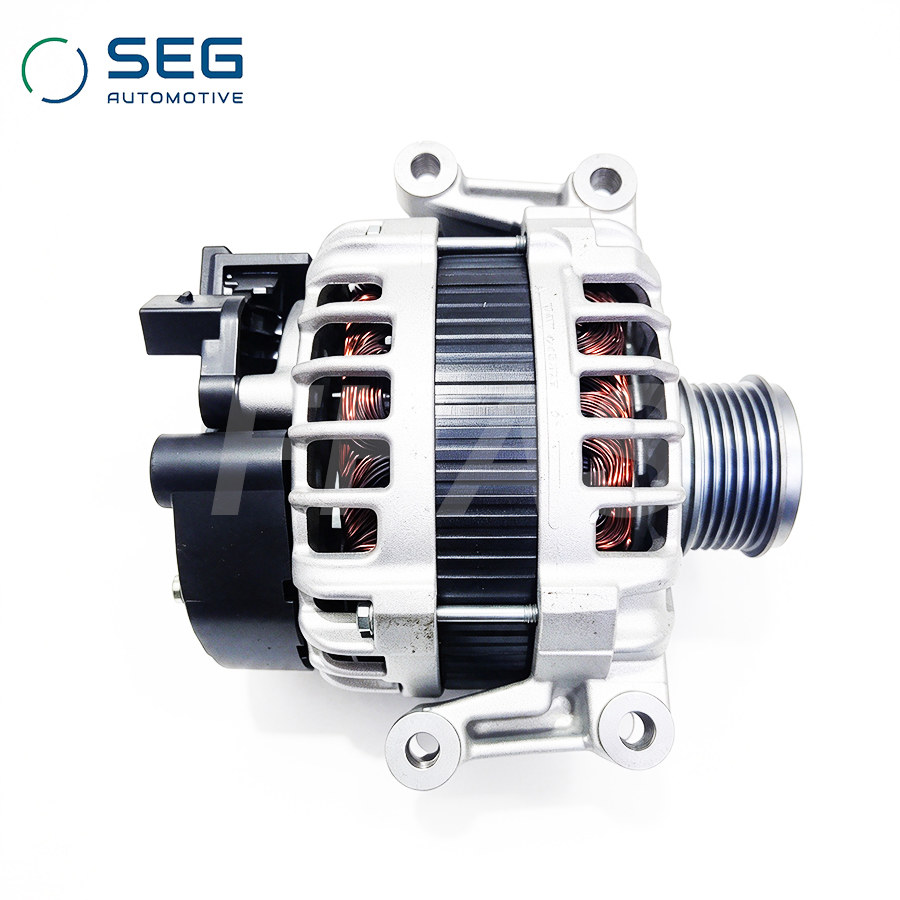 SEG Alternator 12V for Volkswagen Repair (06K903026D)
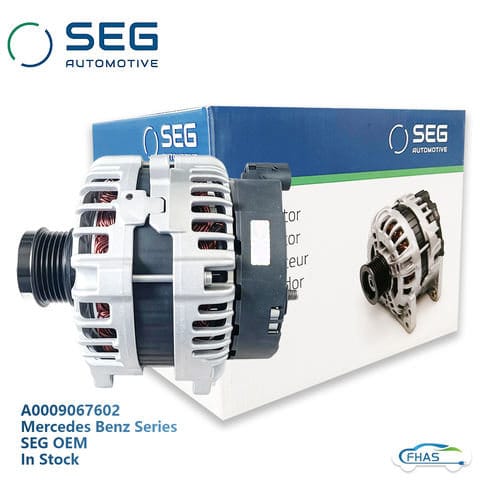 SEG Alternator 12V for Mercedes-Benz B200 W246 — A0009030022 Series
Have a part number to price?
Send it over with the quantity and destination. You will get a fitment check, a unit price and a freight cost — usually the same business day.