
A distributor in Ecuador ordered 120 alternators against a single OE reference. Voltage and current were as specified. The units arrived with solid pulleys; the vehicles were built with an overrunning clutch pulley. Freight both ways plus demurrage took the loss close to USD 4,000.
Nobody was careless: the reference number did its job and identified the application. It does not describe the build. For a wholesaler carrying several brands across hundreds of SKUs, an incomplete specification becomes wrong stock, dead stock and a workshop explaining a comeback.
In short
An OE number identifies the vehicle family, not the build. Confirm six things before the order: voltage and current, mounting and clock position, pulley type, regulator and connector, product identity, and the test record behind the batch.
Key points
- An OE number identifies the application, not the configuration of the unit in the box.
- Six parameters decide fit: voltage and current, mounting, pulley, regulator and connector, product identity, and test evidence.
- Four photographs of the old unit resolve most disagreements before quotation.
- A standard RFQ table makes supplier quotes comparable, line by line.
- Suppliers who cannot answer the table within 48 hours are telling you something useful.
1. Why an OE number and a product photo are not a specification
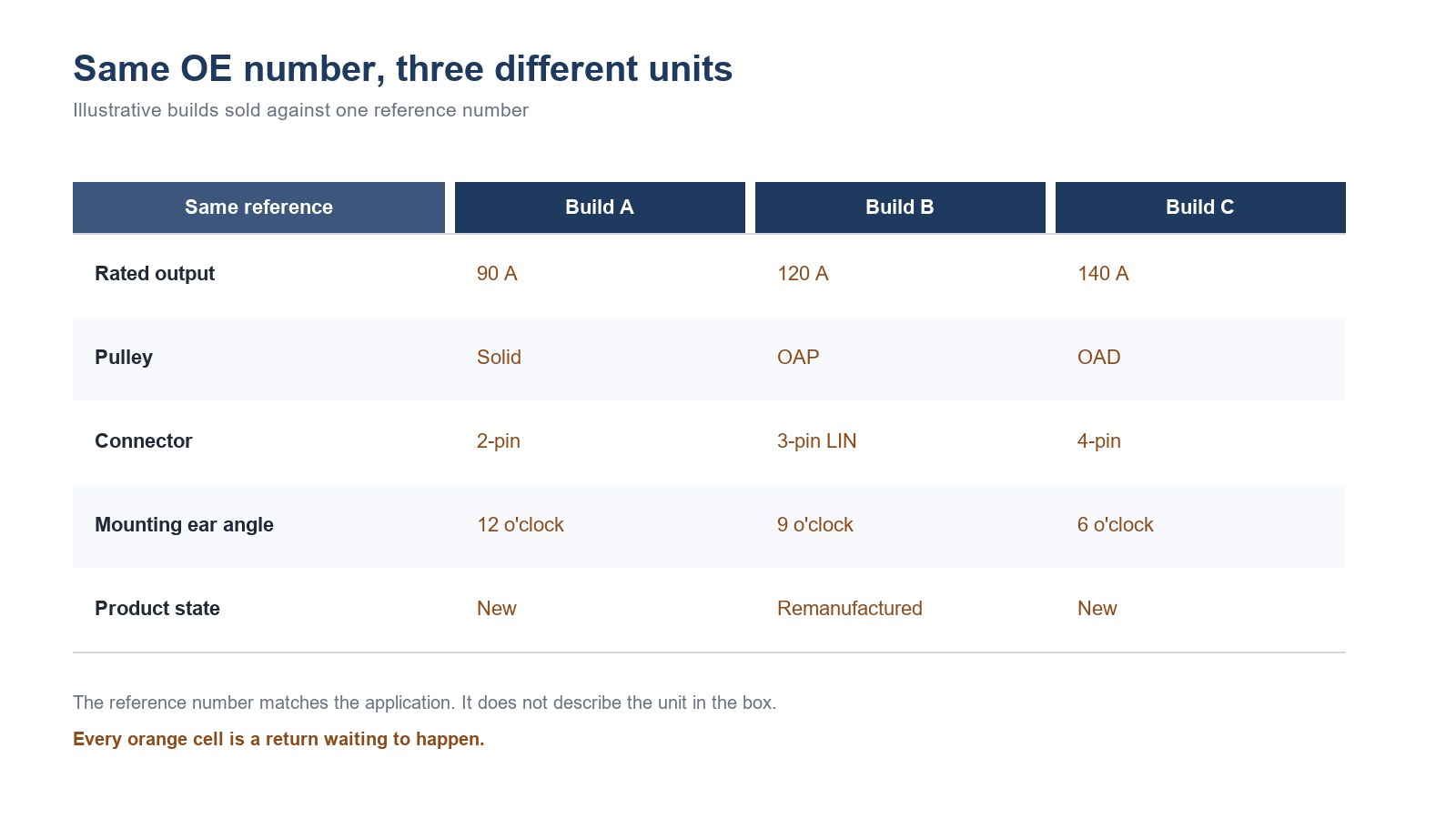
An OE number tells you which vehicle family a part belongs to; it does not tell you which build you will receive. An alternator is an assembly of stator, rotor, rectifier, regulator, bearings, pulley and housing, and two units can share a reference while differing in almost all of them. Buyers sometimes arrive with a stator vs alternator question when what they actually need is the assembly specification.
This is why the interchangeable parts for cars lists buyers rely on are a starting point rather than an answer: a car part interchange or an automotive parts interchange record tells you the family, not the build. That data was never designed to carry pulley type or pin definitions — which is what OE number and cross-reference verification has to add.
One habit shortens the conversation: talk in platform families. Units are described as Bosch type, Denso type or Valeo type, and "platform plus OE number" is confirmed far faster than a photograph and a guess. Whether the catalogue in front of you is bosch auto parts, bosch car parts, denso parts, nippon denso auto parts or a c delco parts, the platform language is the same.
| Item | Often the same | Often different |
|---|---|---|
| Electrical | Rated voltage | Output current: 90A, 120A, 140A |
| Connector | Housing shape | Pin count, pin order, terminal function |
| Pulley | Appearance | Groove count, diameter, solid or OAP/OAD |
| Mounting | Overall size | Ear position, hole spacing |
| Identity | Reference number | Brand, manufacturer, new or remanufactured |
2. Four photographs of the old unit
Ask the workshop for four pictures, taken before the old unit leaves the vehicle.
- The nameplate, showing the original number and the rated voltage and current.
- The pulley face, showing groove count, diameter and any type code.
- The connector, close enough to count pins and read the arrangement.
- The mounting ears and bolt holes, including the angle relative to the pulley.
3. The six parameters to verify
The order below matters: electrical first, mechanical second, identity third. Each parameter ends with what to ask the supplier, because a question that cannot be answered in writing is not a specification.
1. Rated voltage and output current
12V covers most passenger cars, 24V most commercial vehicles. Output is quoted in amps: 90A, 110A, 120A, 150A.
Do not simply buy the largest. Output is set by the stator winding and rectifier, and a higher-current unit is usually larger and loads the belt harder, while the harness and fusing were sized for the original. A 220 amp alternator on a vehicle built for 120A is not an upgrade; it is a fault waiting for a warranty conversation.
One number is hidden: idle output. Rated current is a peak figure measured near 6,000 rpm; at idle, real output is typically 40–60% of the rating. Irrelevant in a passenger car, decisive in a refrigerated van, an ambulance or a converted commercial vehicle.
Ask for: rated voltage and current, the OE reference and its applications, the test evidence behind the figures, and — for high-load use — the speed-versus-current curve with the idle point marked.
2. Mounting structure and dimensions
Beyond the number of ears, hole positions and bore diameter, one parameter is routinely missed: clock position. It describes the angle of the mounting ears relative to the pulley axis, and two versions of the same reference with different clock positions will not interchange.
Then check the cooling fan: internal, external and twin-internal layouts appear on units with the same reference and output, and they move air differently. The wrong layout under-cools at idle, drops output and can cook the regulator and rectifier.
Ask for: ear count, clock position, hole count and spacing, dimensions, fan type and airflow, plus a bracket drawing for the application.
3. Pulley type
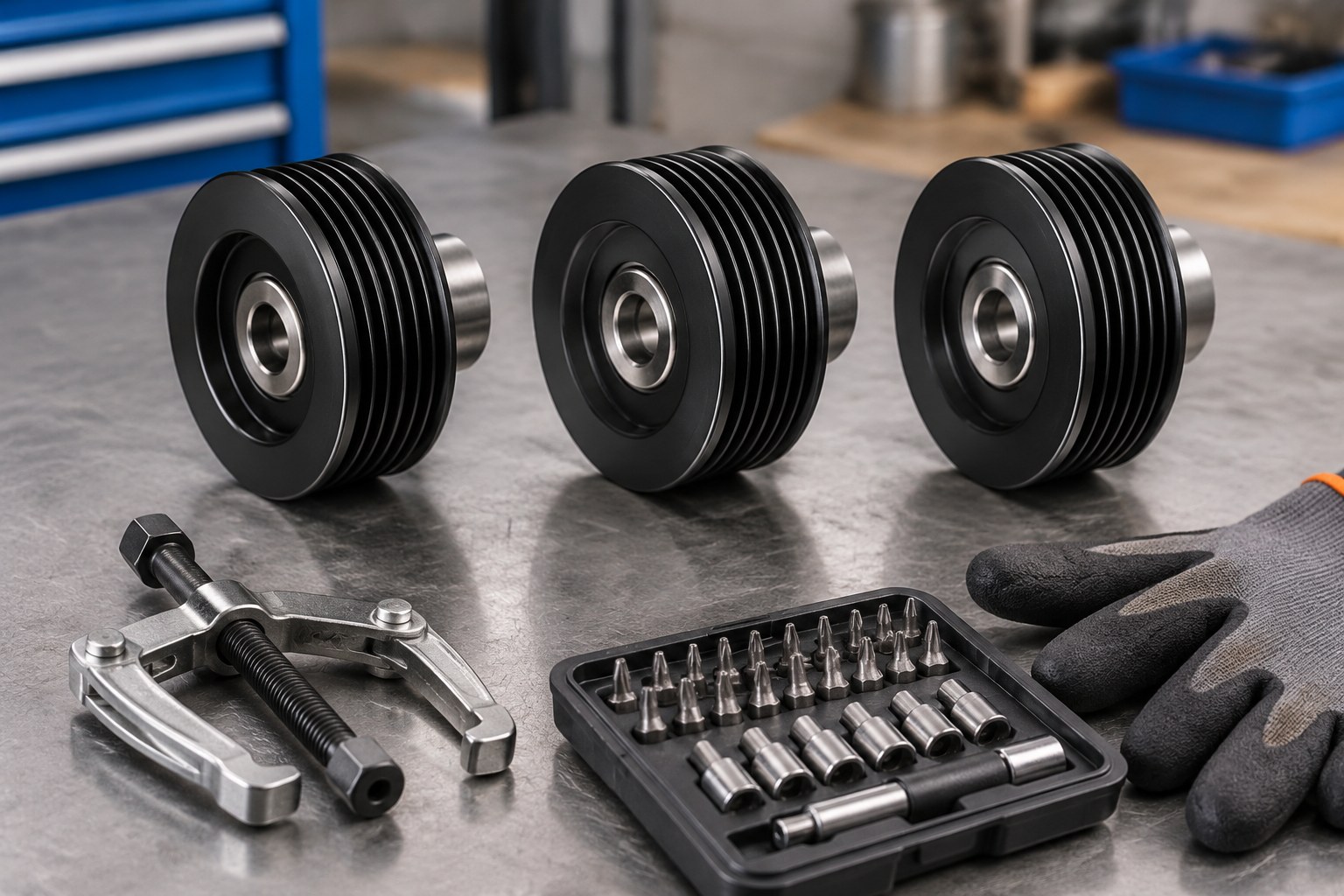
Three designs exist: solid, overrunning alternator pulley (OAP) and overrunning alternator decoupler (OAD). The internals differ and they are not interchangeable.
The trap is that OAP and OAD look identical in a photograph. Only the part code or a physical test tells them apart, and choosing wrongly produces belt flutter, noise and driveline vibration even when output is perfect.
The finger test, which works on a bench or on a delivered batch:
Both clutch types are press-fit, which is why they need a puller and why a field swap is not a five-minute job. Diameter also changes idle output, so it belongs in the specification. The differences are set out in alternator pulley types: solid, OAP and OAD.
Ask for: type, groove count, diameter, mounting method and confirmation against the original drive.
- Solid: locked in both directions.
- OAP: locked one way, free the other.
- OAD: free rotation with spring damping.
4. Regulator and connector
The regulator holds charging voltage in range. A conventional regulator and a smart one that talks to the vehicle over a serial protocol are not substitutes: mismatched control fails to communicate, and the dash lights up.
Protocols follow the platform. Volkswagen applications commonly use LIN; French platforms often use Valeo BSS/RVC; BMW applications use Bosch BSS/BSD. On the regulator question — what does a voltage regulator do is the easy part, which protocol it speaks is the part that decides fitment.
The connector is the second trap. Identical shells can carry different pin definitions: B+ (main output), IG (ignition), L (charge lamp), FR (field return). Same plug, different function.
Ask for: the regulator part number and protocol, plug shape, pin count and terminal definitions. The voltage regulator on a alternator is not universal: confirm the generator voltage regulator number against the platform, not the housing. Units with an external voltage regulator — or an alternator external voltage regulator conversion, or an external alternator regulator on heavy-duty applications — differ in mounting and wiring. On the rectifier side, ask which voltage rectifier is fitted and how it is rated, and whether an alternator voltage regulator replacement is the right remedy at all.
5. Brand, product state and packaging
Matching parameters do not mean matching product: the same reference can arrive as an OEM-brand part, an aftermarket brand, an unlabelled unit or a customer-branded build, with different pricing, warranty and paperwork.
State matters commercially. Several markets require remanufactured product to be declared, and a vague declaration can stop a container. If the unit is a rebuilt alternator, the order should say so, and what was replaced.
Write into the order: brand and supply identity, product state (new, remanufactured, other), whether the housing carries a brand mark, whether customer branding is supported, and whether unit and carton labels match the order.
6. Test evidence and quality control
Product photos cannot show electrical performance, and "100% tested" says nothing until you know what was tested and against what limit.
The minimum list worth asking for: full-load output current, regulated voltage accuracy, rectifier and diode check, end-of-line functional test, and batch records that can be produced on request. For a long-term supplier, a traceable process is worth more than a single certificate — the same argument as alternator quality checks before bulk purchase.
Ask for data, not claims: how do you test an alternator with a voltmeter is a bay question, and how to test the alternator with a voltmeter tells you nothing about a production line at 6,000 rpm.

4. One RFQ table that makes quotes comparable
Ask three suppliers for a price and you get three different shapes of answer: one sends current and plug data, one sends an OE number, one sends a photo. Nothing is comparable.
Send this table and require every line back. It works for a first order, a repeat order and a supplier review.
| Group | Required |
|---|---|
| Identification | OE number, brand, manufacturer part number, Lester number (North America) |
| Electrical | Rated voltage, output current; speed-current curve for high-load use |
| Mounting | Ears, clock position, hole positions, dimensions, fan type |
| Pulley | Type (solid/OAP/OAD), groove count, diameter, mounting method |
| Interface | Regulator number, protocol (LIN/BSS/RVC/BSD), plug, pin definitions |
| Identity | New, remanufactured or other |
| Visuals | Front, rear, side and connector photographs |
| Packaging | Unit label, carton label, customisation |
| Quality | Test items, records, outgoing inspection |
| Commercial | MOQ, stock, lead time, warranty |
For North American customers, check the Lester number alongside the OE reference: it is the local index, many buyers quote it and nothing else, and it separates platforms fast. A delco remy alternator request, a denso auto parts listing and a prestolite reference describe different index universes.
A practical filter: a supplier who cannot return this table within 24–48 hours has a product-data problem — a better predictor of cooperation than price. Keep the returned table with the order; it is also your specification if the next batch differs. And if the quote looks cheap, read landed cost before you compare quotes first.
5. Transparency is the capability
Choosing a supplier is not only a price decision. The question is whether they can pull the same specification and packaging requirements when you reorder, and whether they flag a configuration change before it ships.
The same applies inside your business. Whether your counter sits in an automotive parts store, a toyota parts store or an online parts store, staff need the six parameters on screen, not a photo and a reference. Buyers comparing the best online car parts shop listings compare exactly these fields, whether or not the listing shows them.
A complete product record is not paperwork. It is what lets you quote accurately, hold less dead stock and keep a supply relationship that survives the second order.
6. FAQ
The same OE number comes in different amperages — which one?
Match the original. Check the rating on the old unit's nameplate or the vehicle manufacturer's data; do not assume more is better.
How do I confirm the pulley is an OAP on arrival?
Use the finger test: solid is locked both ways, OAP is locked one way and free the other, OAD is free with spring damping. Sample-check incoming batches.
The connector looks identical — why is it not?
Shell shape does not define pin function, and the regulator protocol may differ as well. Confirm terminal definitions and protocol, not a photograph.
Can we buy remanufactured units?
Yes, depending on your market and its disclosure rules. Specify the product state in the order and confirm what local regulations require.
Why check rotation direction and fan type?
Some Japanese and European applications rotate counter-clockwise with a matching fan; reversed, it pushes air the wrong way — heat, derating, early failure. It is marked on the nameplate.
Why is charging weak at idle on a 120A unit?
Because 120A is measured near 6,000 rpm; at idle the unit delivers roughly 40–60% of that. For high-load vehicles, ask for the speed-current curve, not the headline number.
7. Closing
The reference number gets you into the family; six parameters get you the part: voltage and current, mounting and clock position, pulley type, regulator and connector, product identity and test evidence.
Send the old unit's four photographs and the RFQ table with your next enquiry. A supplier who answers all of it in writing is worth ordering from — and the 120 units that arrive will be the ones you specified.
Related parts
Units from our range. Send an OE number and we will check fitment before quoting.
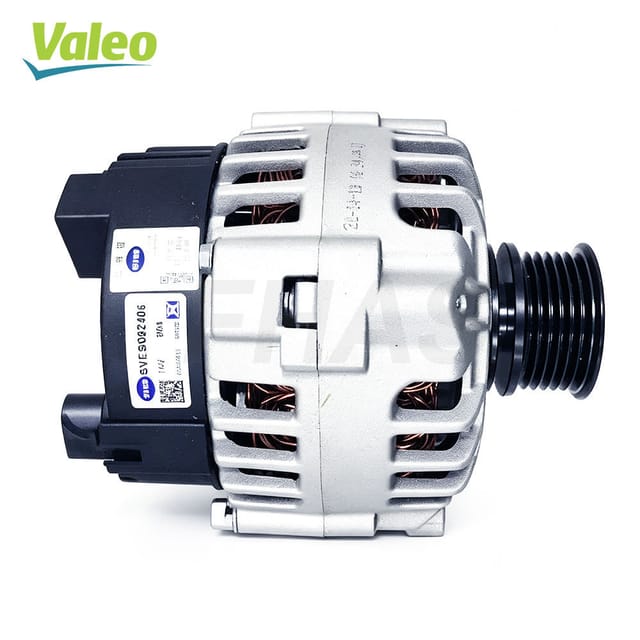 Valeo Alternator 12V 90A for VW Jetta (030903023J)
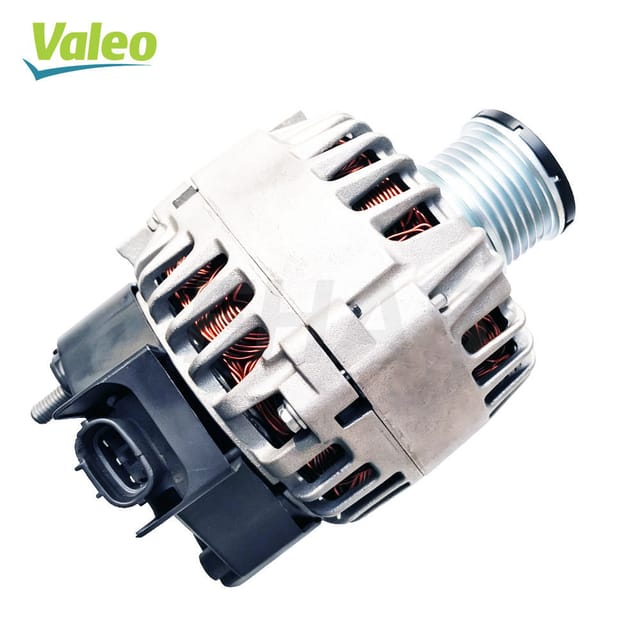 Valeo Alternator 12V 110A for Nissan Sylphy (23100-3RA2B)
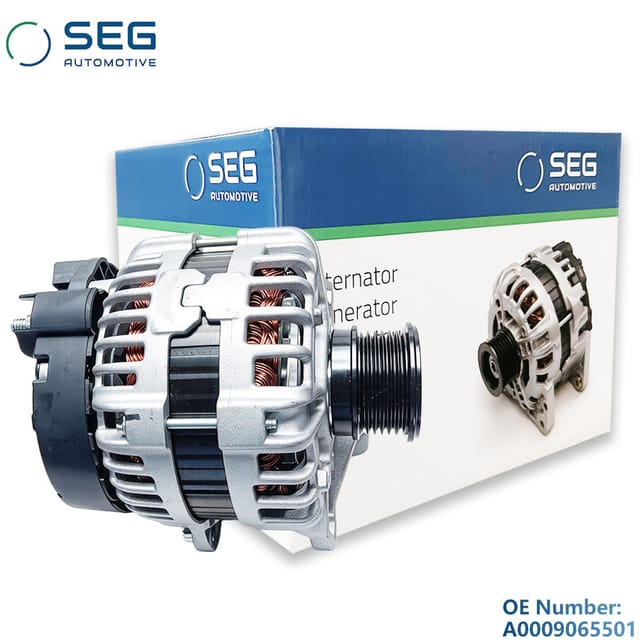 SEG Alternator 12V for Mercedes-Benz GLK 250 (A0009065501)
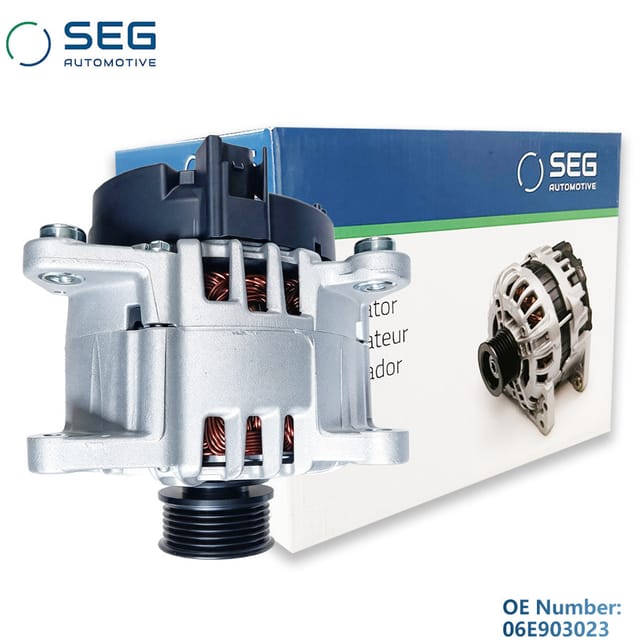 SEG Alternator 12V for Volkswagen Touareg 3.0 TSI 2010 (06E903023)
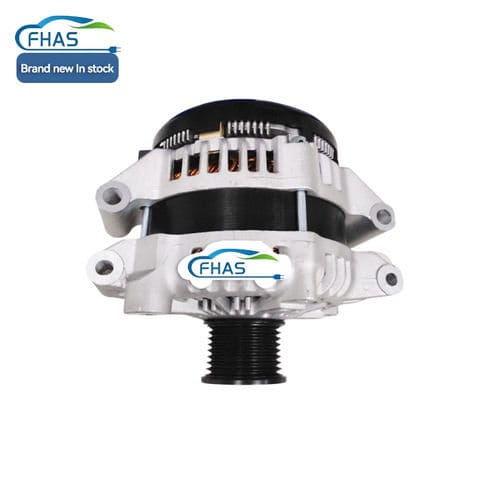 JHAEM Alternator 12V 210A for BMW 523 / 528 / X3 3.0
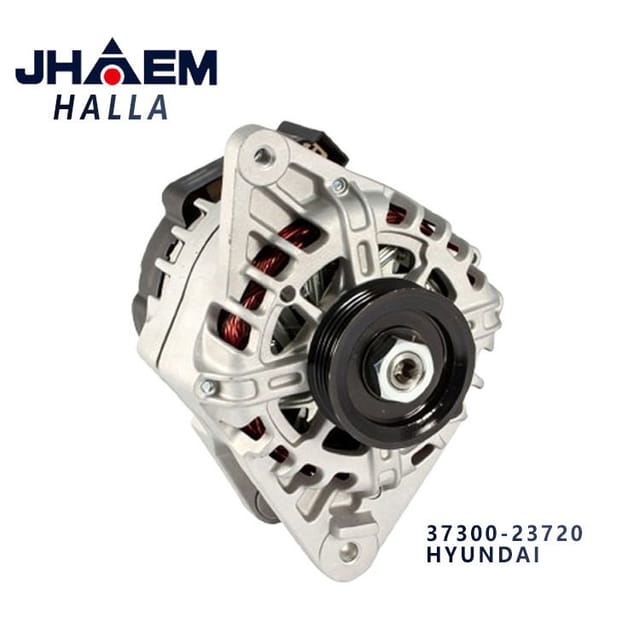 JHAEM Alternator 12V 90A for Hyundai / Kia
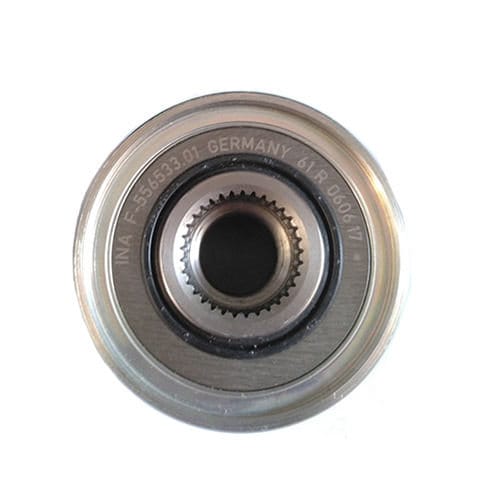 INA Freewheel Pulley Clutch F-556533.01 for Mini 1.6T
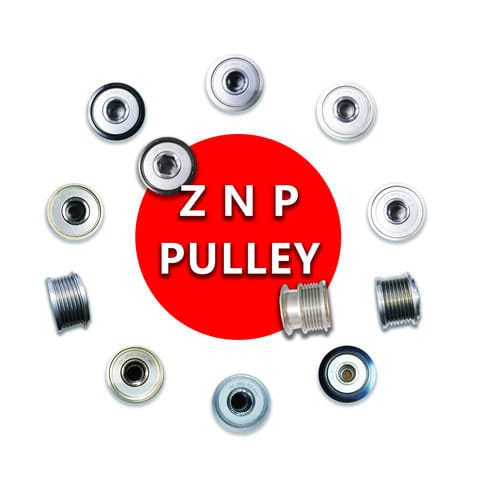 ZNP Alternator Pulley for Citroen / Peugeot / Suzuki / Opel
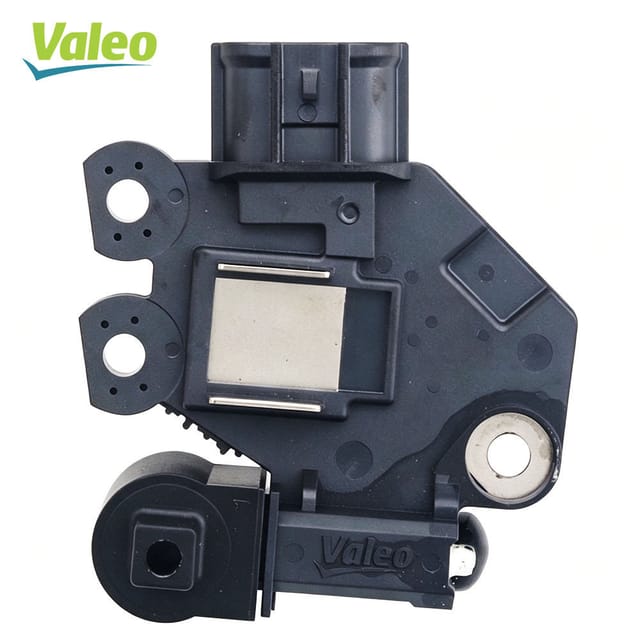 Valeo Voltage Regulator 12V for Hyundai / Kia (2614507)
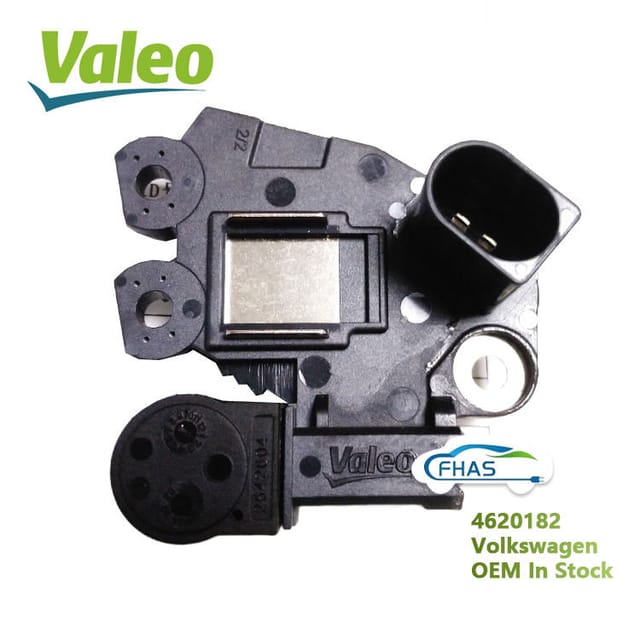 Valeo Voltage Regulator for Volkswagen
Have a part number to price?
Send it over with the quantity and destination. You will get a fitment check, a unit price and a freight cost — usually the same business day.