
This article is a procedure, not a symptom list. It walks through setting the meter up, the four readings that matter, the band each reading should fall into and what it means when it does not, how the test changes when the regulator is external, and what you can reasonably conclude with no meter at all. The angle is the test itself: what to measure, in what order, and how to read the numbers.
In short
Take four readings — engine off, at idle, at fast idle with loads on, and while cranking. Each one falls into a band, and each band has a verdict. Do not average them or pick your favorite; the pattern across all four is what condemns or clears the charging system.
Set the Meter Up Before You Read Anything
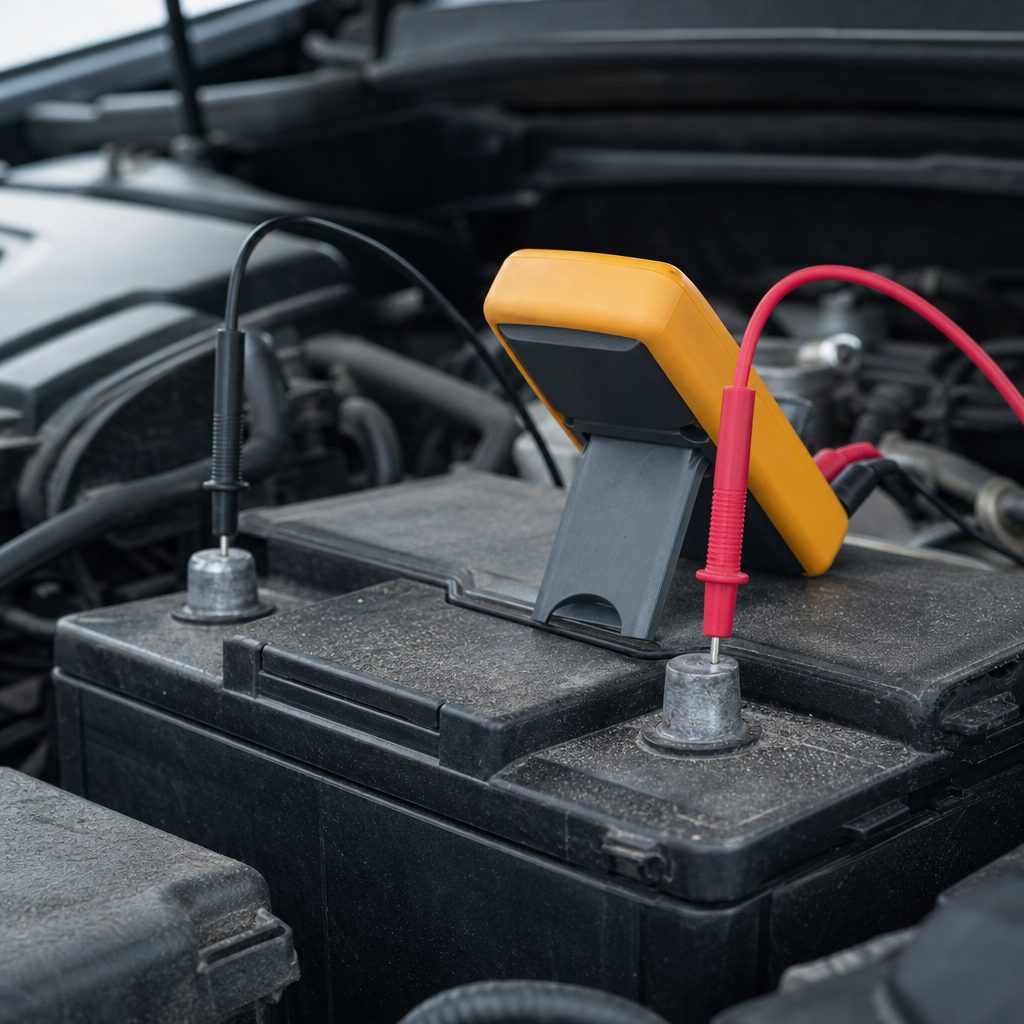
Use the meter as a voltmeter on the DC volts range, and choose a range that covers roughly 20 volts so a spike does not push the display off scale. Probe placement is the part people rush: the red lead goes to the battery positive post and the black lead to the negative post, on the posts themselves rather than on the clamps, because a clamp can hide a poor connection and flatter the reading you are trying to trust. The setup is the same whether you are following a guide on how to check alternator with voltage meter functions or using a dedicated charging-system tester: the leads go on the posts and nothing gets disconnected.
Before you read anything, settle the battery. Immediately after charging or a long drive the battery carries a surface charge that makes it look healthier than it is, so either wait an hour or switch the headlights on for a minute to strip it. A reading taken too early is one of the main reasons a failing unit tests as normal.
If you only remember one thing about the multimeter to test alternator work, remember this: the meter is not testing the alternator, it is testing the circuit the alternator lives in. That distinction matters when a reading is wrong, because the fault is then somewhere along the path rather than necessarily inside the unit. Every multimeter alternator test described below interprets a circuit measurement.
The Four Readings and the Bands They Should Fall In
The first reading is taken with the engine off, after the battery has settled. A fully charged twelve-volt battery sits near 12.6 volts, because it is six cells in series and each healthy cell rests near 2.1 volts. Below that, the battery is partly discharged before you start, and any conclusion about the charging system has to wait until it is topped up.
The second reading is taken with the engine idling and nothing switched on. This is the baseline for what proper alternator voltage looks like on that vehicle: a conventionally regulated system lifts the reading into the mid-teens, well above the resting figure but below the point at which a flooded cell begins to gas. This is the reading that tells you whether the unit is producing at all. A good alternator voltage at this stage is simply anything above the settled resting figure, because the only question being asked is whether the unit is contributing.
The third reading is the one that actually decides most cases. Hold a fast idle with the lights, the blower, and the rear defroster on, and read again. The figure should hold up under that load. A voltage of alternator output that sags toward the resting figure while the loads are applied means the unit cannot meet demand, and a reading that climbs past roughly fifteen volts means the regulator has lost control and is overcharging. Judging the output voltage of alternator units from one number alone is what causes most misdiagnosis, because the same sound unit sits at different figures when it is cold and when it is hot.
The fourth reading is taken during cranking, when the starter is drawing its heaviest current. System voltage will fall, and that is expected, but it should not collapse; a deep drop suggests the battery cannot deliver its rated current or that the cables are resisting. The table below collects the bands and the verdict attached to each. Anyone asking what voltage should an alternator put out will get a far better answer from the pattern across all four readings than from any single figure taken in isolation.
What should alternator voltage be on a smart-charging vehicle is a different question, and it is worth stating plainly: on those systems the target moves with battery temperature and state of charge, and it may deliberately sit lower than the classic band. Normal voltage car alternator figures published online describe conventional regulation. Whether your vehicle follows them depends on its charging strategy, so check that vehicle's data before you condemn the unit.
| Reading | Band to expect | What it means if it is outside the band |
|---|---|---|
| Engine off, settled | Near 12.6 V | Battery partly discharged; charge before judging anything |
| Idling, no loads | Above resting, mid-teens | No rise means the unit is not charging |
| Fast idle, loads on | Holds in band | A sag points at the unit or its circuit; a rise past ~15 V points at the regulator |
| Cranking | Dips but does not collapse | A deep drop points at the battery or the cables |

Testing the Alternator Off the Car
A bench test answers a narrower question than most people expect. If you want to know how to test an alternator off the car with multimeter equipment, the practical method is to spin the unit with a suitable drive, apply field current the way the vehicle would, and read the output across the terminals. It confirms the unit can produce voltage when driven. It does not confirm that the unit will charge your car, because the car also supplies the control circuit, the sense line, and the ground path. The same caution applies to how to test alternator with a multimeter in the vehicle: the meter reads a whole circuit, and a bench removes most of that circuit from the picture.
That limitation is why a bench pass is not a verdict. A unit with a drifted regulator can produce a healthy figure on a bench and still fail in the vehicle once the module takes control of the target voltage. A unit with a poor internal connection can pass when cold and fail when hot. Use the bench test to rule out a completely dead unit, and use the in-vehicle readings to judge everything else.
In practice, testing an alternator with a multimeter in the vehicle is more informative than testing a alternator with a multimeter on a bench, and it is certainly faster. If you have the choice, take the four in-vehicle readings first. Only pull the unit if those readings point at it and you need to know which internal component is responsible. A bench alternator testing multimeter routine that skips the field supply will look like a failed unit even when the unit is sound, which is how healthy alternators get condemned. When the in-vehicle readings do condemn the unit, a replacement alternator is the usual outcome, and those same readings are the evidence for it.
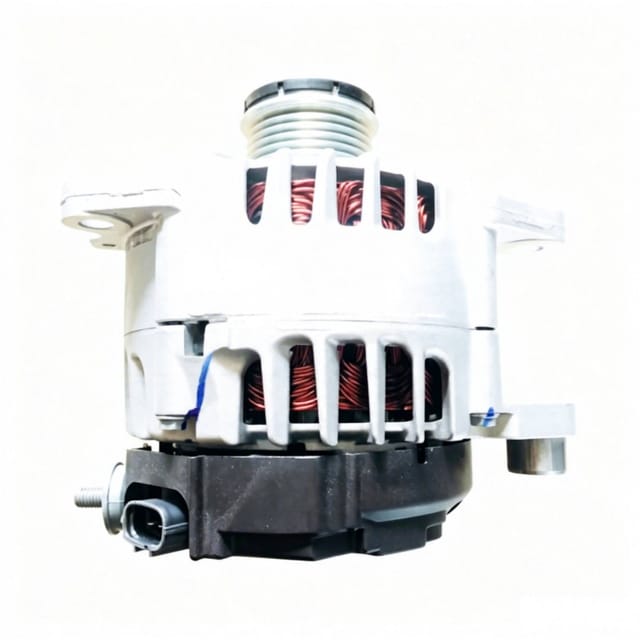
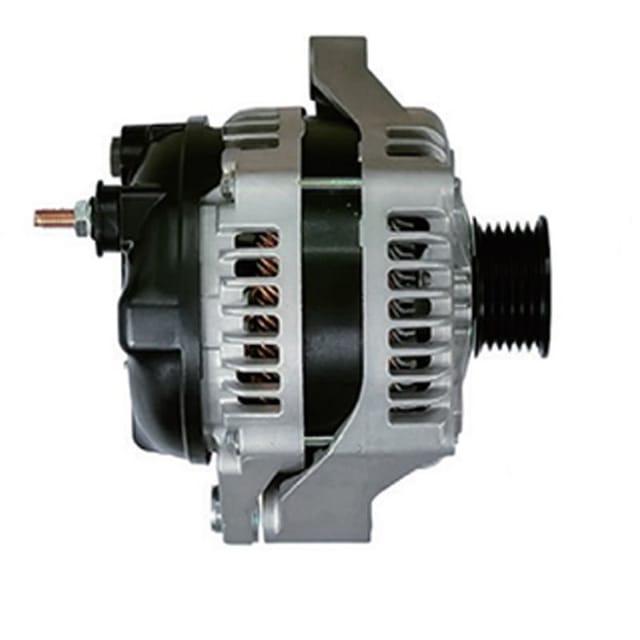
Valeo Alternator 12V 120A for Nissan X-Trail (23100-2DZ0A)
- OE / cross-reference: 23100-2DZ0A · 231002DZ0A · 23100JA02A · 23100JA02B · 23100JA02C · 23100JA04A · 23100JA04C · 23100JA04D · 2609555 · 2609555A · 2650364A · 2650364B · 442213 · 849054 · TG11S092 · TG11S102 · TG11S110 · TG12C032 · TG12C116 · TG12S217 · 11258N · 11458R · 11567N · 301N20339Z
- Valeo brand line
- New condition · inspected before dispatch
PriceUS$94.99-100.99
Minimum order 2 pieces
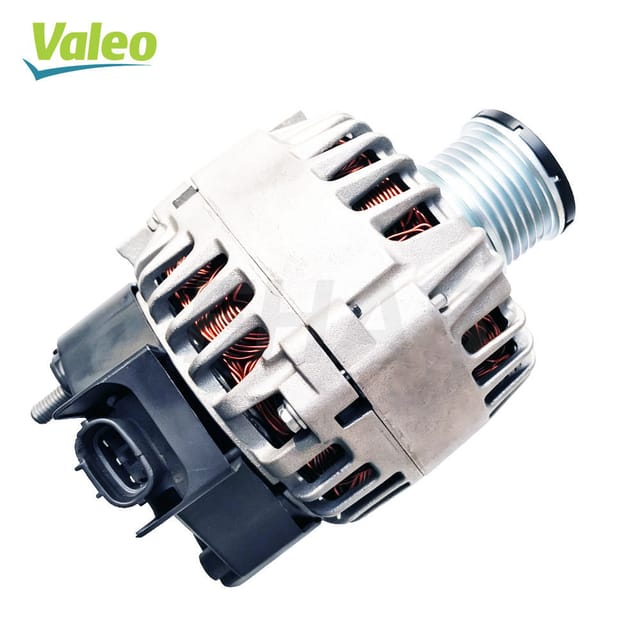
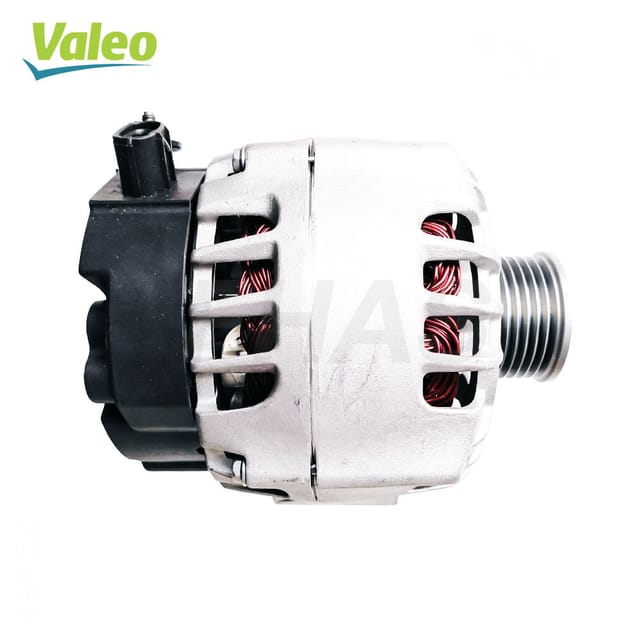
Valeo Alternator 12V 110A for Nissan Sylphy (23100-3RA2B)
- OE / cross-reference: 231003RA2B · 115705 · CAL35357GS · DRA0865 · CA2191IR · ALM4581RB · ALM4581WA · LRA03644 · A002TJ0581 · A002TJ0581ZE · A2TJ0581 · A2TJ0581ZE · 231001FC1A · 231003RC2B · 231003SH2B · 23100JD21A 2611855B · FG12T035 · FG12T037 · FG12T039 · TG12T039 · 301N20664Z · 301N22245Z
- Valeo brand line
- New condition · inspected before dispatch
PriceUS$90.99-97.99
Minimum order 2 pieces

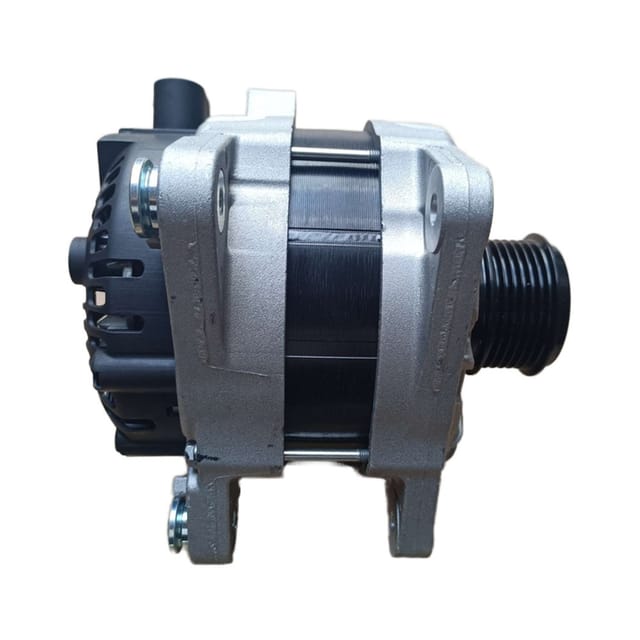
Valeo Alternator 12V 65A for Suzuki Alto (3701010B3)
- OE / cross-reference: 3701010B3 · SV082408 · SGTS046 · 442079
- Valeo brand line
- New condition · inspected before dispatch
PriceUS$47.99-53.99
Minimum order 2 pieces

When the Vehicle Has an External Regulator
Older vehicles sometimes use an alternator with external voltage regulator, where the regulator is a separate box on the inner wing or bulkhead rather than a module inside the unit. That changes the test sequence, because a no-charge reading can now be caused by the regulator, by the wiring between the two, or by the alternator itself. The alternator charge voltage target is the same in principle, but the device that enforces it now sits outside the unit, so a measurement taken at the unit alone cannot clear the system.
On those systems, check the regulator as its own component before condemning the alternator. If you want to know how to test alternator voltage regulator circuits on this layout, the useful approach is to measure at the alternator's field terminal while the engine runs: if the regulator is supplying field current and the unit still does not produce output, the unit is at fault. If the field terminal shows nothing, the regulator or its supply is the more likely cause. If you are unsure how to check alternator with voltmeter readings on this layout, start at that field terminal rather than at the battery, because it is the point where the regulator's command is visible. Before ordering anything, confirm the expected band in the vehicle's service data for the voltage regulator fitted to that layout.
The equivalent question on a modern unit is how to check alternator voltage regulator behavior when the regulator is sealed inside the housing. There, you cannot test the regulator directly; you infer it from behavior. Overcharging, undercharging that is stable rather than intermittent, and a fault that only appears once the unit is hot all point at the regulator. Where the diagnosis turns on a specific value, the manufacturer's own test data is the authority, not a general figure.
What You Can and Cannot Conclude Without a Meter
A vehicle with no meter available still gives you two useful observations. Watch the warning lamp's behavior, and watch the headlights at idle with loads applied. A lamp that stays lit and lights that dim at idle and recover with revs are consistent with a charging fault, and together they justify a proper test. If the lamp behaves normally and the battery still goes flat overnight, the fault may lie outside the charging system altogether, which moves the battery itself to the front of the queue.
If you are wondering how to test an alternator without multimeter equipment, be clear about the ceiling on what those observations can do. They can tell you that something in the charging system is wrong. They cannot tell you whether the fault is the unit, the regulator, the belt, or the ground path, and they cannot measure anything — so they cannot distinguish a marginal unit from a failed one. The same limit applies if you are trying to work out how to test the alternator without a voltmeter on a vehicle that has no gauge. People who ask how much voltage should an alternator put out are usually hoping for a single number, but the honest answer is a band, and that band has to be confirmed against the service data for the vehicle before any reading is called wrong.
One common alternative deserves a warning rather than an endorsement. Using a voltmeter plugged into the cabin socket, or checking alternator with a voltmeter in that way, gives you a reading during normal driving, which is genuinely useful for spotting a fault that only appears under load. What it does not do is put the probes on the battery, so it cannot separate a charging fault from a voltage drop in the wiring between the alternator and the cabin socket. Checking alternator with a multimeter at the battery posts remains the reference method, and a reading taken elsewhere is a secondary observation. If you want to know how to check an alternator with a voltmeter without moving the probes at all, treat the in-cabin figure as a trend indicator and confirm anything it suggests at the posts.
Whatever method you use, the sequence is the same. Checking alternator voltage tells you whether current is being supplied. Checking alternator with a multimeter under load tells you whether the supply survives demand. And a multimeter test alternator result only means something when you know the battery was settled before you began. The same sequence covers any car alternator charging voltage check: settle the battery, read the pattern rather than one figure, and judge it against the band for that vehicle.
FAQ
How long should the test take?
The four in-vehicle readings take a few minutes once the battery has settled. The waiting time for the battery is the longest part, and skipping it is what produces misleading results.
Do I need to disconnect anything to test?
No. The test is taken with the system assembled and running, which is precisely the point. Disconnecting a battery cable with the engine running to check output can spike the electrical system and damage control modules.
Can a good battery hide a failing alternator?
It can, briefly. A healthy battery will carry the vehicle for a while on stored energy, so the charging fault may only show up as a slowly falling reading under load rather than an immediate failure.
Why does my reading drop when I switch the lights on?
Because you have just added a load. What matters is whether the reading recovers to the normal band with the engine held at a fast idle. If it does not recover, the charging system is short of output.
Should I test the alternator if the battery keeps going flat?
Yes, but test the battery first. A battery that will not hold charge will make a perfectly good alternator look faulty, and the two failures produce the same complaint from the driver's seat.
Is a bench test enough to clear an alternator?
No. A bench test shows the unit can produce voltage when driven; it does not prove the unit will be controlled correctly by the vehicle. Treat it as a way to rule out a dead unit, not as a final verdict.
Related parts
Units from our range. Send an OE number and we will check fitment before quoting.



Have a part number to price?
Send it over with the quantity and destination. You will get a fitment check, a unit price and a freight cost — usually the same business day.